Weston
Weston Pro-2300 Vacuum Sealer Reviews (2026)
By June Park · Updated October 2026
Independent editorial review. We never accept payment for coverage, though we may earn a commission if you purchase through our links.

Verdict
Owners who actually load the Pro-2300 skew positive, and the praise repeats: a strong, fast double-piston pump, a wide bar that fits big cuts, and a commercial-grade build people call a tank, with several years and even a decade of service common. Many landed here after cheaper sealers failed, and stopped replacing machines once they did. The counterweight is a real minority who meet an out-of-box fault, most often a dead section in the middle of the seal strip, plus thin parts support and complaints about bag pickiness and having to press the lid to start a vacuum. Reading it all together, we see a heavy-duty volume sealer with a small quality-control tail, judged badly whenever someone expected a grab-and-go countertop unit.
Read full take ↓Similar vacuum sealers
The Weston Pro-2300 Vacuum Sealer Machine is the heavy stainless clamp sealer that shows up whenever a hunter, a prepper, or a bulk buyer outgrows a countertop FoodSaver and wants something that will not quit halfway through a chest freezer of meat. It runs a double-piston pump, carries a wide seal bar that takes bags up to fifteen inches across, and weighs enough to sit still on the counter while it pulls a hard vacuum. On paper it's a small commercial machine wearing a home-kitchen badge, and for the people who actually load it up, that is close to how it plays out.
That power is also the catch. The Pro-2300 is big, it costs real money, and it wants embossed or textured bags rather than whatever roll is cheapest that week. A casual cook sealing a couple of bags a week will feel like they bought a pickup to run to the corner store. What follows comes from the owners themselves: how hard it pulls, how long it lasts, where the seams show, and who should buy something smaller or step up to a chamber machine instead.
The short version
The picture after a couple hundred owner comments: a powerful machine built to be worked, carrying a few frictions nobody mentions in the product photos.
What's good:
- A double-piston pump that pulls a hard, fast vacuum, so bulk meat and even wetter loads seal without babying them.
- A wide seal bar that swallows big bags and long cuts a countertop FoodSaver simply cannot fit.
- Commercial-grade build that owners describe as a tank, with several years and even a decade of service common.
- Works with any embossed or textured bag or roll, so you are not locked into one brand of expensive cartridge.
What's not:
- Big, heavy, and expensive; total overkill if you only seal a handful of bags a week.
- It needs embossed or textured bags, and the wrong bag style turns sealing into a fight.
- A real minority report out-of-box faults or an early failure, sometimes a dead spot in the middle of the seal strip.
- Spare latches and parts can be hard to get, and owner accounts of support run cold.
Who it's for
How much meat you put through a sealer in a year decides whether this machine is a bargain or a boat anchor.
Buy it for:
- Hunters and anglers processing game field-to-freezer, where hours of sealing and big cuts are the whole point.
- Preppers and bulk buyers portioning meat, cheese, and staples for long-term freezer storage in real volume.
- Anyone tired of a small sealer that stalls on wet edges or cannot fit a whole roast or a long fish fillet.
Skip it if:
- You seal a few sous vide bags a week; the FoodSaver V4400 does that for far less money and counter space.
- You want a cheap way into vacuum sealing; the Nesco Deluxe VS-12 covers occasional freezer prep without the bulk.
- You seal a lot of liquids, soups, or marinades; a chamber machine like the VacMaster VP210 handles those far better.
The specs that matter
Three lines on the Pro-2300 spec sheet explain why it costs what it costs:
A double-piston vacuum pump: this is the reason the machine earns its reputation. It pulls a stronger, faster vacuum than the single diaphragm in most home units, which is what lets owners run bag after bag of dense, uneven cuts and still get a tight, freezer-burn-proof seal.
A seal bar wide enough for roughly fifteen-inch bags: the width is the whole reason to size up to this class. A whole shoulder, a rack of ribs, or a long salmon fillet drops into one bag instead of getting cut down or split across two.
Embossed or textured bags and rolls, not a proprietary cartridge: the channels in a textured bag are what give the pump a path to pull air. Any brand of embossed bag or roll works, which keeps you off a single expensive supply line, but a smooth or under-embossed bag will collapse on itself and refuse to seal.
How well it preserves
Sealing power is the one thing nobody argues about. The double-piston pump pulls hard and fast, and the wide bar means big, awkward loads go in whole. The people rating it highest are the ones running real volume, not the occasional dinner bag.
Been using this model for a little over a year and it hasn't given any issues at all even with some wetter foods that I've sealed. It has a wide seal strip, on the about 100+ bags I've sealed I haven't had any fail. Only once with a bone that poked through the bag.
Wet food goes better here than on a typical clamp sealer. It is still an external machine, so a flooded channel defeats any unit, but it seals wetter foods without drama once you leave a little headroom. Meat comes out of the freezer months later still protected, which is the entire reason the bulk crowd buys one.
I have a weston, a commercialish unit from Costco and it has been very good for the last 3-4 years. Any other unit is a 2 year endeavor for me at best.
Bags are what limit this machine, not the pump. Feed it the right embossed bag and it pulls a clean vacuum. Feed it the wrong one and you will fight for every seal. One long-time owner lays out the pickiness and the workaround in the same breath:
I have too much experience with this unit. If you don't have the right bags it's a right pain in the ass. I dealt with it with the wrong bags for pork belly for two years because we got the right size but wrong style. I had to make a fold in the top crease to get a good vacuum and then put my body weight on it for a seal. But! it worked! After you get a good seal, make another because you do not want them to rip or leak in the water bath!
Give it the right bags and a little headroom and nothing in the countertop tier comes close on raw sealing. That is why the Pro-2300 keeps surfacing in hunting and bulk-prep threads and almost never in casual sous vide ones.
Built to last
People buy the Pro-2300 expecting it to outlive three cheaper sealers, and most of the time it does. The build is closer to small commercial gear than to a plastic countertop unit, and the long-haul reports back that up. Several years of steady use is common. A handful of owners are a full decade in.
I’m a second generation Weston owner. No issues from my dad or myself.
Plenty of people arrive here after a cheaper sealer let them down, and the Weston is where they stop replacing machines. The build quality earns that loyalty even from owners who tried the mainstream brand first:
I’ve bought them both. The FoodSaver broke in 2 weeks. The Weston was less expensive and works well. That was my third FoodSaver. Never again.
The Weston is better. I have a bigger model and that thing is a beast.
It is not bulletproof. Some units arrive faulty, most often with a dead section in the middle of the seal strip that leaves a gap in every bag. That is a quality-control miss, not wear, and it is the worst pattern we found:
I have bought and returned two of the Weston’s from Amazon. While I loved having the date/time stamper, the heating element/bag sealer was faulty on both, out of the box. Both had a small section in the middle of the heat strip where they would not seal.
Others hit trouble later. A machine that suddenly stops pulling a full vacuum, an aging pressure sensor, worn gaskets, or a cracked latch can all sideline it, and support for parts is thin enough that owners lean on forums and third-party kits instead of the manufacturer.
Got it 6 months ago exactly and it has worked great up until a few nights ago. It will quickly seal up smaller bags, but this thing is designed to seal bags up to 16 inch in width and it isn't sucking the air out or sealing the 16 inch bags which is terrible timing considering I'm trying to seal up some standing rib roasts I got on sale during Easter. I will eventually cook them sous vide most likely. Anyway, this post might not be allowed but I don't know where to ask and since it's not under warranty, the manufacturer isn't being very helpful.
The saving grace is that this machine is meant to be repaired. Replacement seal-and-gasket kits are sold, and owners routinely bring a tired unit back to life. Even a decade in, the failure owners describe tends to be a fixable slow-vacuum decline, where it takes forever to clear the big bags and never reaches an auto seal, rather than a dead machine:
I’ve had my pro-2300 for maybe 10 years now. Back in 2023 it started taking forever to clear air out of the big bags, and would never get to the point of auto seal.
High marks here, then, but not full ones. The typical Pro-2300 shrugs off years of hard use, and the ones that fail early are usually fixable if you are handy with a screwdriver. A bad seal strip shows itself fast, so test it hard while the return window is open. That alone tilts the odds firmly your way.
Living with it
The Pro-2300 asks more of you than a countertop sealer does, and that is our lowest-scoring part of the story. It is large, heavy, and it eats counter and cabinet space. Priced and sized for someone sealing in volume. If your week is a couple of dinner bags, most of that capability just sits there humming to itself.
Weston should be more expensive. They do about the same. I would return the more expensive one get the loot. I’ve used both and they both work very well. I’ve had both for over 2 years still workin
There is a learning curve, too. Some owners find they have to press down on the lid to get the vacuum to catch, and a bag full of trapped air means canceling and restarting. It is a quirk you adapt to rather than a dealbreaker, but it is friction a set-and-forget countertop unit does not have:
I have the Weston and have to press down on the lid to get it to seal and start removing air from the bag. If it doesn't start removing air, I'll cancel the cycle so I don't heat seal a bag full of air and then try again. It's annoying, but eventually works.
Consumables are the other tax. You are committed to embossed bags, and buying the right style matters as much as the right size. On the upside, the seals that wear are user-replaceable, so a well-kept Pro-2300 stays serviceable rather than turning into landfill:
I like my Weston. The seals do give out after some time, but they sell a kit that allows you to easily replace them.
None of it is hidden if you know what you are buying. The Pro-2300 rewards someone who seals often and hard. It taxes someone who wanted a small grab-and-go unit. Match the machine to the workload and most of the daily friction stops mattering.
How it compares
Three machines come up over and over when people are weighing the Pro-2300. How they stack up:
Versus the VacMaster VP210 chamber sealer: the VP210 is the upgrade for anyone who seals liquids. A chamber machine vacuums the whole box, so soups, marinades, and wet cuts seal cleanly where any external clamp struggles, and it uses cheaper smooth bags. You pay for it in money, weight, and counter footprint, but the owners who tire of babysitting wet edges tend to end up here.
Versus the FoodSaver V4400 2-in-1: the FoodSaver is the mainstream, far cheaper answer if the Weston is more machine than you need. It has a built-in handheld sealer for zipper bags and canisters, a roll cutter, and moist and dry modes. It will not pull as hard or fit the big cuts, but for weekly household sealing it is the sensible default.
Versus the Nesco Deluxe VS-12: the Nesco is the budget floor. It is a compact unit that still pulls a respectable vacuum and takes rolls with a built-in cutter, so it makes real sealed bags for a fraction of the outlay and space. You give up the wide bar and the commercial pump, but it is a fine entry point for occasional freezer prep.
Using it well
Use genuine embossed or textured bags and match the width to your cuts. The wrong bag style causes more failed seals than everything else combined. Leave a couple of inches of headroom above the food so liquid never reaches the channel, and dab wet cuts dry with a paper towel first. For anything going sous vide or into months of freezer storage, run a second seal a quarter inch inside the first, so one weak spot cannot flood the bag. Keep a replacement gasket kit on the shelf and swap the seals before they fail, not after.
If you are still deciding whether a big external clamp is even the right tool, it's worth reading how the formats compare first. Our guide to the best vacuum sealer for sous vide and freezer storage walks through clamp versus chamber, bag types, and how much sealer different cooks actually need, with the Pro-2300 in context against the alternatives.
Where we land on the Pro-2300
If we were filling a chest freezer every fall, we would buy this one. High-volume sealing of meat, game, and bulk staples is the job it was built for, and it is the job that chokes a countertop unit. The double-piston pump and wide bar are the draw. The commercial-grade build is why most owners get years of hard service, and why the failures that do happen are usually fixable at the kitchen table. For hunters, preppers, and anyone buying half a cow, this is the machine that ends the replace-it-again cycle.
Fit and friction are what hold us back from a full rave. It is big, heavy, and expensive, it demands embossed bags, and a real minority meet an out-of-box seal-strip fault or run into thin parts support. Order it where an early return is painless, test it hard the first week, keep it fed with the right bags. Buy it to seal two bags a week and you have paid a lot for capability you will never touch.
Our Ratings
Overall score
The double-piston pump is the reason owners buy in. It pulls a hard, fast vacuum that seals dense, uneven, and even wetter cuts without babying them, and the wide bar takes big bags a countertop unit cannot fit. At real volume it seals bag after bag with no failures. Bags are the one limit: feed it a smooth or under-embossed one and you will fight for a seal. With the right bag, nothing in the countertop tier pulls like this.
Closer to small commercial gear than to a plastic countertop sealer, and it shows: years of steady service are common and some owners are a decade in. The tail is a real minority who meet an out-of-box fault, often a dead spot in the middle of the seal strip, plus thin parts support that pushes people toward forums and third-party kits. It is built to be repaired, which counts for a lot. Buy it somewhere a return won't cost you and run it hard the first week.
Our lowest number of the three. The Pro-2300 is big, heavy, and expensive, sized for someone sealing in volume rather than a couple of bags a week. There is a small learning curve, including owners who press down on the lid to get the vacuum to catch, and you are committed to embossed bags in the right style. The seals are user-replaceable, at least, so a well-kept unit stays serviceable instead of heading to landfill.
Weston Pro-2300 Vacuum Sealer Reviews (2026) on Amazon.
What People Are Saying
Owners who actually load the Pro-2300 skew positive, and the praise repeats: a strong, fast double-piston pump, a wide bar that fits big cuts, and a commercial-grade build people call a tank, with several years and even a decade of service common. Many landed here after cheaper sealers failed, and stopped replacing machines once they did. The counterweight is a real minority who meet an out-of-box fault, most often a dead section in the middle of the seal strip, plus thin parts support and complaints about bag pickiness and having to press the lid to start a vacuum.
Reading it all together, we see a heavy-duty volume sealer with a small quality-control tail, judged badly whenever someone expected a grab-and-go countertop unit.
We weight candid owner reports from Reddit and preservation forums above brand-influenced editorial coverage, then reach our own verdict from them. The quotes below are the evidence; the rating and the take are ours.
What Reddit Is Saying
“Been using this model for a little over a year and it hasn't given any issues at all even with some wetter foods that I've sealed. It has a wide seal strip, on the about 100+ bags I've sealed I haven't had any fail. Only once with a bone that poked through the bag.”View thread →
“I have a weston, a commercialish unit from Costco and it has been very good for the last 3-4 years. Any other unit is a 2 year endeavor for me at best.”View thread →
“I’m a second generation Weston owner. No issues from my dad or myself.”View thread →
“I’ve bought them both. The FoodSaver broke in 2 weeks. The Weston was less expensive and works well. That was my third FoodSaver. Never again.”View thread →
“The Weston is better. I have a bigger model and that thing is a beast.”View thread →
“I have too much experience with this unit. If you don't have the right bags it's a right pain in the ass. I dealt with it with the wrong bags for pork belly for two years because we got the right size but wrong style. I had to make a fold in the top crease to get a good vacuum and then put my body weight on it for a seal. But! it worked! After you get a good seal, make another because you do not want them to rip or leak in the water bath!”View thread →
“Weston should be more expensive. They do about the same. I would return the more expensive one get the loot. I’ve used both and they both work very well. I’ve had both for over 2 years still workin”View thread →
“I have the Weston and have to press down on the lid to get it to seal and start removing air from the bag. If it doesn't start removing air, I'll cancel the cycle so I don't heat seal a bag full of air and then try again. It's annoying, but eventually works.”View thread →
“I like my Weston. The seals do give out after some time, but they sell a kit that allows you to easily replace them.”View thread →
“I’ve had my pro-2300 for maybe 10 years now. Back in 2023 it started taking forever to clear air out of the big bags, and would never get to the point of auto seal.”View thread →
“Got it 6 months ago exactly and it has worked great up until a few nights ago. It will quickly seal up smaller bags, but this thing is designed to seal bags up to 16 inch in width and it isn't sucking the air out or sealing the 16 inch bags which is terrible timing considering I'm trying to seal up some standing rib roasts I got on sale during Easter. I will eventually cook them sous vide most likely. Anyway, this post might not be allowed but I don't know where to ask and since it's not under warranty, the manufacturer isn't being very helpful.”View thread →
“I have bought and returned two of the Weston’s from Amazon. While I loved having the date/time stamper, the heating element/bag sealer was faulty on both, out of the box. Both had a small section in the middle of the heat strip where they would not seal.”View thread →
“The Weston is a nicer tool, but whichever you use will shit the bed on you eventually. Just stick the unused one somewhere and don't forget you have it.”View thread →
“I'd personally return both and get a chamber-style vac sealer if you have the space. This style will eventually fail (I had an older Weston) and is susceptible to damage if it inhales too much liquid, or sticky liquid.”View thread →
Frequently asked questions
Is the Weston Pro-2300 Vacuum Sealer worth it?
Our lowest number of the three. The Pro-2300 is big, heavy, and expensive, sized for someone sealing in volume rather than a couple of bags a week. There is a small learning curve, including owners who press down on the lid to get the vacuum to catch, and you are committed to embossed bags in the right style.
How is the Weston Pro-2300 Vacuum Sealer built?
Closer to small commercial gear than to a plastic countertop sealer, and it shows: years of steady service are common and some owners are a decade in. The tail is a real minority who meet an out-of-box fault, often a dead spot in the middle of the seal strip, plus thin parts support that pushes people toward forums and third-party kits. It is built to be repaired, which counts for a lot.
What is the Weston Pro-2300 Vacuum Sealer best suited for?
The double-piston pump is the reason owners buy in. It pulls a hard, fast vacuum that seals dense, uneven, and even wetter cuts without babying them, and the wide bar takes big bags a countertop unit cannot fit. At real volume it seals bag after bag with no failures.
What do real owners say about the Weston Pro-2300 Vacuum Sealer?
Owners who actually load the Pro-2300 skew positive, and the praise repeats: a strong, fast double-piston pump, a wide bar that fits big cuts, and a commercial-grade build people call a tank, with several years and even a decade of service common. Many landed here after cheaper sealers failed, and stopped replacing machines once they did. The counterweight is a real minority who meet an out-of-box fault, most often a dead section in the middle of the seal strip, plus thin parts support and complaints about bag pickiness and having to press the lid to start a vacuum.
Options Worth Checking Out

VacMaster VP210 Chamber Vacuum Sealer
The chamber upgrade if you seal a lot of liquids. It vacuums the whole chamber, so soups, marinades, and wet cuts seal cleanly right in the bag, and it runs cheaper smooth bags instead of embossed. Bigger, heavier, and pricier than the Pro-2300.
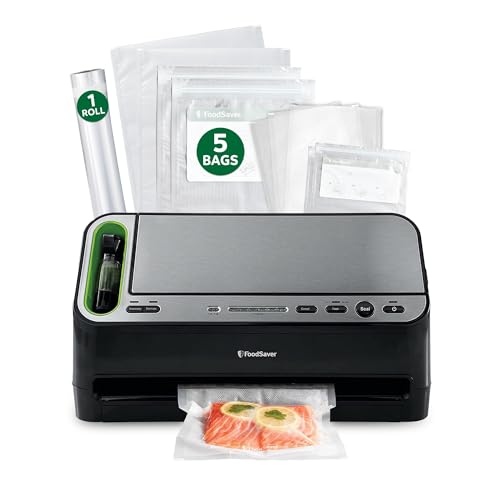
FoodSaver V4400 2-in-1 Vacuum Sealer
The mainstream pick when the Weston is more machine than you need. This 2-in-1 adds a handheld sealer for zipper bags and canisters, a roll cutter with storage, and moist and dry modes, for far less money and counter space than the Pro-2300.

Nesco Deluxe VS-12 Vacuum Sealer
The cheap way into vacuum sealing. Owners upgraded to the VS-12 from a dead FoodSaver and found it quieter, more powerful, and easier to clean, with a double-seal setting and a roll cutter. Fine for occasional freezer prep without the Weston's bulk.
You Might Also Need
Accessories worth grabbing alongside your purchase


