Free tool
Oxygen Absorber Calculator
How many cc for a jar, a mylar bag, a #10 can, or a bucket - sized by how densely your food packs, with packet counts you can actually buy.
Per 1-gallon mylar bag:
300 cc of absorber
For all 1: 300 cc total. That is 1 × 300cc or 1 × 500cc packets (rounded up; extra capacity is harmless).
Work fast once the absorber bag is open: packets start absorbing immediately, so seal spares in a small jar or bag within minutes.
Dry foods only - this is the safety rule
Oxygen absorbers belong with foods that are dry (about 10 percent moisture or less) and low in oil: white rice, wheat berries, rolled oats, dried beans, pasta, flour, dried corn, potato flakes. Sealing a moist food in a low-oxygen container at room temperature creates exactly the environment botulism needs - if a food is soft, chewy, or fresh, it does not go in a mylar bag with an absorber. And skip them for sugar and salt entirely: those never spoil from oxygen, and the absorber just cements them into a brick.
Why density changes the size
An absorber has to scrub the oxygen out of the air in the container, and how much air is left depends on how the food packs. Fine, dense foods like rice and flour settle tightly and leave little headspace; irregular shapes like beans, pasta, and freeze-dried meals trap air throughout. That is why the same 1-gallon bag wants 300cc of absorber for rice but 500cc for beans - the widely published home-storage figures this calculator is anchored to. When in doubt, round up: an oversized absorber simply finishes its job early, while an undersized one leaves oxygen behind.
How many oxygen absorbers for a 5-gallon bucket?
For a 5-gallon mylar bag of dense grain or rice, use about 2,000cc of absorber capacity - that is one 2,000cc packet, or roughly five to seven 300cc ones. Less-dense foods like pasta and whole beans hold more air, so lean toward the higher end. The calculator above sizes it for your exact food and container, and our guide to storing rice and beans walks through it step by step.
How long do oxygen absorbers last?
Sealed in their original unopened packaging, absorbers keep for months to a couple of years. Once opened they start working immediately - including on the air in your kitchen - so set up every container before opening the pouch, drop the packets in last, seal at once, and store any spares in a small airtight jar filled to the brim. They do not so much expire as fill up: a packet that feels hard and crunchy has spent itself, while a fresh one feels soft and powdery.
The sizes the calculator just recommended
Matched cc sizes and the bags to put them in.
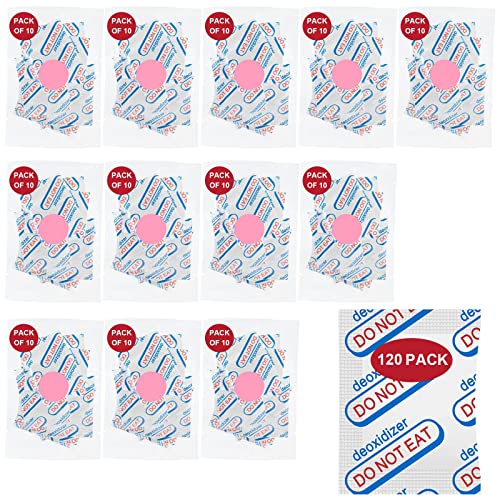
LinsKind 300cc Oxygen Absorbers (120-Pack, 10-Packs)
The everyday size: one packet does a 1-gallon bag of rice or a #10 can. Sold in small sealed 10-packs, so you are not racing to use 120 at once.

500cc Oxygen Absorbers (120-Pack)
The airy-pack size - beans, pasta, and oats trap more air than rice, and a 500cc packet covers a gallon of them with margin to spare.

1-Gallon Mylar Bags, 10 Mil (50-Pack)
Gallon bags are ideal for rotation: small enough to open and use up quickly, big enough to matter. Thick 10-mil walls resist punctures in a bucket.

5-Gallon Mylar Bags + 2000cc Absorbers (15-Pack Kit)
Bucket-scale storage with the correctly sized 2000cc absorbers already matched in the kit - the pairing this calculator recommends for 5-gallon packs.

SEELAUGH 16-Inch Impulse Sealer
A flat-iron works, but an impulse sealer closes a 5-gallon mylar bag in one clean pass - faster sealing means less time for your open absorbers to spend themselves.
The Preserving Kitchen is reader-supported. When you buy through these links we may earn a commission, at no extra cost to you. As an Amazon Associate we earn from qualifying purchases.