Free tool
Fermentation Brine Calculator
The exact salt for a brine or a dry-salt ferment — in grams, and in spoons corrected for the salt you actually own. Because "1 tablespoon" means something different for Diamond Crystal than for table salt.
Add to your water:
19 g of salt
≈ 3.1 tsp (1 tbsp) of fine sea / table salt
Weigh the grams for accuracy — the spoon figure is a cross-check. Switch the salt type above and watch the spoons change while the grams stay the same: that's exactly why "1 tablespoon of salt" ruins so many ferments.
Why weigh salt instead of scooping it
Salt for fermentation is a ratio by weight, not by volume. A tablespoon of fluffy Diamond Crystal kosher salt weighs barely half what a tablespoon of fine table or pickling salt weighs, so the same "1 tablespoon" can hand you a 1.5% brine or a 3% brine depending on the box in your cupboard. Under-salt and you invite mold and soft, slippery vegetables; over-salt and fermentation stalls. Weighing in grams removes the guesswork — the calculator gives you the spoon figure only as a sanity check.
Brine vs. dry salt
Use brine mode for vegetables submerged in salt water (cucumbers, beans, whole peppers, giardiniera): the percentage is figured on the weight of the water. Use dry salt mode for a mass ferment where salt is mixed straight into shredded or chopped vegetables that make their own brine (sauerkraut, kimchi): the percentage is figured on the weight of the vegetables.
Common salt strengths
- 2 to 2.5% — sauerkraut and most shredded-vegetable ferments (NCHFP tested recipes land near 2.25%).
- 2 to 2.5% — kimchi and general lacto-fermented vegetables.
- 3.5% — brined pickles, whole peppers, and warmer-weather batches that need extra protection.
These are the widely used home ranges; follow a tested recipe when you have one. Keep everything below the brine, ferment out of direct sun, and taste as you go.
How much salt for sauerkraut per pound of cabbage?
The tested starting point is about 3 tablespoons of canning or pickling salt per 5 pounds of shredded cabbage, which works out to roughly a 2 to 2.5% salt-by-weight ratio - the dry-salt mode above. Because salt types differ so much by volume, the reliable move is to weigh the cabbage and let the calculator set the grams; a tablespoon is only a rough check. Our how to make sauerkraut guide walks the full method.
What makes these numbers work
A calculator is only as good as the scale behind it. The gear we reach for when the math has to be right.

Etekcity
Etekcity 0.1 g Digital Kitchen Scale
Brine strength is a weight ratio, so a 0.1-gram scale is the tool that makes this calculator work. Measuring salt by the spoon is where most ferments go wrong.

Fermentation Glass Weights (4-Pack, Wide-Mouth)
Glass weights hold vegetables under the brine — exactly where the salinity you just calculated keeps mold out. Sized for wide-mouth mason jars.

Mrs. Wages
Mrs. Wages Pickling & Canning Salt
Pure salt with no iodine or anti-caking agents, which can cloud a brine or slow fermentation. A canning-grade salt is the safe default.
Masontops
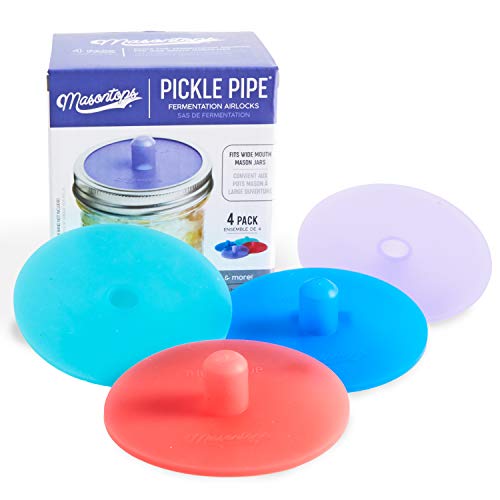
Masontops Pickle Pipes Airlock Lids
Airlock lids vent fermentation gas without letting oxygen back in — the easiest upgrade from a plain jar to a reliable ferment.

Ball
Ball 16 oz Wide-Mouth Mason Jars (12-Pack)
Wide-mouth jars are the vessels these numbers are written for — easy to pack tight and easy to weight down.
The Preserving Kitchen is reader-supported. When you buy through these links we may earn a commission, at no extra cost to you. As an Amazon Associate we earn from qualifying purchases.