Best Vacuum Sealer Bags and Rolls
By June Park · Updated October 2026
Independent editorial guide. We never accept payment for coverage, though we may earn a commission if you purchase through our links.
Quick Take
For a FoodSaver-style external sealer, buy rolls, not pre-cut bags, and buy them in bulk. Rolls let you cut a bag to the exact length of the food, so a chicken breast and a whole roast both get a bag that fits with almost no waste. The FoodSaver Custom Fit rolls are the safe default: they fit any external suction sealer, store inside the machine, and cut down the per-bag cost that quietly adds up faster than the sealer ever did.
The nuance is that the bag itself does more of the work than most buyers expect. Wall thickness decides whether a sharp bone punctures the seal in the freezer. A textured or embossed surface is what lets an external sealer pull air out at all, so smooth bags do not work on these machines. And a generic roll often performs the same as the name brand for a fraction of the price, while pre-cut bags earn their premium only when you seal in big batches and value the speed.
Here is how owners actually sort out rolls, thickness, and price, and the four bags and rolls worth buying for an external sealer. See picks ↓

The vacuum sealer is a one-time purchase. The bags are forever. Buy meat in bulk and portion it every week and the plastic you feed the machine will out-cost the machine itself within a couple of years, which is why the bag you settle on matters more than most buyers realize when they are shopping for the sealer.
Read enough sous vide and freezer-prep threads and the same handful of questions decide every purchase. Rolls that you cut to size, or pre-cut bags you just grab and seal? How thick does the plastic need to be so a bone or a long freezer stint does not spring a leak? And is the name brand worth it, or does the generic off Amazon do the same job for half the money? Those are the arguments owners actually have, and they map cleanly onto what you should buy.
One thing to settle first: this guide is about bags for external suction sealers, the FoodSaver-style machines most home cooks own. Chamber sealers are a different system that uses smooth bags and handles liquids far better, but the bags are not interchangeable. If you run a suction sealer, you need textured bags, and everything below is about choosing them well.
Rolls or pre-cut bags: the choice that shapes everything
This is the first fork in the road, and owners come down hard on both sides. Rolls are a long tube of bag material you cut and seal into a custom size, then seal shut once the food is in. Pre-cut bags come sized and sealed on three sides, so you only seal the open end. The tradeoff is money and waste against speed and convenience.
The case for rolls is simple: they cost less and they fit anything. You cut exactly the length you need, so a pack of hot dogs and a packer brisket both get a right-sized bag. The recurring one-line verdict in these threads is blunt about it:
Rolls. Cheaper and you can make any size you want. I really don't see any reason to not use rolls.
The other roll argument is that a pre-cut bag is almost never the right size, so you either waste plastic on a too-big bag or cannot fit the food at all. The built-in roll cutter most sealers carry makes cutting to size quick:
Rolls all day. You saved a minute power premade bag but the size is never right. And storage like the others have said, and the built in cutter makes it pretty easy
Pre-cut bags win on speed and peace of mind, and that is not nothing when you are sealing a dozen packages after a warehouse-store run. Making a bag from a roll means sealing two ends instead of one, and a roll can curl or crease. One owner who switched over laid out exactly why the convenience adds up:
I started with rolls and have switched to pre-cut. When bought in a large quantity they aren't *that* much more. I got tired of dealing with the curl of the roll. When I'm trying to get something quickly in the water bath for dinner after work (or when trying to seal meats for freezing when I'm tired), not having to make a bag (and have confidence I didn't eff-up the seal accidentally) makes a huge difference in convenience for me. I keep 6x10 (pint), 8x12 (quart), and 11x16 (gallon) bags around, as well as an 11" roll for things like roasts that are too large for the gallon bag.
Those creases are a real failure mode, not just a nuisance. When a roll wrinkles, the seal bar cannot fuse a clean line, and a bag that does not seal is a bag you throw away:
I have been using the rolls for a while because it is less costly, but switched back to pre-cut. My rolls tended to have a lot of creases which didn't seal well. I found easier (and less wasteful) to stick with the bags.
For the highest-stakes food, some owners keep pre-cut bags on hand specifically because a factory seam beats a home-cut one. A roll adds a user-made seam along the bottom, and that is one more place a seal can fail:
Premade bags are wasteful and expensive but absolutely superior when sous vide for expensive meats for long time Rolled bags have a user created seam on the bottom when can occasionally fail, creating minor food disasters. I used to double seal both ends for more insurance but for me the risk simply isn’t worth it ($$$$ product needs best seal possible)
For most people the answer is to default to rolls for the cost and flexibility, and keep a box of pre-cut bags around for the days they are sealing in volume and want the speed. That is why our picks below include both a top-pick roll and a pre-cut bag rather than forcing the choice.
Thickness and mil: the number that decides leaks
The spec that actually predicts whether a bag survives is wall thickness, usually given in mil (thousandths of an inch). Thicker plastic resists punctures from bones and frozen edges, holds a seal longer in the freezer, and shrugs off the handling that thin bags tear under. Owners who have chased down mystery leaks almost always land on thickness as the fix. One switched bags after losing steaks and has not looked back:
The bags I use claim to be ' heavy- duty, 7-layer, 4 mil puncture-resistant plastic.' I switched to them after I lost multiple steaks that were in FoodSaver bags to freezer burn. Hasn't happened again since I made the switch.
The same lesson shows up even with ordinary zip-top bags: the thicker freezer-grade plastic simply seals and holds better than thin storage-grade plastic, and the difference is easy to feel in the hand.
Seconding the non-slider freezer bag recommendation. The sliders don’t seem to get as positive a seal, and the thicker plastic of the freezer bags holds up better than the storage bags.
For buying, treat thickness as the headline number. A 3-mil bag is fine for short-term storage and quick sous vide, but for sharp-edged cuts, bone-in meat, and anything you want to trust after months in the freezer, step up to a 4-mil or heavier bag. That is exactly the wall a heavy-duty pre-cut bag or a quality roll gives you, and it is worth the small premium over the thinnest option on the shelf.
Freezer-burn protection is really about the seal holding
The whole reason to vacuum seal for the freezer is to keep air off the food so it does not dry out and burn. That protection is only as good as the seal, and the cruel part is that a bad seal looks fine on the counter and only fails weeks later in the cold. One owner spelled out how a bag that seals fine for cooking can still fail for long freezer storage:
I’ve found these fine for cooking but terrible for freezing. They eventually lose their seals at least 1/2 the time, and I’ve had a lot of good food get freezer burned as a result. I posted about this once a while ago. Some people had the same experience, while others insisted that I must be sealing sharp bones. The latter would be possible except that a) I trim and/or pad sharp edges before sealing and b) the same thing has happened to me with plenty of boneless foods. I have no doubt that others have had better results, and perhaps they’ve changed suppliers. YMMV.
The flip side is that a good bag, matched to the machine, just holds. The owner below runs generic bags without even double-sealing the ends and still beats the failure rate they saw from name-brand bags, which is a useful reminder that the bag and the machine have to suit each other more than the logo matters:
+1 on Kirkland bags. Switched to them as soon as they came out and have never looked back. I think I've only had 2x failures across two boxes of these and I don't even double seal my ends. Both of those failures were meat cuts with bones that were frozen for over 4 months, where I think I got a micro puncture of some sort. My failure rate with brand name bags was higher than that.
Two practical takeaways follow. First, pad or trim sharp bones before sealing, because a micro-puncture from a rib is the most common way freezer bags quietly fail. Second, for long storage, favor thicker bags and consider double-sealing the open end. The mechanics of the machine matter here too, which is why our companion best vacuum sealer for sous vide and freezer storage guide is worth a read alongside this one: the right bag on a weak sealer still fails.
When a generic beats the name brand
FoodSaver is the default brand, and their bags are good. But the threads are full of owners who quietly switched to generic rolls off Amazon or a warehouse store and could not tell the difference, at a real discount. The most common observation is that the off-brand and name-brand bags are hard to tell apart:
Yep. They're pretty much indistinguishable from the name brand ones. My only issue is that I still end up using way more of the wide bag rolls than the narrow ones. Since you cannot just buy the one size, I've got too many of the narrow ones now.
The price gap is not small. Buying generic rolls instead of one-size-each name-brand packs routinely cuts the cost by close to half:
Yeah I just got 3-8"& 3-11" rolls for $17 in amazon where it was near $30 for one of each size Foodsaver brand
And because rolls last, that saving compounds. An 11-inch roll can cover a year of heavy freezing for a single household, so a value roll bought on sale stretches a long way:
I get these from amazon. They come in 6", 8" or 11" by 150 ft. I get the 11" for me. One roll of these lasts me a year and I freeze a lot of meat. They go on sale on amazon quite a bit so I usually wait for a price slash and then buy another roll.
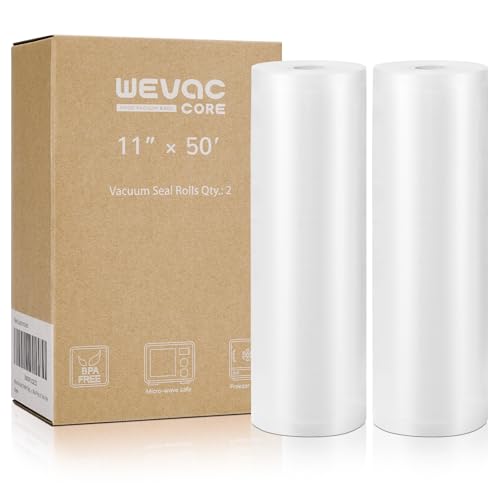
Our value pick exists for exactly this. A generic embossed roll like the Wevac fits any external FoodSaver-style sealer and does the same job as the branded rolls at a fraction of the price. The one caveat owners raise is fit: a few report that certain off-brand bags seal poorly on certain machines, so if your sealer is fussy, buy a smaller quantity first and confirm it seals cleanly before committing to a bulk order. For most external sealers, the generic roll is simply the cheap way to seal in volume.
A quick word on embossed versus channel bags
This is the technical detail behind why smooth bags do not work on a FoodSaver-style machine, and it is worth one paragraph even though owners rarely discuss it by name. External suction sealers pull air out through the open end of the bag, and they need a path for that air to travel. Textured bags, whether the pattern is called embossed dots or channels, have raised or grooved surfaces that keep the two walls of the bag from sealing flat against each other so air can escape. A smooth bag collapses shut and the machine cannot evacuate it.
The practical version: any roll or pre-cut bag sold for an external or suction sealer is textured and will work, and the branded and generic ones use the same idea. The only bags that are smooth are chamber-sealer bags, which are cheaper per bag but only work in a chamber machine, where the whole bag sits inside a vacuum. If you own a suction sealer, ignore the smooth chamber bags and buy anything labeled for an external sealer.
Ziploc versus vacuum bags
Plenty of people start with regular zip-top freezer bags and the water-displacement trick, and for short cooks it works. But for freezer storage and longer sous vide, owners keep running into the same wall: a zip bag that is fine once tends to leak the second time, and a small leak ruins the food. One owner put a number on it before switching:
I used that exact bag a few times, and had about a 50% failure rate. (I do steaks at 130) A small leak still gives you soggy meat. I switched over to actual sous vide bags, and don't have problems anymore.
Vacuum bags cost more per bag than zip-tops, but they are sturdier, hold a real vacuum, and stand up to reuse in a way zip bags do not, which narrows the price gap over time:
They cost twice as much as ziplocs but they are much more rugged. Ziplocs are prone to leak if reused but these vacuum bags can be reused many times. I throw them out after 4 uses just in case so they are effectively half as costly.
So zip-top bags are a fine on-ramp and a fine backup, especially for wet foods a suction sealer struggles with. But if you are sealing meat for the freezer on any regular basis, a proper vacuum bag is the more reliable, and eventually cheaper, choice.
Reusing and washing bags
Because the bags are the recurring cost, it is tempting to wash and reuse them, and for some foods you can. A vacuum bag that held clean, dry, or non-greasy food can often be turned inside out, washed, and used again, and heavy vacuum zip bags in particular tolerate several uses. Silicone bags take this furthest, going through the dishwasher for years.
The important limit is meat. Reusing a bag that held raw meat is a food-safety risk, and it is the one case where the savings are not worth it:
Except it is not recommended to reuse bags that contained meat due to possible bacteria contamination.
The sensible rule owners land on: reuse bags that held dry or clean foods if the seal is still good, cut a fresh bag each time for raw meat, and if reuse is your real goal, buy heavy vacuum zip bags or silicone bags built for it rather than trying to stretch single-use rolls past their limit.
So which bags should you buy?
For most people, buy the FoodSaver Custom Fit rolls and cut them to size. Rolls are cheaper, waste less plastic, and fit anything, and the name-brand rolls seal cleanly on any external machine.
If you seal in big batches and want speed, add the FoodSaver heavy-duty pre-cut quart bags: a thicker wall for sharp foods and long freezer storage, and one sealed end so you work faster. If you want the same job for less money, the Wevac rolls are the value play, a generic embossed roll that fits FoodSaver-style sealers at a fraction of the price. And for foods you open and reseal rather than seal once, like a marinating cut or portioned snacks, keep a box of resealable vacuum zipper bags on hand instead of wasting a fresh roll bag every time.
Whichever you choose, remember what the bag is doing: match the thickness to the food, keep the surface textured so the machine can do its job, pad sharp bones before you seal, and never reuse anything that held raw meat. Those habits are what keep the cheapest part of your setup from becoming the part that fails. For the machine side of the decision, see our best mason jar vacuum sealer guide for jar sealing, and our FoodSaver vacuum sealer review for the sealer these bags are built around.
Recommended
Products related to this guide.


What owners say
Real owner reports from the threads and editorial sources we drew on for this guide.
“Rolls. Cheaper and you can make any size you want. I really don't see any reason to not use rolls.”
— r/sousvide / u/BreakfastBeerz
“Rolls all day. You saved a minute power premade bag but the size is never right. And storage like the others have said, and the built in cutter makes it pretty easy”
— r/sousvide / u/EdgarInAnEdgarSuit
“I started with rolls and have switched to pre-cut. When bought in a large quantity they aren't *that* much more. I got tired of dealing with the curl of the roll. When I'm trying to get something quickly in the water bath for dinner after work (or when trying to seal meats for freezing when I'm tired), not having to make a bag (and have confidence I didn't eff-up the seal accidentally) makes a huge difference in convenience for me. I keep 6x10 (pint), 8x12 (quart), and 11x16 (gallon) bags around, as well as an 11" roll for things like roasts that are too large for the gallon bag.”
— r/sousvide / u/Kyo_Sa_Nim_H
“I have been using the rolls for a while because it is less costly, but switched back to pre-cut. My rolls tended to have a lot of creases which didn't seal well. I found easier (and less wasteful) to stick with the bags.”
— r/sousvide / u/dman77fb
“Premade bags are wasteful and expensive but absolutely superior when sous vide for expensive meats for long time Rolled bags have a user created seam on the bottom when can occasionally fail, creating minor food disasters. I used to double seal both ends for more insurance but for me the risk simply isn’t worth it ($$$$ product needs best seal possible)”
— r/sousvide / u/SilentC1969
“The bags I use claim to be ' heavy- duty, 7-layer, 4 mil puncture-resistant plastic.' I switched to them after I lost multiple steaks that were in FoodSaver bags to freezer burn. Hasn't happened again since I made the switch.”
— r/sousvide / u/goofytigre
“Seconding the non-slider freezer bag recommendation. The sliders don’t seem to get as positive a seal, and the thicker plastic of the freezer bags holds up better than the storage bags.”
— r/sousvide / u/Bikebird63
“I’ve found these fine for cooking but terrible for freezing. They eventually lose their seals at least 1/2 the time, and I’ve had a lot of good food get freezer burned as a result. I posted about this once a while ago. Some people had the same experience, while others insisted that I must be sealing sharp bones. The latter would be possible except that a) I trim and/or pad sharp edges before sealing and b) the same thing has happened to me with plenty of boneless foods. I have no doubt that others have had better results, and perhaps they’ve changed suppliers. YMMV.”
— r/sousvide / u/312view
“+1 on Kirkland bags. Switched to them as soon as they came out and have never looked back. I think I've only had 2x failures across two boxes of these and I don't even double seal my ends. Both of those failures were meat cuts with bones that were frozen for over 4 months, where I think I got a micro puncture of some sort. My failure rate with brand name bags was higher than that.”
— r/sousvide / u/Morael
“Yep. They're pretty much indistinguishable from the name brand ones. My only issue is that I still end up using way more of the wide bag rolls than the narrow ones. Since you cannot just buy the one size, I've got too many of the narrow ones now.”
— r/sousvide / u/anormalgeek
“Yeah I just got 3-8"& 3-11" rolls for $17 in amazon where it was near $30 for one of each size Foodsaver brand”
— r/sousvide / u/FnEddieDingle
“I get these from amazon. They come in 6", 8" or 11" by 150 ft. I get the 11" for me. One roll of these lasts me a year and I freeze a lot of meat. They go on sale on amazon quite a bit so I usually wait for a price slash and then buy another roll.”
— r/sousvide / u/Cavyart