FoodSaver
FoodSaver Vacuum Sealer Reviews (2026)
By June Park · Updated October 2026
Independent editorial review. We never accept payment for coverage, though we may earn a commission if you purchase through our links.

Verdict
Owners are split on the FoodSaver, and the divide is consistent. On one side are people ten, twenty, even twenty-five years into the same machine, using it weekly to feed a freezer and calling it all the sealer they will ever need. On the other are owners who have burned through three or four, hitting dead sealing elements, worn gaskets, and overheating, often after liquid got pulled into the unit. Two themes recur no matter which camp a person lands in: a basic edge sealer fights you on liquids, and the proprietary FoodSaver bags are an ongoing cost that pushes heavier users toward chamber sealers or cheaper generic rolls. The praise for easy, strong sealing is real, and so is the durability-and-bag-cost tail.
Read full take ↓Similar vacuum sealers
The FoodSaver Vacuum Sealer Machine is the sealer almost everyone pictures when they think about vacuum sealing at home. It sits on the counter, detects the bag you feed it, pulls the air out, and heat-seals the end, and it does that job well enough that it has become the default freezer-and-bulk tool in kitchens that have never owned anything else. If you are stepping up from freezer bags and a straw, this is usually where you land, and for a lot of people it is all the sealer they will ever need.
Owners who have run one for a decade sit right next to owners who have burned through three or four. The running cost of FoodSaver-branded rolls comes up in almost every thread too. Both halves are real, and this review takes them both seriously: the strong seals and easy freezing that keep people loyal, against the durability lottery and the bag bill that push a slice of them toward a chamber sealer instead.
The short version
The FoodSaver is a capable sealer that almost nobody has to learn. Two caveats travel with it, and both cost money.
What's good:
- Strong, consistent seals when the unit is healthy, and enough vacuum to keep meat and produce out of freezer burn for months.
- Easy to use: automatic bag detection, a moist setting for juicier foods, and a manual seal button you can trigger early.
- Everywhere. You can buy the machine, the rolls, and replacement bags at almost any big-box or grocery store, plus the mason-jar attachment for dry goods.
- Handles the everyday jobs well: portioning meat from a bulk buy, freezing leftovers and soup, and prepping bags for sous vide.
What's not:
- Durability is a gamble. Plenty last ten years or more, but a real minority die inside one to three, usually a dead sealing element or worn foam gasket.
- The bags are a running cost. Proprietary FoodSaver rolls add up, and the machine leans on you buying more rather than reusing.
- It struggles with liquids. Soups and marinades get sucked toward the seal bar and can ruin the seal or foul the drip tray.
- No serious user servicing. When the sealing element or pump quits, most owners replace the whole unit rather than repair it.
Who it's for
How much liquid you seal, and how often you seal at all, decides whether this is your machine.
Buy it for:
- Freezing a Costco meat haul, garden overflow, or batch-cooked leftovers in household volume a few times a month.
- A first vacuum sealer, where cheap entry, everywhere-availability, and dead-simple operation matter more than lifetime cost.
- Dry-goods storage, especially if you want the jar-sealer attachment for pantry staples in mason jars.
Skip it if:
- You seal liquids constantly, like soups, chili, and wet marinades; a chamber sealer such as the Anova Precision Pro handles wet contents without a fight.
- You run a sealer hard, for a hunter or a big-freezer household; the FoodSaver overheats and quits under that load, so a bigger external or chamber unit earns its keep.
- You want to control long-term cost; a unit that takes cheap generic bags, like the Potane, stops the proprietary-roll bill from stacking up.
The specs that matter
Most of the feature list is noise. These are the parts that change how you actually use it:
Automatic bag detection and a one-touch cycle: the machine senses the bag and runs vacuum-then-seal on its own, which is the single reason first-timers find it foolproof. There is also a manual seal button so you can stop the vacuum early on delicate or juicy foods.
Dry and moist seal settings: the moist mode lengthens the heat time so a slightly damp bag edge still fuses. It helps. It is not a fix for standing liquid, which is why liquids come up in nearly every FoodSaver thread ever written.
Roll storage, a built-in cutter, and an accessory port: you make custom-length bags from a roll instead of buying pre-cut, and the port drives the mason-jar sealer and zipper-bag attachments. The catch is that the rolls are a recurring purchase, and that cost is a live part of the value story.
How well it preserves
When a FoodSaver is working right, the core job is not in doubt: it pulls a solid vacuum and lays down a strong seal, keeping bulk meat and produce freezer-burn-free for months. The people who came to it from freezer bags describe it as the upgrade that finally made their freezer buys worth it, and long-term owners tie its value straight to how much food it saves.
I do as well, no issues. I can’t believe how often I could have used a vacuum sealer - now that I have one I’m always using it. Our adult kids come by for dinner and I want to send them with leftovers? Bag it up and no containers to return.
It is flexible about what you seal, too. Beyond meat and vegetables, the accessory port turns it into a dry-goods tool through the mason-jar attachment, a favorite for keeping pantry staples fresh with no plastic at all.
Oh man that's neat. One thing I've come to really like about my foodsaver though is the mason jar attachment. Food in a vacuum sealed mason jar keeps for a _long_ time and it's super easy to setup and no plastic involved. Can these chamber sealers do mason jars?
Where it gives ground is liquids. A basic edge sealer pulls soup, marinade, and juice up toward the seal bar, which can wreck the seal or get sucked into the machine. Owners work around it constantly, freezing wet foods first or interrupting the cycle by hand, and the workarounds do work, but they are the tax you pay for an edge sealer instead of a chamber. One long-time owner is blunt that even at twenty-five years in, liquids are the reason a different design tempts them:
I have had my foodsaver for over 25 years. I hate the idea of getting a different kind, but there are units that do a great job with liquids. I don’t think that I would get my money’s worth from one at this stage of my life.
For dry and semi-dry foods, though, the seal quality is good, and that is what most households are doing with it. Score the drying-and-sealing job on its own and the FoodSaver is solid.
Built to last
Owner reports split hard here, and it is worth knowing that before you spend. When a FoodSaver lives, it lives a long time. Ten, twenty, even twenty-five years of service, some of them through multiple moves, treated as a forever appliance.
My two Foodsavers have lasted 20 and 10 years so far. Unless you’re in need of a chamber sealer for some other reason it’s a big waste of money and counter space.
I was thinking the EXACT same thing. I’ve had mine for at least ten years. If not more. It’s survived a few moves. It works great.
I'm with you. My Foodsaver feeds my freezer quite well. 10 years old and still going.
Against that sit the early deaths, and they are not rare. Three parts do most of the failing: a sealing element that stops fusing, a foam gasket that stops holding vacuum, or a unit that overheats after a couple of bags. For some owners it happens once and early. For others it becomes a cycle of replacements.
No shit, my food saver is almost 6 years old and I’m about to pull the plug. Thing overheats every 3 seals.
Wow, your food saver lasted 10 years? We burned up four of them in about 6 years, then upgraded to a chamber type vacuum sealer. I looked at these higher end conventional sealers, but I wasn't happy with the level of vacuum they can pull.
Moisture is a recurring killer. Liquid pulled into the machine can finish the sealing element or the pump, and because these are not built for user repair, that usually means a new machine rather than a fix.
the foodsaver would vacuum up any moisture and I think it messed up the sealing element. Now it doesn't seal. Trying to figure out what to replace it with.
The FoodSaver is not junk. Long-life stories turn up as often as early deaths, and a healthy unit sealing dry food runs for years. The spread is simply too wide to score durability any higher. Read the return policy before you order, keep liquids away from the seal bar, and store it with the lid unlatched so the foam gasket does not take a set.
Living with it
Automatic bag detection means you barely have to think. Feed the bag, let it run, done. That is most of why the FoodSaver stays the default. The manual seal button is the feature experienced owners lean on hardest, letting you stop the vacuum the instant the air is out so you do not crush delicate food or draw liquid into the machine.
I have a foodsaver. With anything liquid or super powdery, once vacuuming has started I lift the entire thing up so I can watch the liquid work its way to the top. Once it hits the sealer I stop and manually seal. Almost no liquid in the sealer but still a very good air evac.
The moist setting and the drip channel help with juicier bags, and a little technique goes a long way. Owners pass around the same handful of habits, from picking a model with adjustable vacuum to seating the bag correctly so liquid lands in the channel instead of on the seal:
Not all foodsaver models are the same. Get a vacuum sealer with adjustable vacuum, mine has a delicate setting. Put the end of your bags into the channel between the seal, not on top. Any liquids will go into the channel and not on your seals.
Liquids are still the recurring gripe, but they are manageable rather than disqualifying for most people. The trick everyone learns is to hang the bag off the counter edge or lift the machine so you can watch the liquid rise and seal a moment before it reaches the bar:
I seal liquids with my $79 food saver all the time. Clamp the bag, hang it off the counter, hit vac, hit seal as liquid reaches the top. Works great.
Cleanup is minor: wipe the drip tray, keep the seal bar clean, and swap the foam gasket when vacuum gets weak. The gaskets on many models are replaceable, though finding the exact part for an older unit can be hit or miss, which is worth knowing before you count on repairing one.
How it compares
Owners who leave the FoodSaver leave for one of three machines. What each of them fixes is worth knowing before you buy.
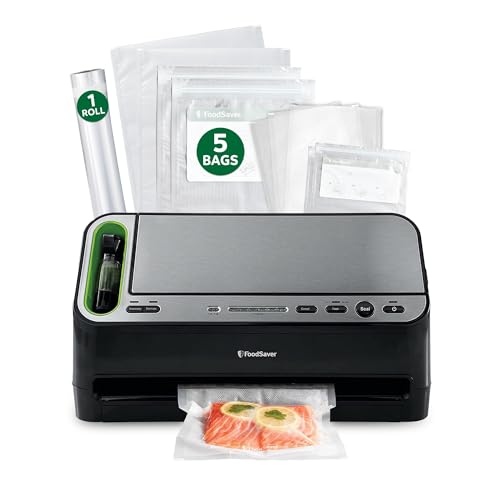
Versus the FoodSaver V4400 2-in-1: this is the step up within the same family. It keeps the automatic bag detection you already know but adds a built-in roll holder and cutter plus a handheld sealer for zipper bags and canisters, so custom bags are faster and the accessory jobs are easier. Same brand, same bag ecosystem, more convenience.
Versus the Anova Precision Vacuum Sealer Pro: the sous-vide crowd's pick. It pulls a stronger, more consistent vacuum, takes generic bags instead of locking you into one brand, and shrugs off wet foods far better than an edge sealer. It costs more and asks for a little more counter space, but it is the answer if liquids and bag cost are your sticking points.
Versus the Potane Precision Vacuum Sealer: the budget cross-shop. It is a cheaper external unit with the same dry and moist modes and presets, and crucially it happily seals inexpensive generic rolls, which is the direct fix for the FoodSaver's ongoing bag bill. You trade the brand-name ubiquity for a lower entry price and cheaper refills.
Using it well
Freeze wet or soft foods on a tray before you seal them so nothing gets crushed or pulled toward the bar. For anything with liquid, hang the bag off the counter edge and use the manual seal button the moment the air is out. Leave a generous margin above the seam, and double-seal juicy bags for peace of mind. Keep the seal bar and drip tray clean so the plastic fuses properly, and store the unit with the lid unlatched so the foam gasket keeps its shape.
If you are still deciding whether an edge sealer is the right format at all, or weighing generic bags against the branded rolls, it is worth reading how the choices play out across brands first. Our guide to the best vacuum sealer for sous vide and the freezer walks through edge versus chamber, seal strength, and bag cost in more depth, with the FoodSaver in context against the alternatives.
The FoodSaver verdict
For a first sealer and a household freezer, yes. Portioning bulk meat, freezing leftovers and produce, prepping bags for sous vide: it seals all of that strongly and asks you to learn nothing. The machine, the bags, and the attachments are also never more than a store trip away, which counts for more than it sounds like on a Sunday afternoon.
You pay for it twice, though. Durability is a gamble, with early deaths common enough that we would treat the first weeks as a trial, and check the return policy before ordering. And the proprietary bags are a bill that never stops, which is exactly why heavy users graduate to a chamber sealer or something that takes cheap generic rolls. Know both of those going in and the FoodSaver still deserves the space it takes up.
Our Ratings
Overall score
When it is healthy, the FoodSaver does the core job well: it pulls a solid vacuum and lays down a strong seal, keeping bulk meat and produce freezer-burn-free for months. The mason-jar attachment extends it to dry pantry goods with no plastic. The limit is liquids, which a basic edge sealer pulls toward the seal bar and struggles with, so soups and wet marinades need workarounds. For dry and semi-dry foods, though, the sealing is strong.
Owner reports split hard on this one. Plenty are ten, twenty, even twenty-five years in with no trouble, but a real minority report units dying inside one to three years, usually a dead sealing element, worn foam gasket, or overheating after a couple of bags. Moisture pulled into the machine is a common killer, and because these are not built for user repair, a failure usually means a new unit. Buy it somewhere you can walk it back and keep liquids off the seal bar.
Ease of use is what earns the FoodSaver its loyalty. Automatic bag detection makes it foolproof, the manual seal button lets you stop the vacuum early on delicate or juicy food, and the moist setting and drip channel help with damp bags. Cleanup is a quick wipe of the tray and seal bar. The recurring drags are liquids, which need technique to seal cleanly, and the proprietary rolls, whose ongoing cost is a real part of what you sign up for.
FoodSaver Vacuum Sealer Reviews (2026) on Amazon.
What People Are Saying
Owners are split on the FoodSaver, and the divide is consistent. On one side are people ten, twenty, even twenty-five years into the same machine, using it weekly to feed a freezer and calling it all the sealer they will ever need. On the other are owners who have burned through three or four, hitting dead sealing elements, worn gaskets, and overheating, often after liquid got pulled into the unit.
Two themes recur no matter which camp a person lands in: a basic edge sealer fights you on liquids, and the proprietary FoodSaver bags are an ongoing cost that pushes heavier users toward chamber sealers or cheaper generic rolls. The praise for easy, strong sealing is real, and so is the durability-and-bag-cost tail.
We weight candid owner reports from Reddit and preservation forums above brand-influenced editorial coverage, then reach our own verdict from them. The quotes below are the evidence; the rating and the take are ours.
What Reddit Is Saying
“My two Foodsavers have lasted 20 and 10 years so far. Unless you’re in need of a chamber sealer for some other reason it’s a big waste of money and counter space.”View thread →
“I was thinking the EXACT same thing. I’ve had mine for at least ten years. If not more. It’s survived a few moves. It works great.”View thread →
“I'm with you. My Foodsaver feeds my freezer quite well. 10 years old and still going.”View thread →
“If it's really cheap, sure. We've had ours close to 10 years, using a few times weekly, and it's still fine.”View thread →
“I have had my foodsaver for over 25 years. I hate the idea of getting a different kind, but there are units that do a great job with liquids. I don’t think that I would get my money’s worth from one at this stage of my life.”View thread →
“I seal liquids with my $79 food saver all the time. Clamp the bag, hang it off the counter, hit vac, hit seal as liquid reaches the top. Works great.”View thread →
“I do as well, no issues. I can’t believe how often I could have used a vacuum sealer - now that I have one I’m always using it. Our adult kids come by for dinner and I want to send them with leftovers? Bag it up and no containers to return.”View thread →
“Oh man that's neat. One thing I've come to really like about my foodsaver though is the mason jar attachment. Food in a vacuum sealed mason jar keeps for a _long_ time and it's super easy to setup and no plastic involved. Can these chamber sealers do mason jars?”View thread →
“Not all foodsaver models are the same. Get a vacuum sealer with adjustable vacuum, mine has a delicate setting. Put the end of your bags into the channel between the seal, not on top. Any liquids will go into the channel and not on your seals.”View thread →
“I have a foodsaver. With anything liquid or super powdery, once vacuuming has started I lift the entire thing up so I can watch the liquid work its way to the top. Once it hits the sealer I stop and manually seal. Almost no liquid in the sealer but still a very good air evac.”View thread →
“No shit, my food saver is almost 6 years old and I’m about to pull the plug. Thing overheats every 3 seals.”View thread →
“Wow, your food saver lasted 10 years? We burned up four of them in about 6 years, then upgraded to a chamber type vacuum sealer. I looked at these higher end conventional sealers, but I wasn't happy with the level of vacuum they can pull.”View thread →
“I dunno. I had many FoodSavers break one way or another. I got sick of rebuying them when I found a deal on a chamber vacuum and I've never looked back. The bags cost pennies.”View thread →
“That’s not a chamber sealer is it? I just got my third food saver replacement u see their warranty and with the shipping on that coming to about 35 I figure I can only justify one more or so before I just buy something new. That thing looks like a beast.”View thread →
“I've been having this issue for quite awhile where my foodsaver won't seal a bag that has been previously sealed. It evacuates air and seals perfectly fine with new bags, but if I try to reseal, it won't. It sucks out the air and never gets to the sealing part. It's almost as if it knows it's a used bag and it wants me to spend money on new bags. It's ridiculous if I just want a piece of cheese and it won't reseal.”View thread →
“the foodsaver would vacuum up any moisture and I think it messed up the sealing element. Now it doesn't seal. Trying to figure out what to replace it with.”View thread →
Frequently asked questions
Is the FoodSaver Vacuum Sealer worth it?
Ease of use is what earns the FoodSaver its loyalty. Automatic bag detection makes it foolproof, the manual seal button lets you stop the vacuum early on delicate or juicy food, and the moist setting and drip channel help with damp bags. Cleanup is a quick wipe of the tray and seal bar.
How is the FoodSaver Vacuum Sealer built?
Owner reports split hard on this one. Plenty are ten, twenty, even twenty-five years in with no trouble, but a real minority report units dying inside one to three years, usually a dead sealing element, worn foam gasket, or overheating after a couple of bags. Moisture pulled into the machine is a common killer, and because these are not built for user repair, a failure usually means a new unit.
What is the FoodSaver Vacuum Sealer best suited for?
When it is healthy, the FoodSaver does the core job well: it pulls a solid vacuum and lays down a strong seal, keeping bulk meat and produce freezer-burn-free for months. The mason-jar attachment extends it to dry pantry goods with no plastic. The limit is liquids, which a basic edge sealer pulls toward the seal bar and struggles with, so soups and wet marinades need workarounds.
What do real owners say about the FoodSaver Vacuum Sealer?
Owners are split on the FoodSaver, and the divide is consistent. On one side are people ten, twenty, even twenty-five years into the same machine, using it weekly to feed a freezer and calling it all the sealer they will ever need. On the other are owners who have burned through three or four, hitting dead sealing elements, worn gaskets, and overheating, often after liquid got pulled into the unit.
Options Worth Checking Out
FoodSaver V4400 2-in-1 Vacuum Sealer Machine with Automatic Bag Detection and Starter Kit
The step up within the same family. Keeps the automatic bag detection you know but adds built-in roll storage and a cutter, plus a handheld sealer for zipper bags and canisters. Same FoodSaver bag ecosystem, faster custom bags, easier accessory jobs.

Anova Precision Vacuum Sealer Pro
The sous-vide crowd's pick when liquids and bag lock-in are your sticking points. It pulls a stronger, steadier vacuum, takes generic bags instead of one brand, handles wet foods far better than an edge sealer, and backs it with a two-year warranty.

Potane Precision Vacuum Sealer Machine with Starter Kit
The cheaper external unit that fixes the FoodSaver's ongoing cost: it seals inexpensive generic rolls happily, so the bag bill stops stacking up. Same dry, moist, soft, and delicate presets you expect, in a compact body for a lower entry price.
You Might Also Need
Accessories worth grabbing alongside your purchase

