FoodSaver
FoodSaver V4400 Vacuum Sealer Reviews (2026)
By Ruth Alvarez · Updated September 2026
Independent editorial review. We never accept payment for coverage, though we may earn a commission if you purchase through our links.
Verdict
Community evidence on this machine is brand-level rather than model-specific: owners almost never name a model number, so the comments below describe FoodSaver countertop sealers generally rather than the V4400 alone. Read that way, the picture is consistent and split. A large group is a decade or more into the same machine, some past fifteen years, treating it as a forever appliance and using it hard for bulk meat and freezer work. A comparable group has burned through two or three, citing gaskets that stop holding vacuum, liquid pulled into the body, and a widely repeated sense that older units were sturdier than current ones. Support after a failure comes up often and rarely kindly. Underneath the split, two things are not in dispute: the seals themselves are good on dry and semi-dry food, and cross-shoppers consistently prioritize the features this model is built around, namely the ability to control the cycle, a mode for damp contents, and not having to buy expensive pre-cut bags. Reading all of it together, we would buy one and treat the first fortnight as a return-window stress test.
Read full take ↓Similar vacuum sealers

NESCO VS-22LB Premium Vacuum Sealer with LiquidLock Technology
View on Amazon →
FoodSaver Vacuum Sealer Machine with Automatic Bag Detection and Handheld Sealer
View on Amazon →
Nesco FreshLock Pro VS-15 Stainless Steel Vacuum Sealer
View on Amazon →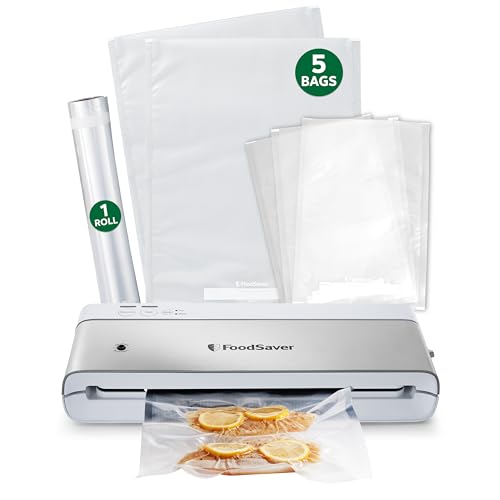
FoodSaver Compact Vacuum Sealer Machine with Airtight Bags and Roll
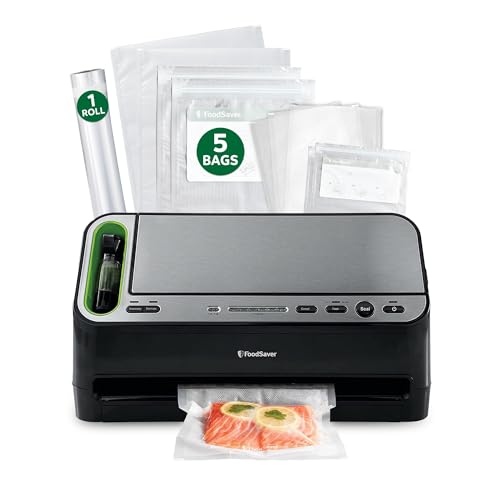
View on Amazon →The FoodSaver V4400 2-in-1 Vacuum Sealer Machine is the model people land on when a plain countertop sealer is not quite enough. It does the ordinary job first: you feed it a bag, it detects the bag on its own, it pulls the air out and heat-seals the end. Then it adds the part the rest of the line makes you buy separately. A retractable handheld sealer lives inside the body, so you can pull it out, put it on a zipper bag or a canister lid, and do a second kind of sealing without a second appliance taking up space.
That convenience is the entire pitch, so be precise about what it buys. The two-in-one layout changes nothing about the fundamentals of an edge sealer. It still pulls air across a seal bar, still fights you on soup, still runs on FoodSaver bag stock. Friction is what it removes. The half-used block of cheese, the chicken you want to marinate in twenty minutes, the canister of nuts: all of it gets fast enough that you actually bother. Set that against a brand whose owner reports point in two directions at once, and this becomes a machine to buy for a specific reason rather than by default.
The short version
One caveat before anything else: almost nobody online names their exact model number, so the durability evidence in this review is brand-level rather than V4400-specific. We treat it that way throughout. The shape of it:
What's good:
- The built-in retractable handheld turns zipper bags and canisters into one-handed jobs, and it lives in the machine instead of a drawer.
- Automatic bag detection makes the countertop side close to foolproof, which matters if more than one person in the house uses it.
- Seal quality on dry and semi-dry food is good, and long-term owners routinely keep bulk meat freezer-burn-free for months.
- A starter kit comes in the box, so the first few sealing sessions do not need a second order.
What's not:
- Durability across the brand is a coin flip. Decade-plus survivors sit right next to owners on their third machine.
- It is still an edge sealer, so soups, marinades, and wet contents need technique or they foul the seal.
- Owners describe warranty and support as a slog, which stings more at this price than on an entry model.
- The handheld only pays off if you actually own zipper bags and canisters; without them you are paying for a feature you will not use.
Who it's for
One question answers this: do you own vacuum canisters and zipper bags, or do you only ever seal bags?
Buy it for:
- A household that already uses vacuum canisters and zipper bags, where the handheld replaces a separate gadget and a separate charging cable.
- Freezer-first cooks who portion bulk meat and batch-cooked food a few times a month and want one machine to cover both bag sizes and small resealable jobs.
- Quick marinating and short-term fridge storage, where the handheld is faster to reach for than opening the full countertop lid.
Skip it if:
- You only ever seal bags. The plain FoodSaver countertop machine does that same job for a lot less money.
- You seal wet food constantly. A Nesco VS-22LB with its liquid-handling design is built for what an edge sealer resents.
- You want the smallest possible footprint or the lowest possible entry price. The FoodSaver Compact is the cheaper, shorter answer.
The specs that matter
FoodSaver sells this model on three claims. What each one means once it is on your counter:
Two-in-one design with a built-in retractable handheld sealer: this is the reason the model exists. One appliance covers full-size bag sealing and the accessory jobs that normally need a separate handheld unit, and because the handheld retracts into the body there is nothing to lose in a drawer or leave uncharged. If you never seal a canister or a zipper bag, this feature is dead weight and you should buy cheaper.
Automatic vacuum sealer bag detection: the machine senses the bag and runs the cycle without you choosing a mode first. That is the single biggest reason first-timers get clean seals, and it is what makes a sealer survive being used by people who did not read the manual.
Starter kit included: bag stock ships in the box, so you can seal on day one. Treat it as a sample rather than a supply. Bag stock is the ongoing cost of owning any FoodSaver, and it is a live part of the value question, not a footnote.
How well it preserves
Underneath the two-in-one packaging is the same job FoodSaver has been doing for decades, which helps, because that job has a long public record. A healthy FoodSaver pulls a solid vacuum and lays a strong seal, and owners keep bulk protein and batch-cooked food in good shape for months. One owner who is hard on equipment puts the volume in perspective:
I’ve had a 3 food savers now over a couple decades. I process hundreds of pounds of gamefish a year, so I’m pretty tough on them. And I basically buy bulk and portion cheese, beef, etc. Not to jinx myself, but the cheapest one I bought is the best so far! Don’t know the Weston brand, but I’m happy with my Foodsaver. Keep both if you have room.
Freezer work is where that seal quality shows up most. Owners who moved from rigid containers to sealed bags describe the switch as a straight upgrade in both space and durability, and the technique they use to get there is worth copying:
Don’t know anything about the Weston but I’ve had a food saver for over ten years. I recently thought it was dead but after a search I bought a new gasket for a few dollars and I was back in business. Can’t complain. Evidently the gasket should be replaced every year or two. I made the mistake of locking the lid down for storage, this is bad on the gasket. Besides souse vid, all the broths and such in my freezer get frozen hard in plastic, then sealed in vac bags. I was tired of plastic tubs getting brittle in the freezer and breaking.
Liquid is where the format stops. An edge sealer draws soup, marinade, and meat juice toward the seal bar, and if it reaches the bar the seal can fail or the mess gets pulled into the machine. Workable, but by technique rather than by design, and experienced owners plan around it:
I’ve been happy with my FoodSaver. I use these 4x1-cup and 2-2-cup silicone molds to freeze stock, soups, stews, and the like and then vacuum-seal them. When doing sous vide with, say, wet-marinated chicken thighs, I’m careful to leave enough head space and elevate the bag, and I generally don’t get seepage.
Some foods stay stubborn no matter how careful you are. Wet, slick items are the classic case, and even a long-term owner who is otherwise happy will tell you certain batches take two passes:
Whenever I seal fresh peeled shrimp with my food saver, it's a crap shoot as to whether or not it will seal properly (most likely I have to try a second time). Everything else I seal, it works great. I've had my food saver for 7 years. My wife seals casseroles and soups without a problem.
On dry and semi-dry food, which is most of what a household actually seals, this does the job well. On wet contents you work around the format, and the handheld does nothing to change that. Good, with a ceiling you can see from here.
Built to last
The FoodSaver record is wildly inconsistent, and that inconsistency is why the number below is the lowest of the three. On one side, owners who have run the same machine for a decade or more with no ceremony at all:
Had a food saver one for 13 years, no signs of slowing down even with terrible maintenance practices. No idea how one would kill one of these.. I've done a lot of terrible stuff to it.
Yeah so I have a food saver for more than a decade and it works like the day I got it, probably the oldest piece of kitchen appliance I’ve owned
Plenty of people describe the brand as the safe default, and note that the survivors are not always the fanciest units in the line:
Food Save is kind of the gold standard... Our old one lasted 15 years, and our new one (4 years) seems to be equally solid. That being said, that seems to be one of the lower end models. Never heard of Weston, though some poking about shows it to be a Hamilton Beach brand.
Newer buyers report the same happy experience, which matters because it means the failures are not universal:
I’ve been seeing so many comments about people’s’ Food Savers breaking. Mine has had no less than 25 uses in the past 6 months and has been perfect everytime
On the other side are failures common enough that you cannot treat them as bad luck. The most cited pattern is a machine that stops holding vacuum, and the most cited frustration is that the part responsible is not something an owner can change:
My FoodSaver doesn't hold a vacuum well enough for the pump to ever decide it's time to stop. There's a rubber gasket that is probably the problem, but it is designed where it cannot be removed / replaced. Either they don't expect this to ever happen or they expect you to just throw the whole thing out and buy a new one when it does. I could kind of understand this on the very cheapest model, but mine wasn't that. Next time, I'll buy a different brand.
Repeat buyers are the ones worth listening to, because they have a sample size and they can name what actually bothered them:
I had 2 food savers. They were good as a starter unit to get me into vacuum sealing. But they both had a lot of shortcomings, mostly involving cleaning and sanitizing. And they were difficult to use with bags that didn't have a wasteful amount of excess plastic. And both of my food savers are now dead. I now have a Weston, although not this model. It's rock solid, doesn't have any of the food saver issues, and sucks much better (in a good way). And it's still working as well as the day I got it.
A recurring theme is that older units were built better, which is uncomfortable given that anything you buy today is a modern unit:
The older ones were way higher quality than modern ones. Mine is also 10+ years old and running great, but the new ones break a lot more.
Bought a FoodSaver about 15 years ago and it was rock solid. About 2 months ago it finally crapped out, so got a new one from Costco. The new one was terrible. Bought an Anova a few weeks ago and, so far, it's actually better than my older FoodSaver.
Liquid ingress is the other killer, and it can happen on the second use rather than the second year:
I bought that food saver one so I could Sous Vide on the road. It died the second time I used it after juices in the bag spilled into a hole next to the sealer and burned out something inside. Made me quite mad.
Then there is what happens after a failure. Support comes up repeatedly, and not kindly:
Dump the FoodSaver. They stop working, and customer service/ warranty build many hurdles in order to replace.
There is a counterweight. Gaskets are the usual culprit, and on many FoodSaver models a gasket is a cheap consumable, as the ten-year owner above found. Owners who stepped up from an entry unit to a higher machine in the same family, the 4800 series in this case rather than the V4400, report the move fixed their complaints:
That particular Food Saver model is just ok. I ended up replacing it with the 4800 series a couple years ago and have had zero complaints with it.
Added up, durability here is a gamble with decent odds. So mind the return window, seal hard for the first two weeks to surface a lemon inside the window, keep liquid off the bar, and store it with the lid unlatched so the gasket does not take a set.
Living with it
This model earns its price difference over a plain countertop sealer in ordinary use, and that is the axis it scores best on. The countertop side is close to thoughtless: the machine detects the bag, runs the cycle, and shuts itself off, so the person in your house who never reads instructions still gets a good seal.
The handheld changes behavior. It retracts into the machine rather than living in a drawer, so it is always there and always charged, and a tool you can reach in two seconds is a tool you use. Zipper bags for the fridge, canisters for coffee and nuts, a quick marinate before dinner. None of those justify opening the full lid. All of them are worth ten seconds with a handheld.
Experienced buyers shop for two specific things: the ability to stop a cycle and seal on demand, and a mode for damp contents. Both come up constantly in cross-shopping threads, because they are what let you control a sealer instead of the reverse:
For me it's important that the gadget has an option to seal a bag end without going through the vacuum cycle. Having a "wet cycle" that uses lower vacuum is helpful for me since almost all of my sealing is for sous vide preparation. Do either one of these have those options?
The automation is usually the first thing to drift as a unit ages. Owners who lose the automatic handoff from vacuum to seal generally keep going on manual, which is a good argument for learning the manual controls early:
Mine no longer automatically switches from Vac to Seal but other than that has kept on trucking for several years.
Bag stock is the recurring cost of ownership and the recurring gripe. Cutting your own from a roll is cheaper per bag than buying pre-cut, which is why cutter-equipped machines get singled out in cross-shopping threads:
Keep the one with the roll cutter. My biggest peeve is custom cutting bags from rolls. The precut bags are expensive.
Committing to a brand-specific bag ecosystem is a running cost that never ends. Put it in the math before you buy at this price tier, not after.
Cleaning is easy to underrate. Wipe the drip channel and the seal bar after anything juicy, because residue there is both a bad-seal risk and a hygiene one. Owners who soured on FoodSavers cite exactly this, and it is fair criticism of the edge-sealer format more than of this model. None of it is hard. Ten seconds of maintenance keeps it happy, and neglect punishes you slowly, which describes most of the kitchen.
How it compares
Four units turn up in the same shopping cart tab as this one, roughly in this order.
Versus the standard FoodSaver countertop machine: same brand, same bag ecosystem, same automatic bag detection, and a much smaller bill. The only thing you give up is the built-in handheld and the accessory jobs it unlocks. If you seal bags and nothing else, that is the smarter buy, and there is a full writeup in the FoodSaver vacuum sealer review.
Versus the Nesco VS-22LB Premium: the upgrade for anyone whose real problem is liquid. Nesco built its liquid-handling system specifically for the failure mode that plagues edge sealers, which is exactly the ceiling described above. It costs about the same as this FoodSaver and trades the handheld for wet-food competence.
Versus the Nesco FreshLock Pro VS-15: the sensible middle. Dry and moist settings, roll storage, and a stainless body at a much lower price than either premium unit. No handheld, no brand-name ubiquity, but it covers the countertop job properly and leaves budget for bag stock.
Versus the FoodSaver Compact: the cheapest way into the same bag ecosystem. It is smaller, simpler, and the right answer for a small kitchen or a first sealer, at the cost of the handheld and some countertop convenience. Buy it if you seal only a few bags a month.
Using it well
Freeze wet or soft food on a tray before sealing so nothing gets crushed or drawn toward the bar. Leave generous headspace above the contents, and lift the front of the machine or set it on a cutting board to buy yourself an extra beat before liquid climbs. Double-seal anything juicy. Wipe the seal bar and drip channel after every messy batch. Store it with the lid unlatched so the gasket keeps its shape, and replace that gasket every year or two as a matter of course rather than reading it as the machine dying.
Use the handheld for what it is good at: resealing zipper bags in the fridge, pulling air out of canisters for coffee, nuts and flour, and short marinades. If pantry jars are the job you actually care about, the format comparison in the guide to the best mason jar vacuum sealer is the place to start, and the FoodSaver containers review covers the canister side. If the format itself is still an open question, the guide to the best vacuum sealer for sous vide and the freezer walks through edge versus chamber, seal strength, and bag cost with this machine in context.
Is the V4400 worth the step up
Only if you own canisters and zipper bags. That one fact decides whether this is a smart purchase or an overpriced bag sealer. Own them and the retractable handheld is a rare convenience feature that changes what you do, because a tool that lives inside the machine gets used and a tool in a drawer does not. Add bag detection that makes the countertop side close to foolproof and you have a sealer covering more of the kitchen than its price tier usually does.
The same thing holds this back that holds back every FoodSaver: durability is a coin flip, and owner accounts of warranty support are grim enough that we would not count on it. Buy it where a return stays trouble-free, seal a stack of bags early to flush out a lemon, keep liquid off the seal bar. Do that and the odds are decent. Expect a convenient, capable everyday sealer with a real chance of an early failure. And if you only ever seal bags, skip it, because you would be paying for a handheld you will never pull out.
Our Ratings
Overall score
On dry and semi-dry food, which is most of what a household actually seals, this does the job well: a solid vacuum, a strong seal, and bulk protein that stays freezer-burn-free for months by owner accounts across the FoodSaver line. The built-in handheld extends that to canisters and zipper bags for shorter-term storage. The ceiling is liquid. Soups and marinades still get drawn toward the seal bar and need technique, and the two-in-one design does nothing to fix that.
The weakest axis, and honestly so. FoodSaver owner reports split hard: decade-plus machines still running with no maintenance sit beside people on their third unit in a few years. The recurring failures are a gasket that stops holding vacuum, liquid pulled into the body, and a sense that older units were built better than current ones. Warranty and support get described as a slog. Gaskets are often a cheap fix, which is the counterweight, but order it somewhere returns are painless and test it hard early.
The reason to pick this model over a cheaper FoodSaver. Automatic bag detection makes the countertop side close to thoughtless. The retractable handheld sits in the machine rather than getting lost in a drawer, and a tool within arm's reach is a tool that gets used. Zipper bags, canisters and quick marinades stop being a production. The drags are wiping the drip channel after juicy batches and the ongoing cost of bag stock.
FoodSaver V4400 Vacuum Sealer Reviews (2026) on Amazon.
What People Are Saying
Community evidence on this machine is brand-level rather than model-specific: owners almost never name a model number, so the comments below describe FoodSaver countertop sealers generally rather than the V4400 alone. Read that way, the picture is consistent and split. A large group is a decade or more into the same machine, some past fifteen years, treating it as a forever appliance and using it hard for bulk meat and freezer work.
A comparable group has burned through two or three, citing gaskets that stop holding vacuum, liquid pulled into the body, and a widely repeated sense that older units were sturdier than current ones. Support after a failure comes up often and rarely kindly. Underneath the split, two things are not in dispute: the seals themselves are good on dry and semi-dry food, and cross-shoppers consistently prioritize the features this model is built around, namely the ability to control the cycle, a mode for damp contents, and not having to buy expensive pre-cut bags.
Reading all of it together, we would buy one and treat the first fortnight as a return-window stress test.
We weight candid owner reports from Reddit and preservation forums above brand-influenced editorial coverage, then reach our own verdict from them. The quotes below are the evidence; the rating and the take are ours.
What Reddit Is Saying
“Had a food saver one for 13 years, no signs of slowing down even with terrible maintenance practices. No idea how one would kill one of these.. I've done a lot of terrible stuff to it.”View thread →
“Yeah so I have a food saver for more than a decade and it works like the day I got it, probably the oldest piece of kitchen appliance I’ve owned”View thread →
“Food Save is kind of the gold standard... Our old one lasted 15 years, and our new one (4 years) seems to be equally solid. That being said, that seems to be one of the lower end models. Never heard of Weston, though some poking about shows it to be a Hamilton Beach brand.”View thread →
“I’ve had a 3 food savers now over a couple decades. I process hundreds of pounds of gamefish a year, so I’m pretty tough on them. And I basically buy bulk and portion cheese, beef, etc. Not to jinx myself, but the cheapest one I bought is the best so far! Don’t know the Weston brand, but I’m happy with my Foodsaver. Keep both if you have room.”View thread →
“I’ve been seeing so many comments about people’s’ Food Savers breaking. Mine has had no less than 25 uses in the past 6 months and has been perfect everytime”View thread →
“I’ve been happy with my FoodSaver. I use these 4x1-cup and 2-2-cup silicone molds to freeze stock, soups, stews, and the like and then vacuum-seal them. When doing sous vide with, say, wet-marinated chicken thighs, I’m careful to leave enough head space and elevate the bag, and I generally don’t get seepage.”View thread →
“Don’t know anything about the Weston but I’ve had a food saver for over ten years. I recently thought it was dead but after a search I bought a new gasket for a few dollars and I was back in business. Can’t complain. Evidently the gasket should be replaced every year or two. I made the mistake of locking the lid down for storage, this is bad on the gasket. Besides souse vid, all the broths and such in my freezer get frozen hard in plastic, then sealed in vac bags. I was tired of plastic tubs getting brittle in the freezer and breaking.”View thread →
“That particular Food Saver model is just ok. I ended up replacing it with the 4800 series a couple years ago and have had zero complaints with it.”View thread →
“Whenever I seal fresh peeled shrimp with my food saver, it's a crap shoot as to whether or not it will seal properly (most likely I have to try a second time). Everything else I seal, it works great. I've had my food saver for 7 years. My wife seals casseroles and soups without a problem.”View thread →
“Keep the one with the roll cutter. My biggest peeve is custom cutting bags from rolls. The precut bags are expensive.”View thread →
“For me it's important that the gadget has an option to seal a bag end without going through the vacuum cycle. Having a "wet cycle" that uses lower vacuum is helpful for me since almost all of my sealing is for sous vide preparation. Do either one of these have those options?”View thread →
“Mine no longer automatically switches from Vac to Seal but other than that has kept on trucking for several years.”View thread →
“My FoodSaver doesn't hold a vacuum well enough for the pump to ever decide it's time to stop. There's a rubber gasket that is probably the problem, but it is designed where it cannot be removed / replaced. Either they don't expect this to ever happen or they expect you to just throw the whole thing out and buy a new one when it does. I could kind of understand this on the very cheapest model, but mine wasn't that. Next time, I'll buy a different brand.”View thread →
“The older ones were way higher quality than modern ones. Mine is also 10+ years old and running great, but the new ones break a lot more.”View thread →
“Bought a FoodSaver about 15 years ago and it was rock solid. About 2 months ago it finally crapped out, so got a new one from Costco. The new one was terrible. Bought an Anova a few weeks ago and, so far, it's actually better than my older FoodSaver.”View thread →
“I had 2 food savers. They were good as a starter unit to get me into vacuum sealing. But they both had a lot of shortcomings, mostly involving cleaning and sanitizing. And they were difficult to use with bags that didn't have a wasteful amount of excess plastic. And both of my food savers are now dead. I now have a Weston, although not this model. It's rock solid, doesn't have any of the food saver issues, and sucks much better (in a good way). And it's still working as well as the day I got it.”View thread →
“Dump the FoodSaver. They stop working, and customer service/ warranty build many hurdles in order to replace.”View thread →
“I bought that food saver one so I could Sous Vide on the road. It died the second time I used it after juices in the bag spilled into a hole next to the sealer and burned out something inside. Made me quite mad.”View thread →
Frequently asked questions
Is the FoodSaver V4400 Vacuum Sealer worth it?
The reason to pick this model over a cheaper FoodSaver. Automatic bag detection makes the countertop side close to thoughtless. The retractable handheld sits in the machine rather than getting lost in a drawer, and a tool within arm's reach is a tool that gets used.
How is the FoodSaver V4400 Vacuum Sealer built?
The weakest axis, and honestly so. FoodSaver owner reports split hard: decade-plus machines still running with no maintenance sit beside people on their third unit in a few years. The recurring failures are a gasket that stops holding vacuum, liquid pulled into the body, and a sense that older units were built better than current ones.
What is the FoodSaver V4400 Vacuum Sealer best suited for?
On dry and semi-dry food, which is most of what a household actually seals, this does the job well: a solid vacuum, a strong seal, and bulk protein that stays freezer-burn-free for months by owner accounts across the FoodSaver line. The built-in handheld extends that to canisters and zipper bags for shorter-term storage. The ceiling is liquid.
What do real owners say about the FoodSaver V4400 Vacuum Sealer?
Community evidence on this machine is brand-level rather than model-specific: owners almost never name a model number, so the comments below describe FoodSaver countertop sealers generally rather than the V4400 alone. Read that way, the picture is consistent and split. A large group is a decade or more into the same machine, some past fifteen years, treating it as a forever appliance and using it hard for bulk meat and freezer work.
Options Worth Checking Out
NESCO VS-22LB Premium Vacuum Sealer with LiquidLock Technology
The upgrade for anyone whose real problem is liquid. Nesco built this one around the failure mode that plagues edge sealers, so soups, marinades and juicy proteins stop being a technique exercise. You trade the handheld for wet-food skill.
FoodSaver Vacuum Sealer Machine with Automatic Bag Detection and Handheld Sealer
The closest cross-shop inside the same family. Same automatic bag detection, same FoodSaver bag stock, far smaller outlay, and it still ships with a handheld for canisters and zipper bags. Buy it if a retractable design is not worth the gap.
Nesco FreshLock Pro VS-15 Stainless Steel Vacuum Sealer
The sensible middle of the shelf. Moist and dry seal modes, onboard roll storage so you cut custom bag lengths instead of buying pre-cut, and a stainless body. No handheld and no brand-name ubiquity, but it covers the countertop job properly.
FoodSaver Compact Vacuum Sealer Machine with Airtight Bags and Roll
The cheapest way into the same bag ecosystem. Smaller footprint, simpler machine, bags and a roll in the box, and the right answer for a small kitchen or a first sealer. You give up the handheld and some countertop convenience to get there.
You Might Also Need
Accessories worth grabbing alongside your purchase

