Your Mylar Bag Lost Its Seal. Is the Food Still Safe? (2026)
By Nora Calloway · Updated November 2026
Independent editorial guide. We never accept payment for coverage, though we may earn a commission if you purchase through our links.
Quick Take
Almost certainly yes, if it is a dry staple and it passes inspection. Rice, beans, pasta, flour and oats do not carry enough moisture for the bacteria that make people ill, so what a failed seal costs you is shelf life and quality rather than safety. The decision is made by looking, smelling and sifting, not by the state of the bag.
Discard it for mold, an off or musty smell, insects or webbing, or damp clumping. None of those, and the food is fine to eat now. What you have actually lost is the decades-long clock: treat it as ordinary pantry food from today and work through it.
Before you reach for a fresh absorber and re-seal it, read the section on that below, because it is the one move in this whole article that can make things worse. See picks for sealing the next batch properly.

You packed it, it went hard as a brick, you felt clever. Months later the bag is soft and you are standing in the garage wondering whether forty pounds of rice is now a write-off.
"To clarify the issue: originally they DID shrink down, like into a brick!! So after looking 4 months later and they are not in that condition..." - u/AGreatMystery
That is the question, and most of what is written about it is either a shrug or a botulism scare. Neither is right. There is a real answer, it is quantitative, and it points somewhere most people do not expect.
Start by giving up on diagnosing it by eye
The instinct is to read the bag: tight means it worked, soft means it failed. Both halves are wrong, and the clearest statement of that comes from a company that sells the bags. PackFreshUSA's own learning pages call the vacuum-packed look a misconception, and go further: there is no reliable way to know whether the absorbers worked once the bag has been sealed. Any confirmation test has to happen before you close it.
Three reasons a leaking bag can still look perfect, all of them documented. The absorber is designed to keep working through a small leak, so a bag can breathe slowly for years while an oversized absorber quietly mops up what comes in. The food itself holds air, and flour can be around half air by volume, so the roughly 21 percent of the atmosphere that is oxygen vanishes into the product without visibly shrinking anything. And some absorber chemistries give off carbon dioxide in roughly the same volume they take in oxygen, so the net change is close to nothing.
Run it the other way and a soft bag proves just as little. Plenty of correctly sealed bags never brick at all, which is a question we take apart in our guide to checking whether your oxygen absorbers are still good. So stop interrogating the packaging. Open it and look at the food.
What would have had to happen for this to be dangerous
This is the part nobody quantifies, and once you see the numbers the anxiety mostly evaporates. Microbial growth is governed by water activity, which is roughly how much of the moisture in a food is available to organisms rather than bound up in it. Kansas State Research and Extension publishes the ladder:
- Around 0.80 water activity: most molds. K-State puts flour, rice and pulses in this band once they reach roughly 15 to 17 percent moisture.
- Around 0.86 to 0.91: Staphylococcus aureus, lower in air than in the absence of it.
- Around 0.93: Clostridium botulinum, which FDA puts at approximately that figure and notes can be higher depending on the product.
- Below about 0.50: no microbial proliferation at all. K-State gives pasta at about 12 percent moisture as its example.
Read the order carefully, because it is the whole answer. Mold is reached first, and by a wide margin. A bag of rice would have to take on enough moisture to pass roughly 0.80 and keep going for a long way before anything more serious than mold became possible, and mold is the one thing on that list you can see. The inspection is the safety test. There is no hidden second test you are failing to perform.
Why botulism is the wrong thing to be frightened of here
It is the fear that drives most of these threads, and for this particular scenario it is pointing backwards.
Clostridium botulinum is an obligate anaerobe. It needs an absence of oxygen, and it needs moisture at roughly 0.93 water activity. A dry staple was never anywhere near the moisture figure, and a seal that failed has let air in, which moves the package away from the condition the organism requires rather than towards it. Utah State Extension puts the direction of the risk plainly when it warns that vacuum packaging increases the ability of botulism bacteria to grow, by removing oxygen.
That warning is real and worth respecting, but notice what it is about: sealing moist food into a low-oxygen package. It is a warning about packing, not about a package that failed. The same caution is why the rule for this method has always been dry, low-oil foods only, which we go through in what not to store in mylar.
So the honest position is that a failed seal on dry staples is a quality event. We are not going to manufacture a safety scare out of it, and anyone who tells you a soft bag of rice is a botulism risk has the mechanism inverted.
What to actually check before you eat it
Open it in good light, tip some onto a tray or a baking sheet, and spread it out. Extension guidance on stored dry food is consistent about what you are looking for, and this list is the decision:
- Mold of any kind. This is a discard, not a trim. Some molds are toxic, and the toxins they leave behind survive cooking, so neither scooping nor boiling rescues it.
- Off, musty or sour smells. A clean staple smells of almost nothing.
- Insects, larvae, or fine silk webbing across the surface. Webbing is the giveaway that the pantry-moth family has been living in there.
- Clumping, caking, or a loss of crispness. That is reabsorbed moisture, and it is the signal that matters most, because moisture is the thing that moves you up the ladder in the previous section.
- Rancid, crayon-like or paint-like smells in anything oily. Brown rice, whole wheat flour, nuts and granola carry their own fats and go off on their own schedule.
If none of that is present, the food is fine. Rancidity is the one judgment call, and it is a palatability question rather than a safety one. No extension or federal discard list we could find names rancidity as a reason to bin dry staples. It tastes unpleasant and the quality is gone; it is not an illness risk.
One honest limitation to hold alongside the list. Mold is visible, which is what makes this work, but mycotoxins are not reliably visible even when mold is present, and that is precisely why the rule is discard on sight of mold rather than cut around it. That is as far as the evidence goes. There is no consumer guidance suggesting a hidden toxin problem in home-stored rice and beans that showed no mold at all.
What probably went wrong
Worth knowing, because every cause here is preventable next time, and the failures cluster at the seam rather than in the middle of the film.
Channels in the seal. This is the big one, and it has a formal name: a channel leaker is a path of non-bonded material running across the width of a seal. The food industry also tracks wrinkles folded into the seal area and contaminated seals, where grease, moisture or a few grains of product sit in the seam and stop it bonding. Anyone who has squinted at a fresh seal has seen it:
"I'm using the harvest right impulse sealer and these are the seals on my Mylar bags and it looks like they're a little creases and channels. Are these acceptable? Or do I need to do something different? For example should I seal it twice right over the same spot to get rid of these?" - u/delta44j
The fix is better than re-ironing the same line, and one commenter here has the right instinct:
"I always do two seals along side , not on top of each other. The chance of the same crease chanel is greatly reduced" - u/stephenph
Two parallel seals rather than one doubled seal is sound reasoning, because a channel is a defect in a specific line and running a second line somewhere else does not inherit it. Wipe the seal zone before you close it, too; that is the documented contaminated-seal failure and it costs nothing to avoid.
Punctures from the food itself. People assume the bag got snagged in storage. Often the contents did it on the way in:
"Some foods are sharp enough to pop the vac seal bags. I vacuum sealed dry rice and found that in 20% of the bags, the rice had poked a hole. I was running the vacuum all the way to completion. The ends of the grain appeared to have been causing the problem." - u/PossibleMicrophone
Dry pasta and rice both end in hard points, and a bag pulled tight around them is a bag pressed onto a few thousand small spikes. Thicker film helps, and so does not drawing the bag down hard onto sharp contents:
"7 mil is very thick and unless you were tossing them about there shouldn't be pinholes in the bags." - u/kfmoses4
Flex cracking. Folding and flexing foil laminate does initiate pinholes, and it does measurably degrade the barrier. We want to be careful about how far that goes, though, because it gets overstated into the bag secretly being useless. The one quantified source we found bounds it the other way: transmission through those pinholes was less than what passes through the exposed sealant edges of the seal itself. So treat creasing as a reason to handle bags gently and to keep them supported, not as a reason to distrust an unfolded bag.
Something chewed it. Mylar is an excellent barrier against exactly two things, and teeth are not among them:
"Mylar is absolutely impermeable to water vapors and air. However, it is not impermeable to mice and rats. I would not store in totes for that reason alone." - u/school_marm
"Mylar is a neat material. its not infallible and it is not verminproof. The food storage bags are typically lined with aluminum." - u/GunnitRust
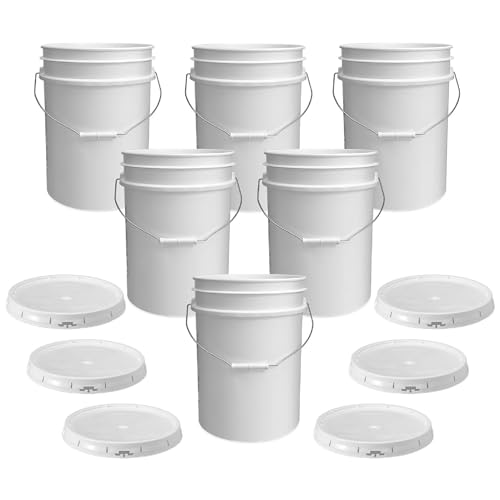
Both are right, and the insect literature agrees about the route: most stored-product infestations come in through seams, closures and existing damage rather than by chewing fresh holes, and newly hatched larvae can pass through a gap a tenth of a millimeter across. A failed seal is an open door. That is the argument for the bucket, which does nothing for oxygen and everything for teeth.
You did not lose the food. You lost the number.
This is the reframe we would want someone to give us. The twenty-five or thirty year figures attached to mylar storage are not properties of rice. They are properties of rice in an intact, oxygen-free, moisture-proof package. Remove the package and the number goes with it, which is why nobody can tell you how long the contents have left: a bag might have leaked slowly for five years with the absorber keeping pace, or vented freely for a month after the absorber saturated, and nothing you can observe separates those two histories.
So stop trying to recover the estimate and use the one that applies now. Treat it as ordinary pantry food from today. Nebraska Extension's room-temperature figures are the ones to work to: white rice about two years, pasta one to two, dried beans and lentils one to two, white flour six to twelve months unopened, whole wheat flour three to six, oatmeal about twelve. Eat the oily items first, because they are the ones on the shortest clock.
Even that is conservative rather than a cliff. Brigham Young researchers assessed thirty-four-year-old split peas whose headspace oxygen had drifted all the way back to roughly air levels, and more than three quarters of their sensory panel still judged them acceptable for emergency use. That is the closest published analogue to a bag that lost its seal, and it came back fine.
While we are retiring numbers: the claim that brown rice lasts six months has no authoritative source behind it. The extension tables that separate brown from white put brown rice at one to two years. It is shorter, not forty times shorter.
Should you add a fresh absorber and re-seal it?
Usually no, and this is the one place where the popular advice can actually make things worse rather than merely waste your time.
No manufacturer we could find addresses re-sealing at all. Not the absorber makers, not the bag makers. The cut-below-the-old-seam-and-add-a-new-absorber routine circulates on blogs and in threads and has no published backing, so nobody should be telling you it is the manufacturer-approved move.
The deeper problem is what you would be doing. A bag that has been exchanging with room air may have taken on moisture, you cannot measure how much at home, and re-sealing puts possibly-damper food into a deliberately low-oxygen package. That is the exact combination the botulism warning is actually about, and absorbers do not inhibit anaerobes. Having spent this article explaining that a failed seal moved the food away from that risk, it would be perverse to then walk it back in.
NCHFP's own wording on moisture-affected dried food names the simpler option first: use it immediately, or redry and repackage. Take the first one. If the food is sound and you cannot eat it quickly, move it to something rigid and keep it in rotation rather than re-burying it:
"I have rows of large jars of rice - when you open one, you just re-seal it after. Same for beans, pasta, flour, etc. couldn’t be happier with this system." - u/spectaphile
There is a real cost to repeatedly opening a long-term package, and it is worth designing around rather than fighting:
"If you constantly open and reseal you are sabotaging the life of the product. Either divide some of the product out into smaller containers before sealing or don't use as large of an amount of the product when sealing." - u/Many-Health-1673
Which is the practical lesson for the next batch. Pack in portions you will actually finish, not in the largest bag that fits the bucket.
Catching the next one early
The useful habit costs nothing and turns a four-month mystery into a four-day fix, because a seal that is going to fail usually fails fast:
"When you bag them check them after a week and then a month. Rebag or use any that have lost the vacuum." - u/sabotthehawk
That is the right protocol. Check at a week and again at a month, while you still remember what went into which bag and while re-doing one is trivial. A bag that is still holding at a month is very unlikely to fail on its own in year three; what fails later is almost always physical, which is to say handling, flexing, or something with teeth.
And mark your bags. Nothing in this article is answerable without knowing what the contents are and when they went in, and an unlabeled bag of white powder is a decision you cannot make.
One non-failure worth recognizing before you panic about it, because it looks dramatic and is completely benign:
"If you store sugar or salt in mylar bags, no need to put in oxygen absorbers, simply seal in the bags. If you put in 02 absorbers, it will turn the salt and sugar into bricks. The sugar will also taste off." - u/savoy66
Exactly so. Sugar and salt set into a solid block in a low-oxygen package, and that is a texture problem rather than spoilage. They also do not need an absorber in the first place.
Open it, look, then decide
Open it, tip it out, and look. Mold, smell, insects, webbing or damp clumping means it goes. Anything else and you have a perfectly good bag of rice with an ordinary pantry life ahead of it, so move it into the kitchen rotation and eat it.
Do not re-seal it as a reflex, do not throw it away because the bag went soft, and do not spend any more time interrogating the packaging, which the people who make it will tell you cannot answer the question. For the next batch: wipe the seam, run two parallel seals, pack in portions you will finish, put the bags in a bucket for the sake of the things with teeth, and check them at a week and a month. Our guide to sealing mylar bags properly covers the technique, and the mil-thickness question covers the film.
Recommended
Products related to this guide.


What owners say
Real owner reports from the threads and editorial sources we drew on for this guide.
“To clarify the issue: originally they DID shrink down, like into a brick!! So after looking 4 months later and they are not in that condition...”
— r/preppers / u/AGreatMystery
“I'm using the harvest right impulse sealer and these are the seals on my Mylar bags and it looks like they're a little creases and channels. Are these acceptable? Or do I need to do something different? For example should I seal it twice right over the same spot to get rid of these?”
— r/preppers / u/delta44j
“I always do two seals along side , not on top of each other. The chance of the same crease chanel is greatly reduced”
— r/preppers / u/stephenph
“Some foods are sharp enough to pop the vac seal bags. I vacuum sealed dry rice and found that in 20% of the bags, the rice had poked a hole. I was running the vacuum all the way to completion. The ends of the grain appeared to have been causing the problem.”
— r/preppers / u/PossibleMicrophone
“7 mil is very thick and unless you were tossing them about there shouldn't be pinholes in the bags.”
— r/preppers / u/kfmoses4
“Mylar is absolutely impermeable to water vapors and air. However, it is not impermeable to mice and rats. I would not store in totes for that reason alone.”
— r/preppers / u/school_marm
“Mylar is a neat material. its not infallible and it is not verminproof. The food storage bags are typically lined with aluminum.”
— r/preppers / u/GunnitRust
“I have rows of large jars of rice - when you open one, you just re-seal it after. Same for beans, pasta, flour, etc. couldn’t be happier with this system.”
— r/preppers / u/spectaphile
“If you constantly open and reseal you are sabotaging the life of the product. Either divide some of the product out into smaller containers before sealing or don't use as large of an amount of the product when sealing.”
— r/preppers / u/Many-Health-1673
“When you bag them check them after a week and then a month. Rebag or use any that have lost the vacuum.”
— r/preppers / u/sabotthehawk
“If you store sugar or salt in mylar bags, no need to put in oxygen absorbers, simply seal in the bags. If you put in 02 absorbers, it will turn the salt and sugar into bricks. The sugar will also taste off.”
— r/preppers / u/savoy66