Can You Store Food in the Garage? (2026)
By Ruth Alvarez · Updated November 2026
Independent editorial guide. We never accept payment for coverage, though we may earn a commission if you purchase through our links.
Quick Take
Dry staples in sealed bags, usually yes. Canned jars, usually no. The deciding number is 85F: federal guidance says keep shelf-stable food below it, and NCHFP tells you never to store canned jars above 95F. A garage that stays under 85F and dry is not prohibited by anything we could find. One that bakes to 110F in July is a bad place for jars and a mediocre one for everything else.
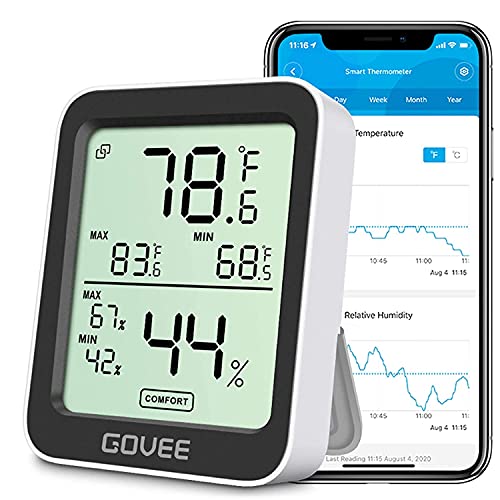
So this is a thermometer question, not a room question. Put a cheap min and max thermometer with a humidity readout in the space and leave it there through a summer and a winter. You are looking for two things: does it break 85F, and does it sit above 60 percent humidity.
One rule that is worth more than the rest: dry food and canned food behave oppositely in the cold, and the cold is where people get hurt. See picks for the measuring kit.

The question arrives the moment a deep pantry outgrows the kitchen, and it arrives in the same form every time:
"I'm struggling to find a good place to store extra food in the house. I don't have a basement, the pantry in the kitchen is very small. Is the attic or garage an okay place? I live in Nashville, TN so it does get very hot and humid in the summer for the garage and the attic." - u/hnn7
The internet answers this badly in both directions. One camp says a garage is fine and waves at a shelf of buckets. The other says never, usually citing an extension article that turns out to be about refrigerated leftovers on a porch in winter. Neither has looked at what the agencies actually publish, which is specific, numerical, and more permissive than the second camp and much less permissive than the first.
It is a thermometer question, not a room question
No authority we could find prohibits a garage. What they prohibit is a set of measurable conditions, and those conditions can occur in a garage, an attic, a basement or a spare room. USDA's food safety service names the defect precisely when it tells you never to put shelf-stable food in a damp garage or basement, or anywhere exposed to high or low temperature extremes, and adds that temperatures below 85F are best. The objection is the damp and the extremes, not the room.
So the useful move is to stop arguing about the room and go measure it. The owners who have actually thought about this end up in the same place:
"areas that are not temperature controlled aren't great for food storage. My solution was to move things that can deal with temperature fluctuations out to the garage to make space indoors for my deep pantry. So instead of a linen closet, my linens live in totes in the garage, and my linen closet is now food storage." - u/TastyMagic
That swap is the smartest answer in these threads and we would repeat it as the default: the linens and the out-of-season coats can take 105F and a damp winter; the rice cannot. If you have any climate-controlled closet at all, the food should be in it and something else should be in the garage.
"Do you have a coat closet or a hallway linen closet? Hang your coats on a rack by the door/store your spare sheets and towels in bins under your bed and use that dry, dark, household-temperature space for food storage." - u/hellhound_wrangler
"If you have a closet that’s mostly used for long-term storage items, can those items safely be stored in an attic? If so, move those and convert the closet to your food prep storage." - u/Mountain-Status569
The temperature rule everyone repeats has no source
You will meet a figure that says shelf life halves for every ten or eighteen degrees of warming, usually credited to the USDA. We went looking for it and could not find a USDA document that says it. The attribution traces to Utah State University Extension, which states that for every 10.8 degrees of temperature rise the shelf life of stored food is halved, and gives no citation. Two different USU publications give two different intervals, which is itself a tell.
The rule is also actively misleading, and the evidence is USDA's own. Its shelf-stable storage chart publishes a measured ladder for MREs: 120F for one month, 100F for a year and a half, 90F for two and a half years, 80F for four years, 70F for four and a half, 60F for seven. Work the arithmetic on those and the implied halving interval is nowhere near constant.
- Between 70F and 80F the published figures barely move. That is the band most people worry about, and it is the band that matters least.
- Between 100F and 120F the shelf life collapses from eighteen months to one. That is a cliff, and it is the part the rule of thumb flattens into nothing.
The practical reading is the opposite of what the folklore implies. Do not agonize over whether the pantry is 68F or 74F. Do care, a great deal, whether the space tops 100F in August. That is the one range where the published numbers fall off a shelf.
Utah State also publishes the comparison that makes this concrete: wheat held acceptable quality for about 25 years stored cold in a basement, against about 5 years stored hot in a garage or attic. We would hold that figure a little loosely, since it traces to a conference abstract rather than a peer-reviewed paper, but the direction is not in doubt.
The numbers that are actually published
These are the lines to measure your space against, and they come from three separate authorities:
- Below 85F is best for shelf-stable food, per USDA FSIS. This is the single most useful threshold in the article.
- Between 50F and 70F for best quality in home-canned jars, per NCHFP.
- Never above 95F for canned jars, per NCHFP, which adds that under those conditions food will lose quality in weeks or months and may spoil. It names an uninsulated attic explicitly.
- Above 100F the risk of spoilage in canned goods jumps sharply, per FSIS.
- Below 60 percent relative humidity, per the Pacific Northwest extension guide, which ties the number to food that is not in airtight containers.
Notice that the strict numbers all attach to canned goods. A garage is a quality question for dry staples in sealed bags and a spoilage question for jars, and those deserve different answers.
"So I have food in mylar bags with oxygen absorbers. My worry though is the varying temps in the garage. In Scotland it can vary from 3 degrees Celsius to 25 in the summer in there." - u/Inevitable_Sir_4739
A 3C to 25C swing is about 37F to 77F, which never breaks 85F and never freezes. For mylar-packed dry goods that is a perfectly reasonable garage, and we would not move it. The same bags in Phoenix would be a different conversation, which is the whole point of measuring rather than generalizing.
Dry food and canned food go opposite ways in the cold
If you take one thing from this article, take this, because it is the only place where getting it wrong can actually hurt someone.
Dry staples do not care about freezing. Utah State says it in as many words: dry foods can freeze without concern. Rice, beans, pasta, flour and oats are not damaged by an unheated garage in January. Freezing is in fact the published method for killing insects in stored grain, usually given as several days at 0F, so a cold snap is doing you a small favor rather than a harm.
Canned food is the reverse, and the problem is the container. Water expands as it freezes and the jar or can is what gives way. NCHFP is reassuring about the food itself, saying accidental freezing will not cause spoilage unless jars become unsealed and recontaminated, though freezing and thawing may soften the contents. It suggests wrapping jars in newspaper and boxing them if they must be stored somewhere they might freeze.
For commercial cans, USDA gives decision rules worth memorizing, because they are the actionable part:
- A swollen can goes in the bin, with no further thought. It may have swelled from freezing, or from Clostridium botulinum, and you cannot tell which.
- A can that is not swollen but thawed at 40F or above also goes in the bin.
- A can that thawed and refroze is not safe.
- A can that is still frozen and intact is fine. Thaw it in the refrigerator and use it.
So an unheated garage in a cold climate is fine for the sacks and bad for the jars. Those are two different storage problems and they want two different rooms.
What people are actually worried about, in order
Ask anyone who has lost a stockpile and heat is rarely the first thing they mention:
"I have a garage that is subject to extremes of heat and cold. Moisture is not a problem, though. Of course, mice do get in there." - u/DutchOvenCamper
"Besides mice and bugs the only other big killer for storage is moisture. A dehumidifier might take care of a lot of issues." - u/JoeIsHereBSU
That ranking is right, and it matches the published guidance better than the temperature obsession does. Dampness is what corrodes lids, breaks seals and lets contamination back into a jar, which is why USDA's objection names a damp garage rather than a warm one. A dehumidifier in a basement does more for stored food than moving it upstairs.
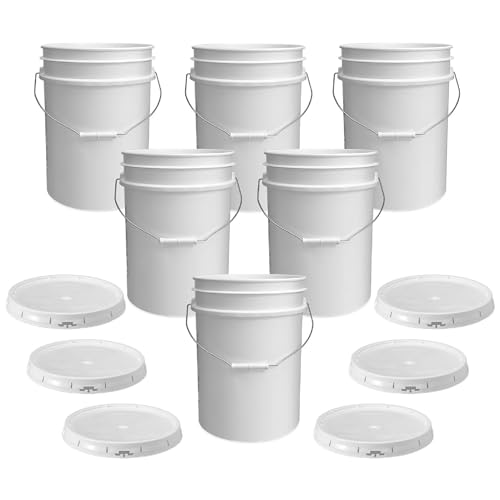
And the one mylar cannot solve. Utah State is blunt about it: even though there is a metallic layer in the bag, rodents can easily chew into it. A mylar bag is an excellent barrier against oxygen and water vapor and no barrier at all against teeth. That is the argument for putting the bags inside buckets, which do nothing for oxygen and everything for rodents. Our guide to buckets versus mylar bags works through the pairing.
"I personally wouldn’t store any food items in the garage. The temps would worry me. I also grew up in an area where nasty creatures like palmetto bugs, so I’m kinda traumatized." - u/International_Cod216
The attic is the one place to be firm about
Garages vary enormously. Attics mostly do not, which is why this is the one room we will not hedge about. NCHFP names an uninsulated attic specifically on its do-not list for canned goods, alongside hot pipes and direct sunlight.
The measured numbers support that. In published monitoring of a typical summer day, a vented attic peaked at about 121F while a sealed, unvented attic in the same study stayed near 88F. The 140F and 150F figures that circulate for attics did not survive checking, so take about 120F as the working number for a conventional vented attic. That is already well past every threshold in this article.
A conditioned or sealed attic is a different space and may be perfectly reasonable. An ordinary vented one is the worst room in the house for food, and worse than the garage directly beneath it.
Concrete floors, and one piece of folklore
The advice to keep food off a concrete floor is real and published. The reason given is always the same one, and it is not the one you have probably heard.
The documented mechanism is moisture. Concrete wicks water by capillary action regardless of gravity, and extension guidance on storing wheat says plainly that concrete can wick moisture to stored containers very easily. For metal cans the consequence is rust, and a rusted seam is how dampness eventually gets inside. Standard guidance is a shelf a few inches up, and getting anything in cardboard off the slab entirely.
What we could not support is the version where concrete leaches chemicals through plastic into your food. We looked for it and found nothing from any agency or extension service in either direction, and FDA's own Food Code points the other way: its six-inch rule exempts cased food in waterproof containers, which may be stored on a floor that is clean and not exposed to floor moisture. A sealed bucket on dry concrete has no documented mechanism of harm.
"I store in my garage in these ceiling mounted storage shelves. The cement slab acts like a heat sink in the summer and I'm not sure cold is an issue for freeze dry." - u/Powerful-Context9671
Worth noting the instinct there is half right and half backwards. A slab is a thermal mass, so it damps the daily swing rather than driving it, and near the floor is usually the most stable spot in a garage, not the worst. Ceiling-mounted shelves are the opposite: they put food in the hottest air in the room. If you are storing high to save space, that is the trade you are making.
On vehicle exhaust, which comes up constantly: we found no published guidance at all, in either direction. We are not going to invent a mechanism to fill the gap.
Measure first, then sort by risk
Measure before you move anything. A min and max thermometer with a humidity readout, left in the space for a year, answers this question better than any article can, because it answers it about your garage rather than the average one. You are looking for whether it breaks 85F and whether it sits damp.
Then sort by what is actually at risk. Canned jars want the most stable, coolest space you own, and if that is a closet then something else is moving out of the closet. Dry staples in sealed bags are far more tolerant and are the right candidate for a garage that runs warm in August or cold in January, because freezing does not touch them. Put the bags in buckets for the rodents, get everything off bare concrete, and run a dehumidifier before you run an air conditioner.
"I wouldn’t put food items, pu/silicone coated fabrics (tents, tarps, rain jackets, goretex), bleach, medicines, and or electronics in the garage." - u/jayhat
That is a defensible position for a hot climate and we would not argue with it for canned goods. For sealed dry staples in a garage that measures under 85F, we think it is more cautious than the published numbers require. Either way, the thermometer decides it, not the label on the door. If you are still choosing packaging, our guide to what not to store in mylar and the food storage planner cover the other half of the problem.
Recommended
Products related to this guide.

What owners say
Real owner reports from the threads and editorial sources we drew on for this guide.
“I'm struggling to find a good place to store extra food in the house. I don't have a basement, the pantry in the kitchen is very small. Is the attic or garage an okay place? I live in Nashville, TN so it does get very hot and humid in the summer for the garage and the attic.”
— r/preppers / u/hnn7
“areas that are not temperature controlled aren't great for food storage. My solution was to move things that can deal with temperature fluctuations out to the garage to make space indoors for my deep pantry. So instead of a linen closet, my linens live in totes in the garage, and my linen closet is now food storage.”
— r/preppers / u/TastyMagic
“Do you have a coat closet or a hallway linen closet? Hang your coats on a rack by the door/store your spare sheets and towels in bins under your bed and use that dry, dark, household-temperature space for food storage.”
— r/preppers / u/hellhound_wrangler
“If you have a closet that’s mostly used for long-term storage items, can those items safely be stored in an attic? If so, move those and convert the closet to your food prep storage.”
— r/preppers / u/Mountain-Status569
“So I have food in mylar bags with oxygen absorbers. My worry though is the varying temps in the garage. In Scotland it can vary from 3 degrees Celsius to 25 in the summer in there.”
— r/preppers / u/Inevitable_Sir_4739
“I have a garage that is subject to extremes of heat and cold. Moisture is not a problem, though. Of course, mice do get in there.”
— r/preppers / u/DutchOvenCamper
“Besides mice and bugs the only other big killer for storage is moisture. A dehumidifier might take care of a lot of issues.”
— r/preppers / u/JoeIsHereBSU
“I personally wouldn’t store any food items in the garage. The temps would worry me. I also grew up in an area where nasty creatures like palmetto bugs, so I’m kinda traumatized.”
— r/preppers / u/International_Cod216
“I store in my garage in these ceiling mounted storage shelves. The cement slab acts like a heat sink in the summer and I'm not sure cold is an issue for freeze dry.”
— r/preppers / u/Powerful-Context9671
“I wouldn’t put food items, pu/silicone coated fabrics (tents, tarps, rain jackets, goretex), bleach, medicines, and or electronics in the garage.”
— r/preppers / u/jayhat