5-Gallon Bucket vs Mylar Bag: Do You Need Both for Food Storage? (2026)
By June Park · Updated October 2026
Independent editorial guide. We never accept payment for coverage, though we may earn a commission if you purchase through our links.
Quick Take
Use both, because they do completely different jobs. The Mylar bag, sealed with an oxygen absorber, is the airtight barrier that actually preserves your food for 25-plus years. The bucket is physical armor: it stops crushing, punctures, and rodents. Neither one replaces the other. A bare bucket isn't airtight enough to hold food for decades, and a bare Mylar bag punctures too easily to trust on its own.
Here's the money-saver almost nobody tells you: once your food is sealed inside Mylar, the bucket never touches it, so the bucket does not need to be food-grade. Any clean bucket works, including a cheap hardware-store pail or a free one from a grocery bakery. Food-grade only matters when food goes straight into the plastic.
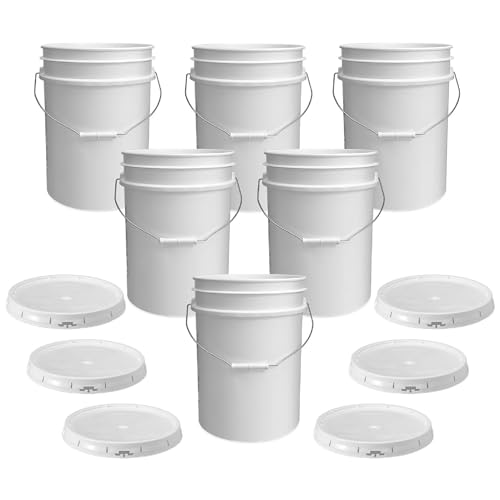
Below is the Mylar-and-absorber kit that does the preserving, a bucket for the armor, and a gamma lid for the ones you open often. See picks ↓

It's one of the first things that confuses people setting up long-term food storage: you see rice and beans sealed in shiny Mylar bags, and you also see them packed into 5-gallon buckets, and it's not obvious whether you need one, the other, or both. Buy wrong and you either waste money on gear you don't need or, worse, trust food to a setup that won't actually keep it.
The confusion is fair, because the two look like they do the same thing and they don't. One is an airtight barrier; the other is a hard shell. Once you see which job each one handles, the whole question answers itself, and a couple of the standard assumptions, like needing expensive food-grade buckets, turn out to be wrong.
So here's the honest breakdown: what the bag does, what the bucket does, where you can save real money, and how people who've packed a pantry's worth of both actually set it up.
The short answer: use both, for different jobs
The bag and the bucket are not competitors; they're a team, and each covers the other's weakness. The Mylar bag plus an oxygen absorber makes the airtight, light-blocking, low-oxygen environment that keeps rice, beans, and wheat edible for decades. The bucket wraps that bag in a rigid shell so nothing crushes, punctures, or chews through it. Skip the bag and your bucket isn't airtight; skip the bucket and your bag is one dropped can away from a hole. The question that kicks this off is usually about whether the bucket has to be anything special:
are food grade buckets a necessity if I’m putting the food into Mylar bags and then the bags into the buckets?
The short version of the answer is no, and we'll get to why. First, here's how the two roles split.
| Mylar bag + oxygen absorber | 5-gallon bucket | |
|---|---|---|
| Its job | The airtight barrier that preserves the food | Physical armor: crushing, punctures, rodents |
| Airtight on its own? | Yes, once heat-sealed | No, a bucket slowly breathes |
| Preserves food alone? | Yes, but it punctures easily unprotected | No, not airtight enough for the long haul |
| Must be food-grade? | Yes, the food touches it | No, if the food is sealed in Mylar first |
What the Mylar bag actually does
The bag is the part that preserves the food, full stop. Heat-sealed around an oxygen absorber, Mylar blocks oxygen, light, and moisture, the three things that age dry staples, and drops the oxygen inside low enough that the food effectively stops oxidizing. That's what buys you 25-plus years on white rice and beans kept somewhere cool (heat shortens it; a hot garage is closer to a decade than to thirty years). A bucket alone can't do this, which is exactly the mix-up new storers run into:
I have 5 gallon food safe buckets and oxygen absorbers, not sure if I need to portion the flour (white) into mylar bags or if the bucket is good enough
The answer to that one is that the bucket is not good enough on its own. A snap-lid bucket is not an airtight, oxygen-free environment; it slowly exchanges air with the room, so an oxygen absorber tossed loose in a bare bucket just wears itself out against the leak. The food needs to be sealed in Mylar for the absorber to do its job. If you're sorting out the absorber side, our guide to how many oxygen absorbers you need covers the counts.
What the bucket actually does
The bucket earns its place as armor, not as a preserver. Mylar is a thin film, and while it's tougher than it looks, it will puncture, especially with sharp grains inside or a hard knock outside. A rigid bucket takes that abuse so the seal survives, and it keeps rodents off the bag, which no thickness of Mylar reliably stops. The people who insist on the bucket are thinking about exactly these failure modes:
What if there's an earthquake? Flood? Some mylar bags can fairly easily puncture.
That's the case in a sentence: the bag can fail to a puncture, and the bucket is cheap insurance against it. It also makes the food stackable and easy to move, and it turns a floppy bag into something you can actually organize a pantry around.
The money-saver: your bucket doesn't need to be food-grade
This is the part that saves real money and that the companies selling food-grade buckets are quiet about. Food-grade plastic matters when food sits directly against it, because it's certified so that anything migrating out of the plastic stays within safe limits. But when your rice is sealed inside a Mylar bag, it never touches the bucket at all, so the bucket is just a box. Any clean bucket does the job:
So food grade buckets are best. Home depot sells them. Really any new clean bucket is fine since the mylar bag keeps the food from it. Only downside is the secondary uses for the bucket are more limited.
Longtime storers say the same thing plainly: pay the small premium for food-grade only if the food goes straight into the plastic, not when it's bagged first.
need to be food safe specifically if you are storing in mylar (they are slightly more expensive). Only if you are pouring the food in and it's touching the plastic.
So a hardware-store bucket from Home Depot or Lowes is perfectly fine for holding Mylar-sealed food, at a few dollars less than the certified white ones. Two guardrails, though. The safety here rests entirely on the Mylar seal, so use a genuinely clean bucket that has never held chemicals, solvents, fuel, or strongly scented products, because Mylar is an excellent vapor barrier but not a perfect one. And a non-food-grade bucket is a worse choice for its second life, so if you think you'll later repurpose it to hold food or water directly, buy food-grade and keep your options open.
Where to get buckets cheap, or free
Since the bucket is just a shell, this is a place to spend as little as possible. New buckets from a hardware store run a few dollars. Cheaper still is asking around, because plenty of businesses get bulk ingredients delivered in sturdy buckets and throw them out:
a trick commonly mentioned around here is to ask the bakery in your local grocery store for a spare bucket. They go through a lot of food grade buckets (various ingredients are delivered in them).
Grocery-store bakeries and delis are the classic source, and many will hand over clean buckets for nothing if you ask. Wash them well, make sure any lingering smell is gone before you commit food to one, and you've got your armor for free. Put the money you saved toward better Mylar and more absorbers, which are the parts that actually preserve the food.
One 5-gallon bag or five 1-gallon bags?
If there's a genuine best-practice beyond "use both," it's this: pack several smaller bags into the bucket rather than one giant one. The reason is access. A single 5-gallon bag means that the moment you open it, the entire twenty-plus pounds inside is now exposed and the clock starts. Smaller bags let you open one, use it, and leave the rest sealed:
Does everyone use a single large 5 gallon bag in a bucket or do people use multiple smaller Mylar bags? I’d like to be able to reach in and grab smaller amounts and not have to open the full 5 gallon bag.
Five 1-gallon bags in a 5-gallon bucket is the setup most experienced storers land on. You keep the bucket's protection and capacity, but you break the food into portions you can open one at a time, so a single opened bag doesn't put your whole reserve on the clock. Add a gamma lid to that bucket and it becomes a screw-off canister you can dip into without prying a lid every time.
What to buy for the deep pantry
Spend on the parts that preserve the food and save on the part that just holds it. Buy quality Mylar bags and oxygen absorbers, portion your staples into 1-gallon bags, and drop those into any clean bucket, food-grade if you want the option to reuse it for food later, a cheap or free bucket if you don't. Top it with a gamma lid for anything you'll open regularly, and you've built the exact system the long-term-storage world runs on, for less than the gear ads suggest.
From there it's about the details: the right Mylar thickness for your foods, the oxygen-absorber count for your bags, and how long each staple actually lasts once it's sealed.
Recommended
Products related to this guide.


What owners say
Real owner reports from the threads and editorial sources we drew on for this guide.
“are food grade buckets a necessity if I’m putting the food into Mylar bags and then the bags into the buckets?”
— r/preppers / u/Anxi0usEspress0
“I have 5 gallon food safe buckets and oxygen absorbers, not sure if I need to portion the flour (white) into mylar bags or if the bucket is good enough”
— r/preppers / u/Salines_Beach
“What if there's an earthquake? Flood? Some mylar bags can fairly easily puncture.”
— r/preppers / u/user381035
“So food grade buckets are best. Home depot sells them. Really any new clean bucket is fine since the mylar bag keeps the food from it. Only downside is the secondary uses for the bucket are more limited.”
— r/preppers / u/Icy-Medicine-495
“need to be food safe specifically if you are storing in mylar (they are slightly more expensive). Only if you are pouring the food in and it's touching the plastic.”
— r/preppers / u/DwarvenRedshirt
“a trick commonly mentioned around here is to ask the bakery in your local grocery store for a spare bucket. They go through a lot of food grade buckets (various ingredients are delivered in them).”
— r/preppers / u/NonmandatoryTape
“Does everyone use a single large 5 gallon bag in a bucket or do people use multiple smaller Mylar bags? I’d like to be able to reach in and grab smaller amounts and not have to open the full 5 gallon bag.”
— r/preppers / u/lukabrazi3