Can You Can in an Instant Pot? (2026)
By Nora Calloway · Updated October 2026
Independent editorial guide. We never accept payment for coverage, though we may earn a commission if you purchase through our links.
Quick Take
No. Not for pressure canning, and not for water-bath or steam canning either. The National Center for Home Food Preservation does not support using USDA canning processes in electric multi-cookers, including the ones sold with a canning or steam-canning button on the panel, and the CDC says the same in plainer words.
The reason is not that somebody tested an Instant Pot and watched it fail. It is that no validated process exists at all: nobody has done the thermal-process work that tells you what happens inside a jar in one of these machines. That distinction matters, because most of what you will read about this topic, including the confident answers, cites research that does not exist.
Cooking in an Instant Pot is fine. Make the broth in it, then can it in a real canner, or freeze it. Below is the equipment that is actually tested. See picks ↓

It is a fair question and an extremely common one, because the box says 15 PSI and canning is a pressure job. Someone buys an Instant Pot, sees a canning button or a marketing line about home canning, and reasonably assumes the two things connect.
They do not, and the answer is worth understanding rather than just obeying, because the internet gets the reasoning wrong in three specific ways that we will name. The short version is that this is one of the few places in home preservation where the failure mode is botulism rather than a wasted batch, so the margin for improvisation is zero.
Here is what the authorities actually say, what is actually wrong with the appliance for this job, which widely repeated claims are false in both directions, and what to use instead.
What the authorities actually say
Precision matters here, so take the wording exactly as written. The National Center for Home Food Preservation states that it does not support the use of USDA canning processes in electric multi-cooker appliances that carry canning or steam-canning buttons. The CDC's home-canning page tells consumers not to use an electric multi-cooker appliance even if it has a canning or steam-canning button on the front panel. North Dakota State's extension guidance, revised as recently as 2026, repeats that multicookers are not recommended for home canning.
Note what that language is and is not. These are non-recommendations, framed as provisional and pending research, not bans. Nobody has prohibited anything, and anyone telling you it is illegal is overstating. What they are saying is that there is no tested process behind it, which for canning amounts to the same practical answer: do not.
Owners in the canning forums land in the same place, and the good answers are blunt about it:
Do NOT use an instant pot to do you canning. You will NEED a canning pot that will be used on a stove. The electric models are not reliable for canning purposes. Stay safe!
The real reasons, and one popular reason that is wrong
You will constantly read that the problem is that an Instant Pot cycles its heat on and off while canning needs constant heat. Even one of the clearer forum explanations puts it that way:
The FDA recommends using a dedicated pressure canner for pressure canning. This is because the ip heats in cycles and pressure canning requires constant heating.
That is close to the truth but not quite it, and the attribution is off as well: home-canning process guidance comes from USDA and the NCHFP, not the FDA. What the research actually describes is temperature that may fluctuate during rapid heating and cooling rather than an on-off duty cycle. The genuine objections are these four, and they are more serious than the cycling story:
- No validated process exists. NCHFP is explicit that no USDA thermal process work has been done with jars inside an electric pressure cooker of any kind. There is nothing to follow, not merely something that failed.
- You cannot verify the pressure. NCHFP asks whether a user can confirm the pressure reaches the stated figure and holds there for the whole process, and answers that it does not know of any way those questions have been answered.
- Small volume changes the whole process. USDA times count heat gained while the canner comes up to pressure and during early cooling, which is why tested canners hold at least four quart jars. A small vessel cools faster than the process assumes, and the food is under-processed.
- Altitude compensation is unvalidated. Utah State measured significantly more under-processing at higher elevations. Some models let you enter an altitude, so the complaint is that the adjustment is unproven rather than absent.
Owners describe the same two problems in plainer language, and the size point is the one people underrate:
Don't try to can in your instant pot. It hasn't been tested for safety due to the small size and the unknown pressure variations.
The 15 PSI on the box is not what you think
This is the trap that makes the question feel unreasonable, and it deserves unpicking because the number really is printed there. One owner quotes the marketing directly:
I'm amazed Instant Pot hasn't gotten legally called out on false/bad advertising! The Amazon listing claim: The 15 PSI pressure will not only cook food faster, it will allow you to do home pressure canning. Positioned to be the industry first USDA approved electric pressure cooker for home canning.
Two separate things are wrong with reading that number as a canning credential. First, a manufacturer's stated PSI is generally the maximum the unit reaches, not a pressure it holds; Utah State's explanation is that these cookers climb to a peak and are then programmed back down to a working pressure for the rest of the run. Second, and more fundamentally, pressure is not the thing being measured in a canning process. Temperature is.
NCHFP puts the point sharply: what matters is temperature, not pressure, and even a cooker that does reach canning pressure does not prove the food inside the jars is heating at the rate the tested process assumed. Air mixed into the steam lowers the temperature at any given pressure. So the chain you actually care about runs from held pressure to pure steam to the temperature in the middle of the jar, and the number on the box tells you about none of it.
Three things the internet gets wrong about this
Here is where we part company with most of what is written on this question, including some of the well-meaning answers warning you off. The conclusion is right; the evidence people cite for it frequently is not.
"NCHFP tested the Instant Pot Max and found it unsafe." This gets repeated everywhere, including by an extension service. It does not appear to be true. NCHFP's own position is that no USDA thermal process work has been done with jars inside any electric pressure cooker, and that it does not have the budget to buy and test the versions on the market. Oregon State has since clarified that its advice follows NCHFP guidance and is not based on research done originally in any OSU lab. There is real laboratory work showing an Instant Pot failing to hold a safe temperature, from Utah State, but it tested a different model, not the Max.
"The Presto Precise was validated by a university." Also widely believed, including in the most informed answer in the threads we read:
No. I would not use a pressure cooker like the instant pot for pressure canning. OSU did do some testing on the Presto Precise electric pressure canner but that is the only one that has even been looked at. My understanding is that they didn’t outright label it as safe, but they felt that it met USDA standards for pressure canning so long as you explicitly follow the manufacturers guidelines.
That is a careful, generous answer and the detail is still wrong. Kansas State's extension service states that the appliance has not been evaluated by USDA or a university research laboratory, that Presto carried out the research itself in order to make its claim, and, pointedly, that the USDA-looking round seal on some Presto materials was developed by Presto and is not an official USDA seal. Extension services disagree about how much weight to give it: North Dakota State's 2026 guidance accepts the unit and tells you to use tested recipes from NCHFP, while Kansas State says that if you use it you should follow Presto's manual rather than NCHFP directions. We would treat it as the best available electric option with an asterisk, not as a validated one.
"The FDA allows water-bath canning in an Instant Pot." There is no such position. FDA does not issue home-canning process guidance in the first place, and the claim appears to be a garbled retelling of the manufacturer's own marketing. Extension guidance from 2025 answering this exact question is that canning in electric multicookers is not recommended whether the food is high-acid or low-acid, and that a stovetop pot or a dedicated electric water-bath canner is the right tool because you can see and confirm an even boil, which a closed multicooker does not let you do.
The workarounds are not safer
Because the pressure-canning answer is so firm, people reach for what feels like a gentler use of the same machine. The most common is steam:
I use my instant pot for canning but I do not use the pressure-cooking feature: I use steam. I put only about a cup of water in the pot along with the mason jars and then process it for about 10-15 minutes depending on the recipe.
Atmospheric steam canning is a genuinely validated method, so this is not a silly idea, but the validation comes with conditions an Instant Pot cannot meet. A true steam canner processes only naturally acid or properly acidified foods at pH 4.6 or below, vents the air out of the steam before timing starts so the steam is pure and at boiling temperature, runs 45 minutes or less including altitude adjustment, and cannot be opened during the process. An Instant Pot is a sealed pressurized vessel rather than an atmospheric one, there is no venting step in the method described above, and there is no way to confirm pure steam at temperature. NCHFP names steam-canning buttons on multicookers specifically as unsupported.
The same goes for using it as a water-bath canner, covered above. Neither workaround is the safe compromise it looks like, and both put you outside a tested process while feeling more cautious than you are.
Bone broth and other low-acid foods: the dangerous case
One question in the threads deserves a direct answer rather than a general warning, because it is the highest-risk thing anyone asked:
I don’t have a pressure cooker but I do have an instant pot. Is it safe to can bone broth in an instant pot, or should I stick to freezing?
Freeze it, or pressure can it in a real canner. Bone broth is meat stock, which is a low-acid food, and pressure canning is the only recommended method for low-acid foods because nothing else reaches the temperature that destroys botulinum spores. The tested process for meat stock is 20 minutes for pints and 25 minutes for quarts, at 11 PSI on a dial gauge at up to 2,000 feet, or 10 PSI on a weighted gauge up to 1,000 feet and 15 PSI above that. An Instant Pot cannot be shown to deliver any of it.
For high-acid foods the risk profile is different, since acidity below pH 4.6 is what keeps botulism off the table, so the likely failure with jam is spoilage rather than poisoning. It is still not recommended, and acidified tomatoes are their own case, because there the safety depends entirely on the acidification being done correctly. If you want the full split, our guide to water bath versus pressure canning lays out which foods go where.
Which electric appliances are actually allowed
Worth saying clearly, because the rule is narrower than the one people repeat. The problem is multicookers, not electricity. NCHFP names specific electric appliances as exceptions, and they are dedicated canners rather than cookers.
| Appliance | Status | What it can do |
|---|---|---|
| Instant Pot and other multicookers | Not recommended for any canning | Cooking only; make the food, then can it elsewhere |
| Ball Automatic Home Canner | Excepted by NCHFP | High-acid foods only; thermal process developed for that canner |
| Weck electric boiling-water canners | Excepted by NCHFP | Boiling-water processing, high-acid foods |
| Presto Precise digital canner | Accepted by some extension services, with caveats | Low-acid pressure canning, tested by Presto rather than a university |
| Stovetop dial or weighted gauge canner | The tested standard | Everything, including all low-acid foods |
If the appeal of the Instant Pot was the countertop convenience rather than the machine itself, the Presto digital canner is the closest honest substitute, with the caveat above about who did the testing. We cover the category in our guide to electric pressure canners.
Buy this instead
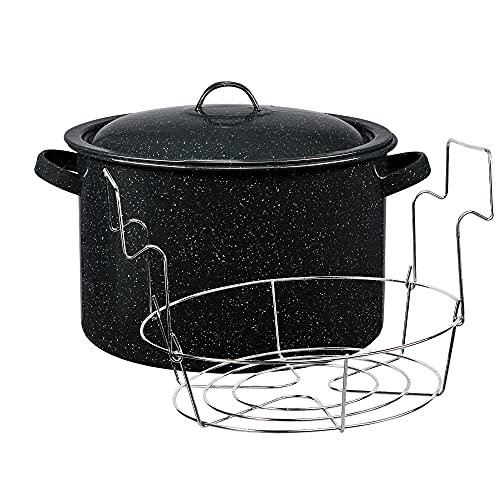
If you intend to can low-acid food, meaning vegetables, meat, or stock, buy a stovetop pressure canner with a dial or weighted gauge that holds at least four quart jars. That is the tested standard and there is no way around it. Weighted gauges need no annual accuracy check; dial gauges should be tested yearly.
If you only want jam, pickles, or properly acidified tomatoes, a boiling-water canner is inexpensive and completely adequate. And keep using the Instant Pot for what it is good at. Cook the beans, simmer the stock, then process the jars in equipment that has a tested process behind it. Someone in the threads found this out one search before making an expensive mistake:
Thanks for this! I just bought an instant pot max and was excited about canning. As someone who never canned before, I did a 2 second reddit search and found this- wow!
If you are starting from zero and want the whole sequence rather than just the equipment, our guide to getting started with canning walks through it.
Recommended
Products related to this guide.


What owners say
Real owner reports from the threads and editorial sources we drew on for this guide.
“I don’t have a pressure cooker but I do have an instant pot. Is it safe to can bone broth in an instant pot, or should I stick to freezing?”
— r/Canning / u/jelly_belly_69
“Do NOT use an instant pot to do you canning. You will NEED a canning pot that will be used on a stove. The electric models are not reliable for canning purposes. Stay safe!”
— r/Canning / u/Gini555
“The FDA recommends using a dedicated pressure canner for pressure canning. This is because the ip heats in cycles and pressure canning requires constant heating.”
— r/Canning / u/notreallylucy
“Don't try to can in your instant pot. It hasn't been tested for safety due to the small size and the unknown pressure variations.”
— r/Canning / u/lissabeth777
“I'm amazed Instant Pot hasn't gotten legally called out on false/bad advertising! The Amazon listing claim: The 15 PSI pressure will not only cook food faster, it will allow you to do home pressure canning. Positioned to be the industry first USDA approved electric pressure cooker for home canning.”
— r/Canning / u/show_time_synergy
“No. I would not use a pressure cooker like the instant pot for pressure canning. OSU did do some testing on the Presto Precise electric pressure canner but that is the only one that has even been looked at. My understanding is that they didn’t outright label it as safe, but they felt that it met USDA standards for pressure canning so long as you explicitly follow the manufacturers guidelines.”
— r/Canning / u/fair-strawberry6709
“None of the Instant Pots are tested and certified by USDA for pressure canning. The instant Pot Max has a pressure canning function that some folks have tested and found safe, but you're taking a risk with that.”
— r/Canning / u/Bobdehn
“I use my instant pot for canning but I do not use the pressure-cooking feature: I use steam. I put only about a cup of water in the pot along with the mason jars and then process it for about 10-15 minutes depending on the recipe.”
— r/Canning / u/bnjenk
“Looks like this question has been asked about the Instant Pot Max which also has a (pressure?) canning function so I see there's some controversy around this topic.”
— r/Canning / u/Tommy_Tukyuk
“I have the instant pot but my question is do I need anything else? Attachments or anything? Or will I be okay with just the Instant pot and some mason jars?”
— r/Canning / u/brntrfranklin
“Thanks for this! I just bought an instant pot max and was excited about canning. As someone who never canned before, I did a 2 second reddit search and found this- wow!”
— r/Canning / u/ForTheLoveOfRomance_