Best Pressure Canner for Canning Meat
By Theo Marchetti · Updated October 2026
Independent editorial guide. We never accept payment for coverage, though we may earn a commission if you purchase through our links.
Quick Take
Meat is a low-acid food, so it must be processed in a pressure canner. A water bath canner cannot make meat shelf-stable at any length of time, because killing botulism spores in low-acid food takes 240 degrees F, and only a pressure canner reaches that. For most kitchens the right tool is the Presto 01781 23-quart: it holds seven quarts per load, and with the inexpensive weighted regulator added it will sit at pressure for a 90 minute run without you staring at a dial.
The nuance is the long run itself. Meat schedules are the longest in home canning, which rewards a canner that holds steady pressure and a gauge you can trust for an hour and a half. That is the case for the All American 915 and its gasket-free metal-to-metal seal, and it's why the weighted 15 pound setting matters if you live above 1,000 feet. Match the canner to your stove first: plain aluminum will not heat at all on induction.
Below are the two canners worth buying for meat, the induction variant, and the two cheap add-ons that make long runs painless. See picks ↓

Canning meat is the moment the hobby stops being casual. Jam forgives you. A jar of raw-packed chicken does not. It is also the moment a lot of shopping advice quietly fails people, because most "best pressure canner" lists are written around green beans and picture-day salsa, and they skip the one fact that should open every meat article: there is no safe way to water bath meat. Not longer, not hotter, not with more headspace. The National Center for Home Food Preservation classifies red meats, poultry, and seafood as low-acid foods, and low-acid foods have to be sterilized at temperatures only a pressure canner can produce.
Once that question is settled, the buying decision looks different than it does for vegetables. Meat runs are the longest in the standard schedules, which means the gear questions that barely matter for a 25 minute batch of green beans start to compound: whether the canner holds pressure steadily for an hour and a half, whether you are reading a dial or listening to a weight, how many quarts fit in one load when a whole turkey is on the counter, and whether the thing will even heat on the stove you own.
This guide works through those four decisions in order, using what owners on r/Canning actually report from their meat runs, the manufacturers' published specs, and the NCHFP's safety pages. For the head-to-head between the two brands that dominate this category, the Presto vs All American comparison goes deeper on price and build. This one is about meat.
Meat has to go through a pressure canner. Full stop.
Start with the rule, because everything else in this guide hangs off it. The National Center for Home Food Preservation puts red meats, seafood, and poultry on the low-acid list: foods with a pH above 4.6, which is not acidic enough to block the growth of Clostridium botulinum in a sealed jar. Its guidance is blunt about what that requires. Botulinum spores are very hard to destroy at boiling-water temperatures, so all low-acid foods should be sterilized at 240 to 250 degrees F, and those temperatures are attainable only in a pressure canner operating at 10 to 15 PSI. A water bath tops out at 212 degrees at sea level. It never gets there, no matter how long it boils.
That single fact is what sends people canner shopping, and it's often a surprise. This poster on r/Canning, deciding between a used All American 915 and a new Presto, put the discovery plainly:
I want to start pressure canning after learning that most of the things I actually want to make(meats, beans, soups etc) can’t be done with my water bath canner. The thing is, I have an induction stove.
So the question is never pressure canner versus something else. It is which pressure canner, and meat has opinions about that which green beans do not.
A meat run is long. Buy for the ninetieth minute.
Under the NCHFP schedules, strips, cubes, or chunks of meat process for 75 minutes in pints and 90 minutes in quarts, hot pack or raw. This guide will not give you the full procedure, and you should not take it from any blog: pull the recipe for your exact cut and jar size from the NCHFP's meat pages and follow it as written. But the number itself belongs in a buying guide, because an hour and a half at pressure, plus venting time before and cool-down after, is what your hardware actually has to survive. A meat day is a three hour commitment per load.
That duration changes what matters in a canner. A heavy base that spreads heat evenly, a stove or burner with enough output to hold pressure once it gets there, and a pressure signal you can monitor without hovering all stop being nice-to-haves. Owners who run meat regularly test all of this before the first jar of chicken ever goes in:
I've been using the exact same model on my household induction stove for years without issue. If you're worried about it, load it with a few cans of plain water to simulate a typical canning run and see if the stove gets it up to pressure and holds it there.
The dry-run advice is worth taking seriously precisely because meat runs are so long. A stove that can boil pasta can still fail to hold a loaded canner at pressure for 90 minutes. And on responsive stoves, the ramp-up matters too. This owner runs the stainless-clad Presto on an induction range:
Biggest warning is to not heat it too fast. The induction top has the likeliest potential to do that so take longer if you have to to become familiar with a good increase pace so you don’t blow caps. It’s magical really. Buy the changeable weight gauges and it is even more magical if you are doing recipes that require 10 PSI.
Capacity math: think in canner loads of seven quarts
Canner capacity is quoted in quarts of liquid volume, which is nearly useless for planning. The number that matters is jars per load. The 23-quart Presto holds seven quart jars or ten pints in a single layer, and with a second rack it double-stacks to twenty pints. The All American 915 holds seven quarts or ten pints, per the manufacturer. Notice the pattern: for quart jars, the two most recommended canners in the category hold exactly the same load. The bigger pot buys you stacked pints, not more quarts.
Now put real meat against that math. Owners feed these canners with post-holiday turkey sales, butcher-counter bones, and freezer-clearing beef:
I grabbed post Christmas turkey sales. I'm canning turkey and turkey broth and turkey soup.
I just did some beef tips and some navy bean soup the other day.
A single big turkey becomes meat, broth, and soup, and that is easily two or three canner loads at 75 to 90 minutes each. This is why capacity planning for meat means counting loads, not jars. If your habit is one small batch a month, seven quarts per run is plenty and the smaller 915 fits the pattern beautifully. If you buy half a steer or clear a chest freezer every fall, every extra load is another three hour block at the stove, and the double-stacked pint capacity of a 23-quart canner starts paying for itself.
The gasket question: what a metal-to-metal seal buys you on long runs
Every stovetop canner seals one of two ways. Most, including every Presto, seal with a rubber gasket in the lid. The All American line seals metal against metal: the lid and pot are machined to mate directly and clamp shut with wingnuts, with no rubber ring anywhere in the pressure path. All American markets this as its exclusive metal-to-metal sealing system, and owners who inherit decades-old units describe exactly that construction:
Between the lid and the body is metal on metal. There is no gasket for these types of pressure cookers, but I will check and see if there are any rubber parts by the pressure gauge or the steam vent.
Why does that matter more for meat than for anything else? Because a gasket is a consumable that fails on its own schedule, and a 90 minute run gives it the longest possible stage to fail on. A gasket that weeps steam mid-run means lost pressure partway through the longest process in the book, with jars of raw-packed pork on the line. Gaskets are cheap and Presto owners simply keep a spare, but the All American design removes the failure mode entirely, which is a real advantage when your typical run is measured in hours. The All American 915 review covers the trade-offs of that design in full, including the weight and the learning curve of the wingnuts.
The one hard limit is the stove. Cast aluminum does not work on induction, and it breaks hearts:
Following a kitchen remodel, I found out today that our new induction stove doesn't work my All American pressure canner. Y'all - I'm devastated. This pressure canner has been with me since 2000 and I love everything about it.
If your kitchen is induction, the All American is off the table for indoor use, full stop. The stainless-clad Presto 01784 exists for exactly that kitchen.
Dial or weighted gauge: for meat, the weight wins
The other decision the long run makes for you is how the canner reports pressure. A dial gauge shows pressure on a needle you have to watch; the NCHFP says dial gauges should be checked for accuracy each year before use. A weighted gauge regulates pressure mechanically and announces it, jiggling or rocking gently when the canner is at pressure. Read the manufacturer's directions for what your specific weight should do, but the practical difference is simple: a dial is watched, a weight is heard.
For a 25 minute vegetable run, babysitting a dial is a chore. For a 90 minute meat run it is misery, and experienced owners consistently steer new canners toward the weight:
I have a presto 23 qt. And I like it a lot. If you do decide on Presto I recommend purchasing a separate weight. It is SO much easier that trying to regulate pressure with a dial gauge.
This was the best accessory we got for our Presto! We wanted a dial-gauged canner but didn't realize what a chore it could be to regulate the pressure. The weighted gauge is simplicity!
The standard Presto ships as a dial-gauge canner, and the fix costs less than a bag of jars: a three-piece regulator weight that drops onto the vent pipe and converts it to weighted operation at 5, 10, or 15 pounds. That accessory is in the picks below, and it's the single best upgrade for meat canning on a Presto. The same logic holds on the All American side, where the modern models carry both a gauge and a weight:
Per All-American, if you are switching out the petcock for a vent tube and weighted regulator, then don't bother getting the gauge checked as it is only for a reference. If the weighted regulator is rocking 1 to 4 times per minute at the specified weight, then you can be assured that you are at the correct pressure.
Altitude changes the weight you run
Pressure requirements rise with elevation, and meat's long schedules make it worth getting this right before you buy the canner rather than after. Under the NCHFP tables for meat, a weighted-gauge canner runs 10 pounds at 0-1,000 feet and 15 pounds above 1,000 feet. There is no in-between setting on a weight, which is why the jump comes up constantly in r/Canning threads:
Yes, if you were close to or anything above, I believe 1000 feet. You have to use 15 pounds of pressure so if you have a gas oven, you’re gonna have to have a really hot burner and if you have an electric one if it’s not making it hot enough, you may have to get it like a turkey fryer or something like that.
Note the second half of that advice: 15 pounds also demands more sustained heat from the burner. A dial-gauge canner, by contrast, scales in 1 pound steps under the NCHFP dial tables, starting at 11 pounds for 0-2,000 feet, which is the one scenario where the dial earns its keep: some high-altitude canners prefer it for the finer increments. For everyone else, the weighted 15 pound setting is the simpler instrument for a long run. Check your elevation once with the canning altitude calculator and you will know which camp you are in for good.
Glass tops and induction: know your stove before you pick a canner
A loaded canner full of quarts is one of the heaviest things that will ever sit on your stove, and a meat run keeps it there for hours. On a radiant glass top, the rules are about weight and handling: check your stove manual for its burner load limit, set the canner down instead of sliding it, and note that All American publishes its own glass-top guidance, listing the 915 as compatible with gas, electric, and glass-top stoves at 21 pounds empty. Follow the manufacturers, both of the stove and of the canner, and do not improvise limits either direction.
Induction is a different problem entirely. An induction burner heats only ferromagnetic metal, so a plain aluminum canner does not heat slowly on it; it does not heat at all:
Using a smaller burner may not put out enough heat to get up to pressure. Also, unless you have the induction canner it will not work at all.
The stainless-clad Presto 01784 is the induction answer, and owners who bought it for that reason report it earns the choice:
I would get the Presto. Being able to can inside is really important to me. I have the Presto, specifically purchased for being induction compatible.
One warning specific to burner shopping: Presto cautions against outdoor LP burners above 12,000 BTUs with its canners, because they cannot throttle low enough to hold pressure without damaging the base. If your meat-canning plan is a propane burner on the porch, size it to the canner.
Raw pack or hot pack, strictly as a gear decision
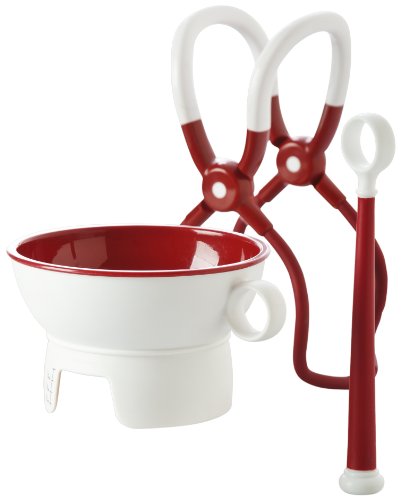
The NCHFP's meat procedures allow two pack styles, and this guide takes no position on which your recipe should use; that choice belongs to the tested recipe you pull from the NCHFP. But the two styles do ask slightly different things of your kitchen, and that is fair game here. Hot pack means precooking the meat by roasting, stewing, or browning before it goes in jars, which the NCHFP notes is preferred for liquid cover and storage quality. Practically, that adds a big skillet or stockpot to the day and rewards a wide-mouth funnel. Raw pack loads raw meat into jars without added liquid, which makes for dense, heavy jars and puts a premium on a jar lifter you trust.
I got two really great sale turkeys this year and used them for broth, soups, and some raw packing. Not a great time for produce but there can be some really nice post-holiday sales.
Neither style changes which canner you should buy. Both run the same NCHFP schedule in the same pot. The pack style just decides how much of the day happens before the lid goes on.
The short version: which canner for meat
Four questions settle it:
- Induction stove? Presto 01784, and nothing aluminum. The stove decides this one for you.
- Want one canner to outlast your stove, and you cook on gas, coil, or radiant glass? The All American 915: no gasket to fail an hour into a run, seven quarts per load.
- Canning meat in volume on a normal stove? The 23-quart Presto 01781, plus the regulator weight. Same seven quarts per load, double-stacked pints when you need them, and the weight makes the long runs hands-off.
- Above 1,000 feet? Any of the above at the 15 pound setting. Confirm your elevation once and move on.
And whichever pot you choose, the recipe comes from the NCHFP, not from this page or any other. The canner is the part you get to shop for. The process is not. The Presto 23-quart review has the full owner record on the canner most people should start with.
Recommended
Products related to this guide.


What owners say
Real owner reports from the threads and editorial sources we drew on for this guide.
“I want to start pressure canning after learning that most of the things I actually want to make(meats, beans, soups etc) can’t be done with my water bath canner. The thing is, I have an induction stove.”
— r/Canning / u/No_Personality_3631
“I grabbed post Christmas turkey sales. I'm canning turkey and turkey broth and turkey soup.”
— r/Canning / u/Rude_Veterinarian639
“I got two really great sale turkeys this year and used them for broth, soups, and some raw packing. Not a great time for produce but there can be some really nice post-holiday sales.”
— r/Canning / u/Ambystomatigrinum
“I just did some beef tips and some navy bean soup the other day.”
— r/Canning / u/Psychological-Star39
“I do tons of bone broth. I can get bones on their own very cheap from a local butcher, or I save the bones from whatever we’ve had (I keep them in the freezer until I’m ready to do a batch).”
— r/Canning / u/aureliacoridoni
“I've been using the exact same model on my household induction stove for years without issue. If you're worried about it, load it with a few cans of plain water to simulate a typical canning run and see if the stove gets it up to pressure and holds it there.”
— r/Canning / u/AgentBanks
“Biggest warning is to not heat it too fast. The induction top has the likeliest potential to do that so take longer if you have to to become familiar with a good increase pace so you don’t blow caps. It’s magical really. Buy the changeable weight gauges and it is even more magical if you are doing recipes that require 10 PSI.”
— r/Canning / u/10handsllc
“Using a smaller burner may not put out enough heat to get up to pressure. Also, unless you have the induction canner it will not work at all.”
— r/Canning / u/Tacticalsandwich7
“Following a kitchen remodel, I found out today that our new induction stove doesn't work my All American pressure canner. Y'all - I'm devastated. This pressure canner has been with me since 2000 and I love everything about it.”
— r/Canning / u/jimmyfivetimes
“Between the lid and the body is metal on metal. There is no gasket for these types of pressure cookers, but I will check and see if there are any rubber parts by the pressure gauge or the steam vent.”
— r/Canning / u/Emotional_Nebula
“Per All-American, if you are switching out the petcock for a vent tube and weighted regulator, then don't bother getting the gauge checked as it is only for a reference. If the weighted regulator is rocking 1 to 4 times per minute at the specified weight, then you can be assured that you are at the correct pressure.”
— r/Canning / u/crapta
“I have a presto 23 qt. And I like it a lot. If you do decide on Presto I recommend purchasing a separate weight. It is SO much easier that trying to regulate pressure with a dial gauge.”
— r/Canning / u/roxannegrant
Sources
NCHFP: Ensuring Safe Canned Foods (low-acid classification, botulism, 240-250F requirement) · NCHFP: Meat, Strips, Cubes or Chunks (process schedule and pressure tables) · NCHFP: Using Pressure Canners (dial vs weighted gauge guidance) · All American 915 official product page (capacity, weight, stove compatibility)