Best Grain Mill for Home Sourdough Baking (2026)
By Nora Calloway · Updated October 2026
Independent editorial guide. We never accept payment for coverage, though we may earn a commission if you purchase through our links.
Quick Take
For sourdough, buy a stone-burr mill. Stone grinds fine enough for a light, open crumb, dials coarse when you want cracked rye, and runs cooler than a high-speed machine, which matters because heat is what dulls the flavor of fresh flour. In this lineup that's the NutriMill Harvest: a standalone that grinds a whole loaf's worth without the breaks a stand-mixer attachment forces on you. It's the one experienced home millers keep pointing new bakers toward.
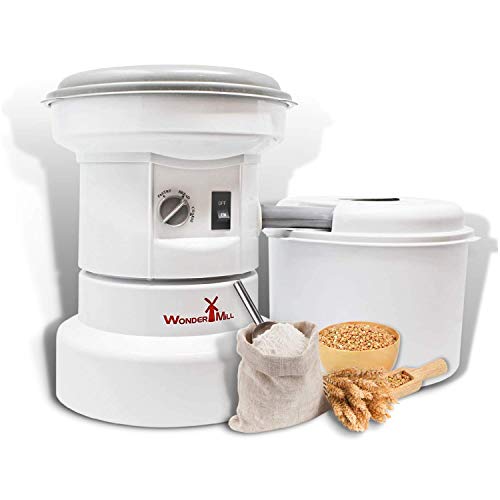
The other camp is impact mills, like the WonderMill and the smaller NutriMill Impact. They're fast and they powder hard wheat very fine, but they run loud and can warm the flour, so a lot of bakers keep them for volume and reach for stone when flavor is the point. And if you want to bake off-grid, a hand-crank mill trades speed for a machine that works when the power's out. The wrong buy for almost everyone is the stand-mixer attachment, and owners are blunt about why.
Below: what actually changes your flour, and the four mills we would put on a counter. See picks ↓

Milling your own flour changes sourdough more than almost any other upgrade, and the bakers who do it rarely go back. Fresh flour tastes sweeter and more alive, the loaves rise faster, and you get access to grains you'll never find bagged at the store. But the mill you choose decides how fine that flour comes out, how hot it gets, and how much of a chore each bake becomes.
Read enough sourdough threads and the same split shows up over and over. On one side are stone-burr mills, quieter and cooler, the crowd favorite for bread. On the other are high-speed impact mills, fast and very fine but loud and warmer. Underneath both is a simpler warning that owners repeat constantly: don't start with the stand-mixer attachment, because it's slow, it heats up, and it won't grind as fine as a real countertop mill.
Brand loyalty is beside the point here. Match the mill to how you bake: how fine you want your flour, how much you'll grind at a time, and whether you care about keeping the flour cool. The right match makes fresh milling stop feeling like a project; the wrong one turns every loaf into a chore.
What actually matters when you're milling for sourdough
Four things separate a good sourdough mill from a bad one: how fine it grinds, how cool it keeps the flour, how much you can mill before it needs a rest, and whether it goes coarse for rye and porridge grains. Fineness and heat are the two you taste.
The short version, before we take them one at a time:
- Grind: fine enough for a light crumb, adjustable coarse for cracked grain and rye.
- Heat: cooler is better, because heat drives off the flavor and nutrients you milled for.
- Mechanism: stone burr for flavor, impact for speed and very fine white-ish flour.
- Format: a standalone countertop mill, not a stand-mixer attachment.
Stone burr vs impact: the choice that shapes your flour
Almost every mill worth buying is one of two types. Stone-burr mills crush the grain between two stones, which folds the germ and its oils through the flour and runs relatively cool. Impact mills, sometimes called micronizers, fling the grain against a spinning set of teeth at high speed, which grinds very fine and very fast but generates more heat and a lot more noise.
For sourdough, most bakers land on stone. One home miller put the whole tradeoff in a sentence:
A Schnitzer Country. Good solid stone mill. Go for stone over meta burrs if you can afford it - it grinds cooler, which is better for retaining nutrients.
Impact mills are not bad. They are the ones to buy when you mill a lot and want fine, uniform flour quickly. Here is an owner who runs an impact NutriMill day to day and keeps a manual burr mill for everything else:
I use a nutrimill (electric impact) for day to day flour and a Country Living (manual burr) for hand grind and corn. I've been very happy with the nutrimill, we're on our second one because the first didn't warn explicitly against grinding oats (which are to oily for an impact mill and gummed it up) and I smoked the motor. They replaced it cross shipped for free (the new one has a "no oats" in the manual hah) even though it was five plus years old and the replacement has been going strong for 15+ years now (I use it pretty exclusively for wheat and rice). The flour quality is really good and it grinds pretty fast. It does sound like a loud vacuum cleaner though hah.
That "loud vacuum cleaner" line is the price you pay for impact speed. Take the oats warning seriously too: impact mills can't handle oily grains. Mill mostly hard wheat and rye, want speed, buy impact. Care about flavor and a cooler grind, buy stone.
Fineness, and why it matters more for bread
Cheap mills fall down on fineness, and new millers underestimate it every time. Coarse, gritty flour hydrates slowly and fights gluten development, which is why fresh-milled loaves come out dense until you grind finer or sift out the bran. A mill that reaches a fine grind buys you a lighter crumb.
The stand-mixer attachment loses people right here. One baker upgraded from the attachment to a countertop mill and saw the difference immediately:
I've been using the KitchenAid attachment from Mockmill but just got the Mockmill 200. The 100 and 200 design is much better. The KitchenAid attachment works but it's fairly fragile as I just broke a couple of plastic tabs dropping it. Looking inside I can see why it doesn't Mill the flour as well as the countertop models. I've only just started grinding with the 200 but the flour is so much more consistent and fine.
Nearly every thread repeats that shape. The attachment works; a real countertop mill grinds finer and more consistently. Want light sourdough? Buy the fineness up front.
Heat: the quiet thing that can ruin a batch
Fresh flour is worth milling because the germ and its oils are still in it, and heat degrades them. Grind too hot and you cook off the aroma. In bad cases the flour smells off. That is the strongest argument for a cooler stone mill, and for milling in smaller batches so the burrs don't overheat.
Some owners regret the wrong buy over this. Here is one who found even a stone mill ran too warm for his taste on wheat:
I have the Mockmill 200 and I hate it for wheat flour. It's been good for buckwheat and corn, but anything else gets an off aroma. I can only assume it's from the stones heating it up too much when it's being milled. I discussed this in a post in r/HomeMilledFlour and it seems like most people don't notice or mind the smell, but I found it incredibly unappealing.
Most people never notice, and milling smaller amounts with a rest between runs manages it. Still, heat is a real variable, and speed on an impact mill costs you something on that axis.
Noise, speed, and how much you'll actually mill
Volume decides almost everything, so be honest with yourself about it. Bake a loaf or two a week and mill only the whole-grain portion? A modest mill, or even a compact impact unit, is plenty. Mill most of your flour and you want a standalone that runs for minutes without overheating and never makes you stop to let a stand mixer cool.
Noise tracks with mechanism. Stone mills hum, impact mills roar. Neither is a dealbreaker, though if you mill at six in the morning in a small kitchen, know that the fast machine is the loud one. Bakers who mill often lean toward the convenience of a dedicated electric:
So i love my electric wondermill, I have a manual stone mill too. The electric is definitely convenient if you'll be baking often.
Skip the stand-mixer attachment (owners are blunt about this)
Don't make the stand-mixer grain attachment your main mill. That warning is close to universal in the sourdough threads, and the reasons are consistent: it's slow, it grinds coarser than a countertop unit, and running it hard heats up your mixer. Fine for the occasional cup of flour to feed a starter. Not much more.
One baker watched a friend go through exactly that arc:
A good friend of mine bought the Mockmill attachment for his KitchenAid mixer. It worked well to grind a fine flour, but it was slow and very loud. His KitchenAid got really hot. We had to take breaks when milling. We were trying to mill 500 grams of flour to make a loaf of bread. He ended up selling it and buying a used KoMo on eBay. I think the Mockmill attachment would work fine if you were only milling a little flour, for feeding a starter or mixing in with other flour, for example. If you think you'll use it a lot, a stand alone grain mill would likely be a better choice.
A miller of 22 years put it even more bluntly, right alongside a recommendation for the standalone stone mill that tops this guide:
I've been grinding my own flour for 22 years now. Love the freshness of the flour. Here's a list of my experience: 1) grain lasts a LOT longer than already ground flour. 2) freshness is unparalleled 3) the KitchenAid Grain Mill attachment seriously sucks, avoid at all costs unless you want it for making cream of wheat (very coarse grind) 4) my first mill was a KitchenMill, good but didn't last as long as I thought it should've. 5) second mill I got was the NutriMill Harvest Grain Mill, absolutely excellent and decently priced, watch for sales at big holidays. They seriously stand behind their products. Their customer service is outstanding.
If you already own a stand mixer and want to test the idea cheaply, the attachment will technically get you milling. You will outgrow it. We would put that money toward a standalone from the start.
Manual mills and off-grid milling
Some bakers mill by hand, for resilience or just because they like that it works when the power doesn't. A hand-crank burr mill is slow, and cranking it is a workout. It also grinds cool, goes from fine flour to coarse cracked grain, and the better ones handle masa and even nut butter. For a power-out pantry or off-grid baking, it keeps working when nothing else does.
Buy it as your second mill if you bake indoors with electricity. If you already know you want the off-grid option, buy it for that reason alone and don't expect daily volume from it.
Which mill for sourdough
Buy a standalone stone mill first. Fine flour, a cooler grind, and the range to go coarse when a rye loaf calls for it. Experienced millers keep steering newcomers there, and so do we, which is why it tops this guide.
Milling in volume and willing to trade the last bit of flavor for speed? An impact mill powders hard wheat fast. Still testing whether milling is your thing? A compact impact mill is the cheapest way to find out. Baking when the grid is down? Add a hand crank. Then, whichever you buy, mill in smaller batches, keep the flour cool, and bake it fresh. Those three habits do more for a loaf than the badge on the front of the machine.
Recommended
Products related to this guide.


What owners say
Real owner reports from the threads and editorial sources we drew on for this guide.
“A Schnitzer Country. Good solid stone mill. Go for stone over meta burrs if you can afford it - it grinds cooler, which is better for retaining nutrients.”
— r/Sourdough / u/Taseaweaver
“I use a nutrimill (electric impact) for day to day flour and a Country Living (manual burr) for hand grind and corn. I've been very happy with the nutrimill, we're on our second one because the first didn't warn explicitly against grinding oats (which are to oily for an impact mill and gummed it up) and I smoked the motor. They replaced it cross shipped for free (the new one has a "no oats" in the manual hah) even though it was five plus years old and the replacement has been going strong for 15+ years now (I use it pretty exclusively for wheat and rice). The flour quality is really good and it grinds pretty fast. It does sound like a loud vacuum cleaner though hah.”
— r/Sourdough / u/oldcrustybutz
“I've been using the KitchenAid attachment from Mockmill but just got the Mockmill 200. The 100 and 200 design is much better. The KitchenAid attachment works but it's fairly fragile as I just broke a couple of plastic tabs dropping it. Looking inside I can see why it doesn't Mill the flour as well as the countertop models. I've only just started grinding with the 200 but the flour is so much more consistent and fine.”
— r/Sourdough / u/obxtalldude
“I have the Mockmill 200 and I hate it for wheat flour. It's been good for buckwheat and corn, but anything else gets an off aroma. I can only assume it's from the stones heating it up too much when it's being milled. I discussed this in a post in r/HomeMilledFlour and it seems like most people don't notice or mind the smell, but I found it incredibly unappealing.”
— r/Sourdough / u/squidsquidsquid
“A good friend of mine bought the Mockmill attachment for his KitchenAid mixer. It worked well to grind a fine flour, but it was slow and very loud. His KitchenAid got really hot. We had to take breaks when milling. We were trying to mill 500 grams of flour to make a loaf of bread. He ended up selling it and buying a used KoMo on eBay. I think the Mockmill attachment would work fine if you were only milling a little flour, for feeding a starter or mixing in with other flour, for example. If you think you'll use it a lot, a stand alone grain mill would likely be a better choice.”
— r/Sourdough / u/livtiger
“I've been grinding my own flour for 22 years now. Love the freshness of the flour. Here's a list of my experience: 1) grain lasts a LOT longer than already ground flour. 2) freshness is unparalleled 3) the KitchenAid Grain Mill attachment seriously sucks, avoid at all costs unless you want it for making cream of wheat (very coarse grind) 4) my first mill was a KitchenMill, good but didn't last as long as I thought it should've. 5) second mill I got was the NutriMill Harvest Grain Mill, absolutely excellent and decently priced, watch for sales at big holidays. They seriously stand behind their products. Their customer service is outstanding.”
— r/Sourdough / u/Raspberry2246
“So i love my electric wondermill, I have a manual stone mill too. The electric is definitely convenient if you'll be baking often.”
— r/Sourdough / u/pineapplesnoranges