Nesco
Nesco Snackmaster Pro Reviews (2026)
By Nora Calloway · Updated October 2026
Independent editorial review. We never accept payment for coverage, though we may earn a commission if you purchase through our links.

Verdict
Owners are fond of the Snackmaster for what it is: cheap, compact, expandable, and simple enough that a first-timer works it out in a minute. Many are years deep, some on units well over a decade old, and they praise how it stores away small and travels outside for smelly batches. The worries repeat just as reliably. The top-mounted fan dries unevenly, so people rotate trays. The plastic yellows, turns brittle with age, and melts in a dishwasher. And a real cluster of owners report the thermostat failing and the unit overheating, in the worst cases warping trays or scaring them into switching brands. Others counter that the failures are cheaply fixable and that Nesco is easy to deal with for parts. We would still buy one as a first dehydrator, treating the first few months as a trial run.
Read full take ↓Similar dehydrators
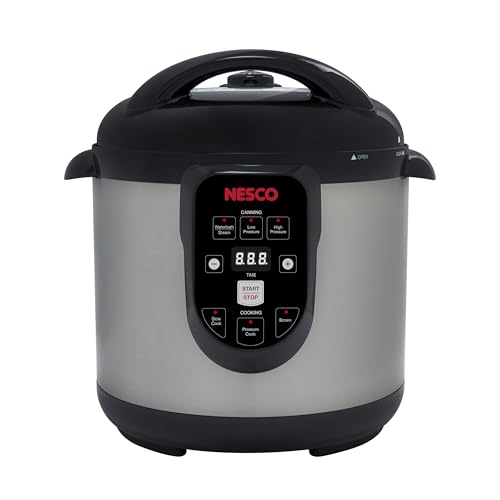
The Nesco Snackmaster Pro FD-75A is the cheap round dehydrator half the hobby seems to have started on. A stack of clear plastic trays. Heating element and fan mounted in the lid. An adjustable thermostat that reaches meat range, and a footprint small enough to shove in a cabinet between uses. Buy more trays and it grows to a dozen. It travels to the porch when you dry something smelly, and it makes real jerky and fruit leather for a fraction of what a stainless box costs.
Cheap and round both come with strings. Owners get years out of these, sometimes fifteen or more, and owners also fill the overheating and meltdown threads when a thermostat gives out. The top-mounted fan dries the tray nearest it faster than the one at the bottom, so you rotate. The plastic yellows and turns brittle with age. We weigh the whole picture below: what the Snackmaster does well for the money, where the round format and the plastic cost you, and who should spend more up front instead.
The short version
A useful budget machine with two caveats you should buy knowing about. A few hundred owner comments land in the same place. Here's the detail.
What's good:
- Cheap to buy and cheap to replace, which matters a lot in a category where units do die.
- Compact and light, so it stores in a cabinet and moves outside for onions, garlic, fish, and peppers.
- Expands from a handful of trays up to about a dozen, so capacity grows with your appetite.
- Adjustable thermostat reaches meat range, so it makes real jerky, not just fruit and herbs.
- Dead simple to run, and handy owners fix a dead one with a few-dollar thermal fuse.
What's not:
- The top-mounted fan dries unevenly, so you rotate trays through a batch to finish them together.
- A real cluster of owners report the thermostat failing and the unit overheating, sometimes warping trays.
- The plastic trays and body yellow and grow brittle with age, and they melt if you dishwasher them.
- No timer on this model, so long overnight runs mean checking on it rather than walking away.
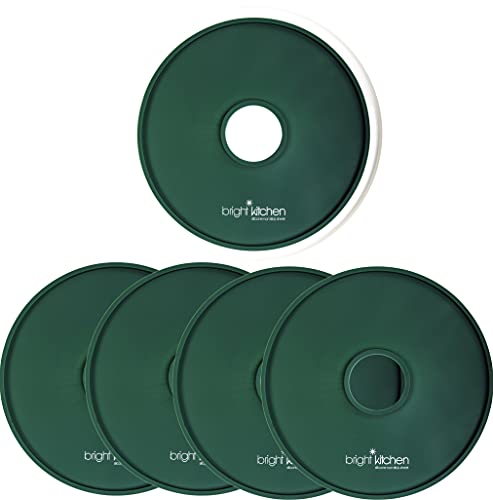
- No silicone trays are made to fit it, so fruit leather means parchment or cut-to-fit liners.
Who it's for
The Snackmaster fits one kind of buyer beautifully and frustrates another. How hard you run it settles the question.
Buy it for:
- A cheap, low-risk first dehydrator to find out whether you will actually use one.
- Occasional household batches of jerky, fruit, and herbs where rotating a few trays is no burden.
- Small kitchens and preppers who want something that stores away small and moves outdoors easily.
Skip it if:
- You want even, hands-off drying with no tray shuffling; a rear-fan stainless box like the Cosori solves that.
- You run a dehydrator hard and often; the endurance and capacity of a ten-tray Excalibur is a better long-run bet.
- You want set-and-forget overnight runs; without a timer, this one asks you to check on it.
The specs that matter
Three numbers on the Snackmaster's box decide what it can do. Here is what each one adds up to in the kitchen:
Stackable trays, five in the box and expandable to about twelve: start small and cheap, add trays as your batches grow instead of paying for a big chamber up front. The taller the stack, the less evenly the top and bottom finish.
Top-mounted fan and heating element: air pushes down through the stack from the lid, so the top trays get hot dry air first and the bottom trays get what's left. That one design choice is why owners rotate trays, and it's the core difference from a rear-fan box.
Adjustable thermostat that reaches meat range: it climbs high enough to carry beef and poultry jerky through the temperature it needs, which is why it turns up in jerky threads and not just fruit-and-herb ones. No digital readout, no timer. A dial.
How well it preserves
For the everyday jobs most people buy a dehydrator for, the Snackmaster does the work. Jerky, fruit, herbs, and fruit leather all come out fine, and the thermostat reaches the range meat needs. Portability is part of why owners run it across such a spread of foods. Drying something pungent means carrying the whole machine outside instead of clearing the kitchen for a day:
Nesco fd-75 user here. It's mobile, I prefer to dehydrate outside, the aromas can be overwhelming when drying fish, onions, garlic, or peppers.
Fruit leather is the one exception, because the round trays have an open center and nobody makes a fitted silicone insert for them. Owners work around it with parchment, and it goes well once you learn the whisper-of-oil trick so the leather peels instead of tearing:
I use parchment paper and it works great. I’ll typically put the barest hint of oil on the paper before I spread the fruit pulp onto it. I’ll put the oil on then use a rag or paper towel to wipe it off and the small amount that is left behind works really well to stop the leather sticking to the parchment paper.
Evenness is the limit, and it comes from the format. With the fan and heat in the lid, the top of the stack finishes ahead of the bottom, so an unrotated batch comes out done on top and tacky underneath. That is how a round top-fan stacker works, and it is the main reason people who dry in volume move to a rear-fan box. For household batches, if swapping trays partway through does not bother you, the drying itself is perfectly good. Expect to be more hands-on than a set-and-forget machine asks.
Built to last
Buy this axis with eyes open, because owners are all over the map. Plenty of Snackmasters run a decade or more. People are still using units from the 2000s, and long-haul owners rack up serious hours without drama:
I have one of these with 1000s of hours and never had it get that warm.
Haha yeah it looks grody. I still use it a lot. The Excalibur is great, but the nesco works just as well and is great for smaller jobs. I have vowed to clean it if I can get it working again
The plastic is the quiet cost of all those years. It yellows and grows brittle as it ages, so a fifteen-year-old unit still works but wants gentle handling, and the trays warp or melt if they ever see a dishwasher. One long-term owner puts it plainly:
My Nescos’ are so old the plastic turned yellow and is super brittle. I still use them but have to be careful.
Then there is the overheating tail, and it clusters around one failure. The thermostat contacts stick or fuse, the heater stops cycling off, and the unit cooks itself. Owners describe warped trays, ruined batches, and in the worst threads a genuine fire scare. This is not one unlucky lemon. It comes up often enough to weigh:
Anyone ever had a Nesco Dehydrator meltdown on them? This is a 6 month old FD75A or FD-75PR. Turned it on 160 last night. Was a mess by this morning. Top two trays were awful. The rest on the way down are all warped. All 8 trays. I use this thing every day. Kinda worried about running any replacement at max again. Too risky.
I'm on my 4th now, it's a service time issue... after so many 100 hrs or so the internal electrics go somehow and the heater starts to go way over temp. They are cheap and you get what you pay for, tho they do work great for awhile. I think every one of these will fry eventually.
For a few owners that failure ended the relationship with the brand, which is the downside of a budget build:
Had this happen with my Nesco. Could have burned my house down. Tossed it and bought an Excalibur.
Two things keep the score from sinking. The simplicity that makes the Snackmaster cheap also makes it fixable, and the usual death is a thermal fuse that costs a few dollars, which handy owners replace with a solder iron. And when you do need the company, owners report Nesco is easy to deal with for parts and replacements:
I ordered a new top from Nesco. Works fine, and they were easy to deal with.
Durability here is a gamble rather than a guarantee in either direction. Run it attended instead of overnight and unwatched, don't hold it at max temperature for days on end, and keep the receipt. A unit that survives its first months of regular use tends to keep going for a very long time.
Living with it
Day to day is where the Snackmaster earns its budget reputation. There is almost nothing to learn. Stack the trays, set the dial, and it runs. It lifts with one hand and stores in a cabinet between projects, which beats a full-size box that owns a piece of counter forever. Owners cite that portability more than any other virtue.
Cleaning draws more complaints than the drying does. The trays wash by hand fine. The lid and body collect grime in the seams around the vents, and there is no getting at it without taking the top apart:
Honestly, i have same one. I wipe my top to make it look clean. But, that little crack / line catches dirt in there and i wish i knew an easy way to clean that part. I feel like dirt is just cluttering up underneath that top part if i took it apart lol.
Fruit leather is the other friction. With no fitted silicone tray made for the round format, you improvise with parchment or cut-down liners, and owners have opinions about which sticks less:
I bought this Nesco model for making fruit leather only to find that there aren’t silicone trays that fit it. Plastic wrap isn’t cutting it. If I cut silicone sheets to fit will I slow progress? Should I use parchment paper?
I’m partial to the silicone ones. I started with parchment but stuff would stick to it. Doesn’t happen with the silicone. Not trying to poop on your parade, just an alternative option
One more thing is missing: a timer. A timed machine shuts itself off so an overnight run cannot over-dry, and this one cannot. For daytime batches you check on anyway that hardly matters. For long unattended runs it's why some owners step up to a digital unit. None of these are dealbreakers. They are the difference between cheap-and-simple and effortless.
How it compares
Three units come up most when people weigh the Snackmaster, and each one fixes a different Nesco weakness.
Versus the Cosori Premium 6-Tray Stainless: the even-drying upgrade most Nesco owners eventually consider. A rear fan dries the whole stack at once so the tray shuffling stops, and the stainless trays and interior go in the dishwasher instead of melting. You pay more and give up the expandable stack. You get a machine you can walk away from.
Versus the Excalibur 10-Tray Select Series: the capacity-and-endurance answer. Bigger, pricier box with horizontal airflow that swallows bulk jerky and garden hauls the round stacker cannot take, and Excalibur's long reliability record is the draw if you run a dehydrator hard. Money and counter space for throughput and staying power.
Versus the NutriChef Food Dehydrator: the cheaper floor. A similar round stacking format with circulating heat, covering jerky and fruit for a little less than the Nesco. Same tradeoffs on rotation and plastic, so it only makes sense if the lowest price is the whole point.
Using it well
Loading matters more here than on most dehydrators. Load trays in a single layer with space between the pieces so air can move, and rotate the stack partway through a batch so the bottom finishes with the top. For jerky, set the dial into meat range and check for doneness instead of trusting the clock, since there's no timer and humidity changes everything. Keep the plastic out of the dishwasher and wash by hand. Grab a set of round silicone liners or a roll of parchment for fruit leather and small pieces. Run it attended when you can. And if the thermostat ever stops cycling the heat on and off, unplug it and swap the cheap thermal fuse before you trust it again.
Buying it mainly for meat? Read how fan placement and temperature play out across brands first. Our guide to the best dehydrator for jerky walks through the round-versus-box question in more depth, with the Snackmaster in context against the step-up options.
The Snackmaster verdict
For a first dehydrator, or an occasional one, we would buy the Nesco Snackmaster Pro. It is a cheap, compact, expandable way to make real jerky, fruit, and herbs without committing much money or counter space. Ease of use is its strength, and the low price of entry does real work in a category where units die. So many owners are years deep on old ones that the good version of this machine is clearly very good.
Two things a round budget stacker cannot escape keep it out of rave territory: uneven drying that has you rotating trays, and an overheating tail when the thermostat gives out. Neither is a reason to avoid it. Both are reasons to buy it for what it is. Run it attended, keep it out of the dishwasher, treat the first few months as a trial, and it delivers a lot of preserving for very little money. Want even drying with no tray shuffling, or the endurance to run it hard, and we would spend up instead.
Our Ratings
Overall score
The Snackmaster dries jerky, fruit, herbs, and fruit leather perfectly well for household batches, and the adjustable thermostat reaches the range meat needs. Evenness is the catch. With the fan and heat in the lid, the top trays finish ahead of the bottom, so you rotate the stack partway through instead of walking away. That is how a round top-fan stacker works, and it's the main reason volume driers move to a rear-fan box.
Durability is the gamble here. Plenty of owners run these a decade or more, and the simple build takes a few-dollar thermal fuse when it dies. A real cluster of owners also report the thermostat failing and the unit overheating, sometimes warping trays or worse, and the plastic yellows and grows brittle with age. Run it attended rather than overnight, keep it out of the dishwasher, keep the receipt. A unit that survives its first months tends to last a very long time.
Ease of use is what the Snackmaster's budget reputation rests on. Nothing to learn, light enough to lift one-handed, small enough to store in a cabinet, and easy to move outdoors when you're drying something pungent. Minor gripes: grime collects in the seams around the lid vents, nobody makes a fitted silicone tray for the round format so fruit leather means parchment, and there's no timer for hands-off overnight runs.
Nesco Snackmaster Pro Reviews (2026) on Amazon.
What People Are Saying
Owners are fond of the Snackmaster for what it is: cheap, compact, expandable, and simple enough that a first-timer works it out in a minute. Many are years deep, some on units well over a decade old, and they praise how it stores away small and travels outside for smelly batches. The worries repeat just as reliably.
The top-mounted fan dries unevenly, so people rotate trays. The plastic yellows, turns brittle with age, and melts in a dishwasher. And a real cluster of owners report the thermostat failing and the unit overheating, in the worst cases warping trays or scaring them into switching brands.
Others counter that the failures are cheaply fixable and that Nesco is easy to deal with for parts. We would still buy one as a first dehydrator, treating the first few months as a trial run.
We weight candid owner reports from Reddit and preservation forums above brand-influenced editorial coverage, then reach our own verdict from them. The quotes below are the evidence; the rating and the take are ours.
What Reddit Is Saying
“Haha yeah it looks grody. I still use it a lot. The Excalibur is great, but the nesco works just as well and is great for smaller jobs. I have vowed to clean it if I can get it working again”View thread →
“I have one of these with 1000s of hours and never had it get that warm.”View thread →
“I ordered a new top from Nesco. Works fine, and they were easy to deal with.”View thread →
“I use parchment paper and it works great. I’ll typically put the barest hint of oil on the paper before I spread the fruit pulp onto it. I’ll put the oil on then use a rag or paper towel to wipe it off and the small amount that is left behind works really well to stop the leather sticking to the parchment paper.”View thread →
“Nesco fd-75 user here. It's mobile, I prefer to dehydrate outside, the aromas can be overwhelming when drying fish, onions, garlic, or peppers.”View thread →
“My Nescos’ are so old the plastic turned yellow and is super brittle. I still use them but have to be careful.”View thread →
“Honestly, i have same one. I wipe my top to make it look clean. But, that little crack / line catches dirt in there and i wish i knew an easy way to clean that part. I feel like dirt is just cluttering up underneath that top part if i took it apart lol.”View thread →
“I bought this Nesco model for making fruit leather only to find that there aren’t silicone trays that fit it. Plastic wrap isn’t cutting it. If I cut silicone sheets to fit will I slow progress? Should I use parchment paper?”View thread →
“I’m partial to the silicone ones. I started with parchment but stuff would stick to it. Doesn’t happen with the silicone. Not trying to poop on your parade, just an alternative option”View thread →
“I'm on my 4th now, it's a service time issue... after so many 100 hrs or so the internal electrics go somehow and the heater starts to go way over temp. They are cheap and you get what you pay for, tho they do work great for awhile. I think every one of these will fry eventually.”View thread →
“Anyone ever had a Nesco Dehydrator meltdown on them? This is a 6 month old FD75A or FD-75PR. Turned it on 160 last night. Was a mess by this morning. Top two trays were awful. The rest on the way down are all warped. All 8 trays. I use this thing every day. Kinda worried about running any replacement at max again. Too risky.”View thread →
“Had this happen with my Nesco. Could have burned my house down. Tossed it and bought an Excalibur.”View thread →
Frequently asked questions
Is the Nesco Snackmaster Pro worth it?
Ease of use is what the Snackmaster's budget reputation rests on. Nothing to learn, light enough to lift one-handed, small enough to store in a cabinet, and easy to move outdoors when you're drying something pungent. Minor gripes: grime collects in the seams around the lid vents, nobody makes a fitted silicone tray for the round format so fruit leather means parchment, and there's no timer for hands-off overnight runs.
How is the Nesco Snackmaster Pro built?
Durability is the gamble here. Plenty of owners run these a decade or more, and the simple build takes a few-dollar thermal fuse when it dies. A real cluster of owners also report the thermostat failing and the unit overheating, sometimes warping trays or worse, and the plastic yellows and grows brittle with age.
What is the Nesco Snackmaster Pro best suited for?
The Snackmaster dries jerky, fruit, herbs, and fruit leather perfectly well for household batches, and the adjustable thermostat reaches the range meat needs. Evenness is the catch. With the fan and heat in the lid, the top trays finish ahead of the bottom, so you rotate the stack partway through instead of walking away.
What do real owners say about the Nesco Snackmaster Pro?
Owners are fond of the Snackmaster for what it is: cheap, compact, expandable, and simple enough that a first-timer works it out in a minute. Many are years deep, some on units well over a decade old, and they praise how it stores away small and travels outside for smelly batches. The worries repeat just as reliably.
Options Worth Checking Out

Excalibur 10-Tray Select Series Food Dehydrator, Stainless Steel
Step up when the Nesco's round stack keeps drying unevenly on you. Ten flat trays and a rear fan finish a batch together with no rotating, and the box chamber swallows bulk jerky the stacker can't hold. Bigger footprint, higher spend, more endurance.

Cosori Premium Food Dehydrator, 6 Stainless Steel Trays
The stainless upgrade most Nesco owners cross-shop. A rear fan dries the whole stack at once, so the tray rotating stops, and the steel trays and interior go in the dishwasher after greasy jerky. Costs more, asks less of you.
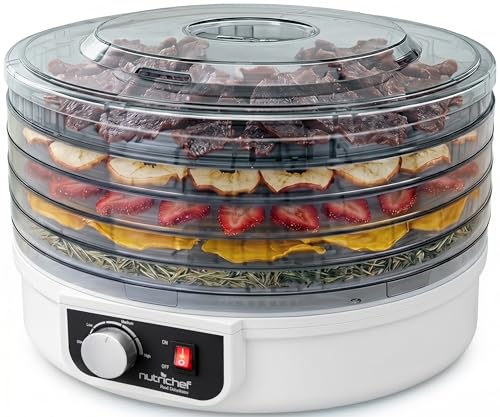
NutriChef Food Dehydrator Machine, 5 Trays
The cheaper way in. Five stacking trays and circulating heat cover jerky and fruit for a little less than the Nesco, in the same round format. You still rotate trays and mind the plastic. A low-risk way to find out whether the hobby sticks.
You Might Also Need
Accessories worth grabbing alongside your purchase