FoodSaver vs Weston: Which Vacuum Sealer Should You Buy? (2026)
By Theo Marchetti · Updated October 2026
Independent editorial guide. We never accept payment for coverage, though we may earn a commission if you purchase through our links.
Quick Take
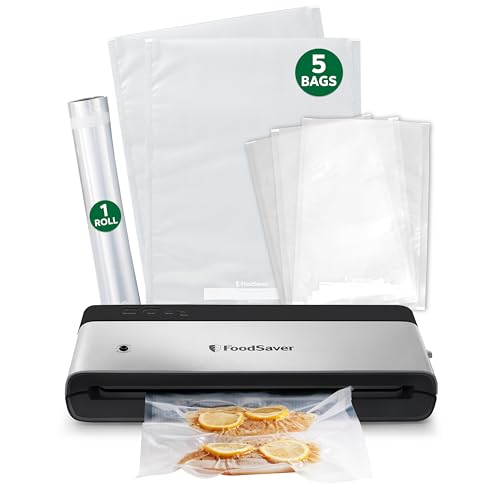
For most kitchens, buy the FoodSaver. It's cheap, it's everywhere, and it plugs into a huge ecosystem of bags, rolls, jar sealers, and attachments. For bagging leftovers, freezing portions, and sous vide, it does the job for a fraction of a Weston.
Buy the Weston Pro-2300 instead if you process game or fish, seal in real volume, or need to seal moist, marinated foods and oversized bags a consumer sealer chokes on. It's a commercial-grade machine built to run for decades, with parts you can actually replace. You'll pay roughly three times as much and give up counter space.
Below are the exact FoodSaver to start with, the Weston worth stepping up to, a cheaper way in, and the bags you'll need either way. See picks ↓

This is the vacuum-sealer question that fills r/sousvide every holiday season: someone gets a FoodSaver and a Weston, or a broken FoodSaver and a decision to make, and asks which way to go. One is the mass-market sealer in every big-box store. The other is the heavy, boxy machine that hunters and bulk buyers swear by.
They aren't really built for the same person. The FoodSaver is designed to be an affordable, do-everything kitchen sealer with an accessory for every job. The Weston is designed to be a powerful, near-commercial machine that powers through moist foods and survives years of hard use. Pick the wrong one and you either pay commercial money for kitchen-scale needs, or you keep replacing a consumer machine that was never meant for the load you put on it.
So this isn't about which brand is better. It's about how much and what you'll seal, whether you fight moisture and bulk or just bag the occasional dinner, and how you feel about spending three times more up front for a machine that lasts. Here's how owners of both talk about the choice.
Matching each sealer to a freezer
Here's the whole decision in a paragraph. If you seal for a normal kitchen, want to spend the least, and like the enormous FoodSaver accessory ecosystem, get the FoodSaver. If you process game or fish, seal in volume, or need to seal moist foods and oversized bags, get the Weston Pro-2300 and plan to keep it for decades. The people staring at both on the counter frame it exactly this way:
brand new to sousvide/vacuum sealing, and received these two as Christmas gifts! After reading some reviews, I’m leaning more towards the Weston, since it can also do liquids. Does anyone here have experience with this Weston? Or does anyone really love this model of foodsaver?
And the answers sort by load. Light kitchen use points at the FoodSaver almost every time. Heavy, wet, or high-volume sealing points at the Weston.
| Factor | FoodSaver | Weston Pro-2300 |
|---|---|---|
| Price | Lower | Roughly 3 times the FoodSaver |
| Build | Consumer-grade | Commercial-grade, heavy |
| Moist foods | Struggles with juice and moisture | Handles moist, marinated foods far better |
| Durability | Breakage-prone, but gasket is a cheap fix | Runs for decades, parts available |
| Accessories | Huge ecosystem: jar sealers, rolls, attachments | Uses FoodSaver accessories (no auto-shutoff) |
| Best for | Everyday kitchen, sous vide, freezing portions | Game and fish, bulk, liquids, longest life |
Durability: the reason people switch to Weston
The most common story in these threads is a FoodSaver that quit and a Weston that didn't. Consumer sealers run a small motor and pump hard, and under heavy use they wear out. People who seal a lot tend to arrive at the Weston after burning through a FoodSaver or two:
After a series of foodsavers I bought a Weston. I've had it for years.
That's one owner's luck, not a guarantee every FoodSaver dies young, but the pattern is real enough that heavy users repeat it. A Weston is built to a tougher standard and, just as important, is designed to be repaired rather than replaced, which is exactly why the people who seal hardest tend to end up with one.
Sealing power: moisture, bulk, and big bags
The Weston's commercial guts actually change what you can do here, not just how long the machine lasts. A stronger pump and a longer seal bar let it handle moist, marinated foods and oversized bags that make a FoodSaver struggle or quit. If you sous vide big cuts or seal damp, marinated meat, it matters:
This is the exact reason I got the Weston. I want to be able to sous vide bigger rib racks! My chamber vac or the Foodsaver can’t do it.
Be clear on what this does and doesn't mean: neither of these is a chamber sealer, so for soup and stew you still freeze the liquid solid first or reach for a chamber vac, and even Weston owners warn against letting straight liquid reach the suction. Short of that, though, the Weston powers through the damp and marinated foods that stall a FoodSaver. If most of what you seal is dry, portioned, and bag-sized, you'll never notice the difference. If you butcher, brine, or batch-cook, you will.
The FoodSaver case: cheap, everywhere, and fixable
None of this should read as a knock on the FoodSaver, because for the buyer it's built for, it's genuinely the smart pick. It costs a fraction of a Weston, the bags and accessories are in every store, and the machines last longer than people expect once you know the one maintenance secret: the gasket is a wear part you replace for a few dollars, not a reason to throw the machine away.
Don’t know anything about the Weston but I’ve had a food saver for over ten years. I recently thought it was dead but after a search I bought a new gasket for a few dollars and I was back in business.
That's the quiet majority of FoodSaver owners: years of service, one cheap gasket now and then. Replace it every year or two, don't store the lid locked down, and a FoodSaver keeps sealing long past the point where people assume it's dead.
Bags, accessories, and cross-compatibility
One underrated point in the FoodSaver-versus-Weston choice is that you don't fully leave the FoodSaver ecosystem even when you buy the Weston. The Weston accepts many FoodSaver accessories, the mason-jar sealer and the handheld ziplock attachment among them, though with a catch worth knowing:
I got a weston too. You need to get an extra set of foam seal and extra heat resistant type later. Be very careful not to get liquid in the suction hole. It could damage the vacuum. You can use some of the foodsaver accessories like the mason jar sealer and the ziplock attachment.
And the FoodSaver-brand bags and rolls have a good reputation on their own, which is why even Weston owners often keep buying them. One two-decade Weston owner still reaches for FoodSaver roll material, USA-made and reliable:
heading toward 20 years with a Weston Pro-2100, about half that time in light commercial use. It's not terribly expensive, replacement parts are available and I've only replaced the teflon tape so far. I use Foodsaver 8" and 11" roll material as it's USA made high quality BPA free material
So the accessory question isn't really either-or. Whichever machine you buy, FoodSaver-brand bags and jar sealers are likely in your future. The difference is that on the FoodSaver they auto-shut-off and on the Weston you run them manually.
Price and value over time
The sticker gap is real: a FoodSaver is often a third to a fifth of a Weston Pro-2300. For a light user, that alone settles it, and it's the honest math people work through out loud:
would you rather have $120 or a second vacuum seeler? If the Weston breaks in 5 years, I'd buy whatever is the best value in 5 years.
The counter-argument is only about time. If a cheap sealer dies every couple of years under heavy use, the Weston's higher price amortizes into the cheaper choice, plus you can rebuild it instead of rebuying it. That case only pays off if you actually seal hard. For someone bagging the occasional dinner, the FoodSaver's low price is simply the better deal.
FoodSaver or Weston
Start with the FoodSaver unless you already know you're the heavy user. It's cheap, it's everywhere, the accessory ecosystem is unmatched, and a few-dollar gasket keeps it running for years. For everyday kitchen sealing and sous vide, the search ends there.
Step up to the Weston Pro-2300 when you process game or fish, seal in real volume, or fight moist foods and oversized bags a consumer machine chokes on. You'll pay several times more and give up counter space, but you'll get commercial sealing power and a machine you repair instead of replace. Match the sealer to what you actually seal, and either way you end up with a machine people trust.
Recommended
Products related to this guide.


What owners say
Real owner reports from the threads and editorial sources we drew on for this guide.
“brand new to sousvide/vacuum sealing, and received these two as Christmas gifts! After reading some reviews, I’m leaning more towards the Weston, since it can also do liquids. Does anyone here have experience with this Weston? Or does anyone really love this model of foodsaver?”
— r/sousvide / u/SkrtBoySkrt
“After a series of foodsavers I bought a Weston. I've had it for years.”
— r/sousvide / u/tomatocrazzie
“This is the exact reason I got the Weston. I want to be able to sous vide bigger rib racks! My chamber vac or the Foodsaver can’t do it.”
— r/sousvide / u/williekinfam9
“Don’t know anything about the Weston but I’ve had a food saver for over ten years. I recently thought it was dead but after a search I bought a new gasket for a few dollars and I was back in business.”
— r/sousvide / u/Build68
“I got a weston too. You need to get an extra set of foam seal and extra heat resistant type later. Be very careful not to get liquid in the suction hole. It could damage the vacuum. You can use some of the foodsaver accessories like the mason jar sealer and the ziplock attachment.”
— r/sousvide / u/corgi-king
“heading toward 20 years with a Weston Pro-2100, about half that time in light commercial use. It's not terribly expensive, replacement parts are available and I've only replaced the teflon tape so far. I use Foodsaver 8" and 11" roll material as it's USA made high quality BPA free material”
— r/sousvide / u/EnRober
“would you rather have $120 or a second vacuum seeler? If the Weston breaks in 5 years, I'd buy whatever is the best value in 5 years.”
— r/sousvide / u/JavaOrlando