Easy Fermenter
Easy Fermenter Lids Reviews (2026)
By June Park · Updated October 2026
Independent editorial review. We never accept payment for coverage, though we may earn a commission if you purchase through our links.

Verdict
Owners running the pump-and-valve lids are mostly satisfied with them for everyday single-jar ferments. The one-way valve self-burps, keeps oxygen out, and takes the guesswork out of pressure for anyone new to this. The knocks repeat just as reliably: debris clogs the valve and invites mold, brine pushes up through the airlock on an active batch, the pump's vacuum quits holding once gas refills the jar, and nothing but a wide-mouth jar will take these lids. A vocal slice of the community also doubts any fermentation gadget is needed, pointing at a plain jar and a loose lid doing the same work for free. Our call: a useful beginner tool with a durability asterisk, not a must-have.
Read full take ↓Similar fermentation lids
The Easy Fermenter Wide Mouth Fermentation Lids Kit from Nourished Essentials exists to fix the two things beginners get wrong: letting oxygen sit on the surface, and forgetting to burp the jar. Each lid screws onto a wide-mouth mason jar, seals with a silicone gasket, and vents fermentation gas through a one-way valve, so pressure escapes on its own. A little hand pump pulls the starting air out. A dial on top marks the day you began. For a first jar of kraut or a small batch of pepper mash, it is about as low-effort as home fermenting gets.
The community is split on whether you need any of it. Owners running the valve-and-pump lids mostly like them for single-jar ferments, and the self-burping valve does take the guesswork out of pressure. The moving parts are also the parts that fail. Debris lodges in the valve. The pump's vacuum bleeds off. The silicone holds onto smells, and nothing but a wide-mouth jar will take these lids. We weigh the beginner convenience against those soft spots below, and point you at simpler options if the gadget is not for you.
The short version
The Easy Fermenter is a helpful beginner tool with two caveats. Owner reports back that up, and so does the wider community's grumbling about fermentation gadgets in general. Detail below, verdict first.
What's good:
- The one-way silicone valve self-burps, so gas escapes on its own and you never have to remember a burping schedule.
- No water airlock to keep topped up, unlike the bubbler lids a lot of beginners fight with.
- Pump-and-date routine is close to foolproof for a single jar of kraut, pickles, or pepper mash.
- Keeps oxygen off the surface, which is the failure new fermenters run into most.
What's not:
- The moving parts fail more than a plain lid: debris can lodge in the valve and let mold track into the jar.
- The pump vacuum bleeds off as fermentation gas refills the headspace, so it is not a lasting seal.
- Silicone can pick up smells and staining over time, and lively batches push brine up through the airlock.
- Wide-mouth jars only, so you cannot repurpose narrow-mouth bottles you already own.
Who it's for
This kit fits a specific buyer and irritates another. Sort yourself before you spend.
Buy it for:
- A first foray into fermentation where hands-off and hard-to-mess-up matters more than saving a few dollars.
- Single-jar batches of kraut, fermented pickles, hot sauce mash, or fermented garlic in wide-mouth mason jars.
- Anyone who has abandoned water-airlock bubblers because topping them up and watching for evaporation was a chore.
Skip it if:
- You already ferment confidently; a plain jar with a loosely seated lid does the same job for nothing.
- You want the least that can go wrong: the Masontops Pickle Pipes self-burp with no pump, dial, or valve to clog.
- You want everything matched in one purchase; a full starter kit bundles weights, lids, and a tamper together.
That last group is loud, and worth hearing before you spend. Plenty of long-time fermenters see a lid gadget as solving a problem they never had:
Glass jar. Twist on lid. Vegetable and brine in. Profit. No hassle. No need for fermentation "product"
fun, did it probably not in your demographic though, i'm not a gadget guy, still do it grandma style with whatever jars are empty and a sharp knife to prep.
The specs that matter
Simple product. Three details decide whether it fits how you actually ferment:
Wide-mouth mason jars only: the lids thread onto standard wide-mouth jars and nothing else, so a narrow-mouth bottle or an odd import jar is out. Check your jars before you order if your collection is mixed. There is no universal fit here.
One-way valve plus a hand pump: the valve does the day-to-day work, venting CO2 while blocking air from coming back in. The pump is a one-time move to evacuate the starting air. You do not re-pull it, and the jar does not stay under vacuum once the ferment gets going.
A date dial on the lid: the top rotates to mark the day you started, handy when a shelf holds several jars at different stages. Some owners call it a gimmick and use a piece of tape instead. Either way it changes nothing about how the ferment performs.
How well it preserves
On the small single-jar ferments it was built for, the Easy Fermenter does the core job well. The one-way valve vents gas and keeps oxygen off the surface, which is all an airlock is supposed to do. Owners who came to it from finicky water bubblers describe the switch as the moment fermenting stopped being fussy. One long-time hot-sauce maker picked up a valve lid with the pump and stopped losing batches to mold:
There is a guy on U tube and his channel is: "Alabama Hot Sauce". He does the vacuum ferment. as to why I do it? Oxygen is your enemy and I used to get failures (mold) in my ferments (Not just Kim Chi and not all the time). But haven't had a failure since the vacuum.You don't have to do it. But I got into it when I bought those one way valve lid and didn't have to use the bubblers (which never seemed to work for me). Since I got the vacuum pump along with the lid I figured I'd give it a try. The bubblers never seemed to work because I'd never see them actually send a bubble through them. So here with the vacuum I knew I was getting a lot of Oxygen out of the jar and then id wind up getting positive pressure in there in just two day. ( I could smell it). And I'm not even sure I'm making Kim Chi. I'm not using the real recipe but I'm using this salted Chili paste in a red tub. End product is close enough and I can add things like red radish (which is not a Kim Chi radish but it's all I can get.) And I can add in things like Tom Yum shrimp paste to change up the flavor too. If I have carrots left over I'll throw them in too. so it's not real Kim Chi. but it's good enough since you can't buy it down here in NE Florida. I've been to Korea several times and I know what the real stuff tastes like. My product is pretty close to the taste. (South Korea, Not the north)
The valve breathes on its own, and a lively batch will push gas and sometimes a little brine out the top. That is the airlock working. Experienced owners barely register it:
That is what they do....I just pour off the excess that bubbles out and put it back in the cupboard to continue
You will see that overflow yourself if you skimp on headspace, or if your weight lets produce float up into the active zone. One owner a week into a pepper ferment ran straight into it:
I'm fermenting some mild peppers for sauce. Today I noticed some brine has pushed up through the airlock. I have about an inch of head space so not sure why it's pushing through. Some peppers have snuck around the weight so the surface might be more active than it should. Should I clean this off or just leave it be? The peppers have been fermenting for almost a week now and I was planning on leaving them for another week.
The limits are scale and mess. One jar at a time, household quantities, and a vigorous ferment wants real headroom or it climbs into the valve. Stay inside those bounds and the results come out clean and consistent batch after batch.
Built to last
Durability is the weak axis, and we would rather say so up front. The Easy Fermenter is not fragile. It just has three things that can go wrong where a plain lid has none: valve, pump, gasket. The valve is a small opening, and anything that lodges in it can cost you the whole jar:
I rinse them off and then spritz with some starsan. I've had only one failed ferment with these jars and it was from A seed or something lodging in the airlock valve and mold grew down in to the jar.
The pump has a limit people do not expect. It pulls the starting air out, and then the vacuum goes away; fermentation gas refills the headspace, the compression releases, and you are back to a plain vented jar. One commenter in the Easy Fermenter thread laid out the mechanics for anyone expecting a permanent seal:
I don't know exactly what product the photo you took is, but in the case of such products, aren't they mostly containers that use an air pump to extract air and create a vacuum compression? If it's that kind of product, I believe the compression releases and the vacuum effect almost disappears as gas fills the interior. And in the case of fermented products, I think it is better to allow gas to escape from the inside to prevent explosive decompression, along with extra space to hold the gas. (In your case, since the vacuum compression would have already released, there's nothing more to do. Except wiping up what overflowed...)
The rest of the longevity gripes are what you would expect from silicone and plastic used with pungent food. The silicone holds onto garlic and pepper smells and picks up staining. And the system is locked to wide-mouth jars, so old narrow-mouth bottles stay on the shelf. That fit ceiling frustrates people who want one lid for a mixed jar collection:
I feel this - almost like those who would buy this product aren't really understanding the soul of the fermentation hobby/craft. That being said, I wouldn't mind a product that makes the process easier to pick up. I haven't seen a truly universal self burping lid or a good weight that can expand to any jar size - these would be helpful for those that want to repurpose jars and bottles they have lying around.
None of which makes it a bad buy. Keep the valve clear, leave headspace, rinse the silicone properly, and a set runs through plenty of batches. The number below sits lower than the others because there is more to maintain and more to fail here than on the dead-simple alternatives.
Living with it
Ease of use is the reason to buy this, especially if you are new. Pump the air out, set the date dial, walk away. No water airlock to top up. No burping schedule to remember. Those are the two things beginners most often get wrong, and the community's own diagnosis of why first ferments fail reads almost like a spec sheet for what this kit is trying to fix:
Stinky failure examples and "is this mould" queries on fermentation forums like this one invariably result from beginner fermenters 1) not submerging 2) not excluding oxygen and/or 3) not getting salt ratio correct. If your tool can easily correct for these 3 things (esp 1 and 2), then you have a winner.
Dated lids make a shelf of jars readable at a glance, and cleanup is a rinse instead of taking a three-piece bubbler apart. The bigger payoff is nerve. A tool that keeps oxygen out and vents pressure by itself is what gets a hesitant first-timer to actually start, which even the gadget skeptics will grant:
Done - good luck with your project! I'm not sure how much of the fermentation community would be into a gadget, it's a very bare bones hobby down to food quality and method mostly. But, if it gets more people comfortable with fermentation, all the better!
Small gripes remain. The date dial strikes some owners as gimmicky, the pump is one more thing to lose in a drawer, and none of it is necessary once you ferment by feel. For the first few jars, though, pump-and-forget does what it promises.
How it compares
The usual competition for this kit comes down to three options.
Versus the Masontops Pickle Pipes: the Pickle Pipes are the simpler waterless option, silicone domes that self-burp with no pump, no dial, and no small valve to clog. Less to fail, nothing to maintain. You give up the pump-and-date routine, and a lot of owners doing hands-off ferments would rather have a cap that only breathes.
Versus a full Masontops starter kit: buy everything matched at once and a complete kit gives you glass weights, airlock lids, and a tamper sized to work together. It costs more than a bare lid set. You are also not hunting down weights and tools two weeks later.
Versus a plain jar and a loose lid: the cheapest cross-shop is no gadget at all. A wide-mouth jar with the lid seated finger-tight vents pressure and ferments fine, and confident fermenters swear it does everything a valve lid does for nothing. You lose the safety rail. No automatic burping, and keeping produce submerged and oxygen off the top is entirely on you.
Using it well
The Easy Fermenter rewards a little setup discipline. Leave real headspace, an inch or two, so a lively ferment has somewhere to push before it reaches the valve. Weigh your vegetables down under the brine so nothing floats into the active zone, clogs the valve, or grows mold. Pump once at the start and then let the valve work instead of re-pumping. Rinse the silicone gasket and valve thoroughly between batches, especially after garlic or peppers. Check the valve is clear before you seal a new jar.
Still deciding between lid systems? See them side by side first. Our guide to the best mason jar fermentation lids walks through valve lids, waterless domes, and water airlocks in more depth, with the Easy Fermenter in context against the alternatives.
Easy Fermenter: buy or skip
We recommend the Easy Fermenter for one job: getting a beginner through their first jars without the two mistakes that ruin ferments. The self-burping valve and the pump-and-date routine take the anxiety out of it, single-jar batches come out clean, and none of the fiddling that makes people quit on water airlocks survives the switch. For that buyer the small outlay is worth it.
The asterisk is durability and necessity. Valve clogs, a vacuum that does not hold, silicone that picks up smells, wide-mouth jars only. All of that is more to manage than a Pickle Pipe or a plain lid gives you. If the training wheels are the appeal and you ferment in wide-mouth jars, buy it. If you already ferment by feel, or you want the fewest possible things that can fail, we would spend less and go simpler.
Our Ratings
Overall score
On the single-jar batches it was built for, the Easy Fermenter does the core job well. The one-way silicone valve vents CO2 and keeps oxygen off the surface, so kraut, pickles, and pepper mash ferment cleanly with no daily burping. Owners running the valve-and-pump setup report few failed batches once they leave enough headspace. What holds the score back is scale, plus the brine that climbs out through the airlock on a lively ferment.
The weak axis, and the moving parts are why. A seed or bit of debris lodges in the one-way valve and mold tracks down into the jar. The pump vacuum bleeds off as gas refills the headspace. Silicone picks up smells and stains over the seasons, and the lids fit wide-mouth jars only, so narrow-mouth bottles stay in the cupboard. Nothing here is fragile. There is simply more to maintain and more to fail than on a plain lid.
Ease of use is what wins beginners over. Pump the air out, set the date dial, walk away. No water airlock to top up, no burping schedule to remember, which is the two most common new-fermenter mistakes handled for you. Cleanup is a rinse, and dated lids keep a shelf of jars straight. Some owners find the dial gimmicky. Pump-and-forget is the part they keep using.
Easy Fermenter Lids Reviews (2026) on Amazon.
What People Are Saying
Owners running the pump-and-valve lids are mostly satisfied with them for everyday single-jar ferments. The one-way valve self-burps, keeps oxygen out, and takes the guesswork out of pressure for anyone new to this. The knocks repeat just as reliably: debris clogs the valve and invites mold, brine pushes up through the airlock on an active batch, the pump's vacuum quits holding once gas refills the jar, and nothing but a wide-mouth jar will take these lids.
A vocal slice of the community also doubts any fermentation gadget is needed, pointing at a plain jar and a loose lid doing the same work for free. Our call: a useful beginner tool with a durability asterisk, not a must-have.
We weight candid owner reports from Reddit and preservation forums above brand-influenced editorial coverage, then reach our own verdict from them. The quotes below are the evidence; the rating and the take are ours.
What Reddit Is Saying
“That is what they do....I just pour off the excess that bubbles out and put it back in the cupboard to continue”View thread →
“There is a guy on U tube and his channel is: "Alabama Hot Sauce". He does the vacuum ferment. as to why I do it? Oxygen is your enemy and I used to get failures (mold) in my ferments (Not just Kim Chi and not all the time). But haven't had a failure since the vacuum.You don't have to do it. But I got into it when I bought those one way valve lid and didn't have to use the bubblers (which never seemed to work for me). Since I got the vacuum pump along with the lid I figured I'd give it a try. The bubblers never seemed to work because I'd never see them actually send a bubble through them. So here with the vacuum I knew I was getting a lot of Oxygen out of the jar and then id wind up getting positive pressure in there in just two day. ( I could smell it). And I'm not even sure I'm making Kim Chi. I'm not using the real recipe but I'm using this salted Chili paste in a red tub. End product is close enough and I can add things like red radish (which is not a Kim Chi radish but it's all I can get.) And I can add in things like Tom Yum shrimp paste to change up the flavor too. If I have carrots left over I'll throw them in too. so it's not real Kim Chi. but it's good enough since you can't buy it down here in NE Florida. I've been to Korea several times and I know what the real stuff tastes like. My product is pretty close to the taste. (South Korea, Not the north)”View thread →
“I'm fermenting some mild peppers for sauce. Today I noticed some brine has pushed up through the airlock. I have about an inch of head space so not sure why it's pushing through. Some peppers have snuck around the weight so the surface might be more active than it should. Should I clean this off or just leave it be? The peppers have been fermenting for almost a week now and I was planning on leaving them for another week.”View thread →
“I rinse them off and then spritz with some starsan. I've had only one failed ferment with these jars and it was from A seed or something lodging in the airlock valve and mold grew down in to the jar.”View thread →
“I feel this - almost like those who would buy this product aren't really understanding the soul of the fermentation hobby/craft. That being said, I wouldn't mind a product that makes the process easier to pick up. I haven't seen a truly universal self burping lid or a good weight that can expand to any jar size - these would be helpful for those that want to repurpose jars and bottles they have lying around.”View thread →
“Stinky failure examples and "is this mould" queries on fermentation forums like this one invariably result from beginner fermenters 1) not submerging 2) not excluding oxygen and/or 3) not getting salt ratio correct. If your tool can easily correct for these 3 things (esp 1 and 2), then you have a winner.”View thread →
“Done - good luck with your project! I'm not sure how much of the fermentation community would be into a gadget, it's a very bare bones hobby down to food quality and method mostly. But, if it gets more people comfortable with fermentation, all the better!”View thread →
“I don't know exactly what product the photo you took is, but in the case of such products, aren't they mostly containers that use an air pump to extract air and create a vacuum compression? If it's that kind of product, I believe the compression releases and the vacuum effect almost disappears as gas fills the interior. And in the case of fermented products, I think it is better to allow gas to escape from the inside to prevent explosive decompression, along with extra space to hold the gas. (In your case, since the vacuum compression would have already released, there's nothing more to do. Except wiping up what overflowed...)”View thread →
“Glass jar. Twist on lid. Vegetable and brine in. Profit. No hassle. No need for fermentation "product"”View thread →
“fun, did it probably not in your demographic though, i'm not a gadget guy, still do it grandma style with whatever jars are empty and a sharp knife to prep.”View thread →
Frequently asked questions
Is the Easy Fermenter Lids worth it?
Ease of use is what wins beginners over. Pump the air out, set the date dial, walk away. No water airlock to top up, no burping schedule to remember, which is the two most common new-fermenter mistakes handled for you.
How is the Easy Fermenter Lids built?
The weak axis, and the moving parts are why. A seed or bit of debris lodges in the one-way valve and mold tracks down into the jar. The pump vacuum bleeds off as gas refills the headspace.
What is the Easy Fermenter Lids best suited for?
On the single-jar batches it was built for, the Easy Fermenter does the core job well. The one-way silicone valve vents CO2 and keeps oxygen off the surface, so kraut, pickles, and pepper mash ferment cleanly with no daily burping. Owners running the valve-and-pump setup report few failed batches once they leave enough headspace.
What do real owners say about the Easy Fermenter Lids?
Owners running the pump-and-valve lids are mostly satisfied with them for everyday single-jar ferments. The one-way valve self-burps, keeps oxygen out, and takes the guesswork out of pressure for anyone new to this. The knocks repeat just as reliably: debris clogs the valve and invites mold, brine pushes up through the airlock on an active batch, the pump's vacuum quits holding once gas refills the jar, and nothing but a wide-mouth jar will take these lids.
Options Worth Checking Out
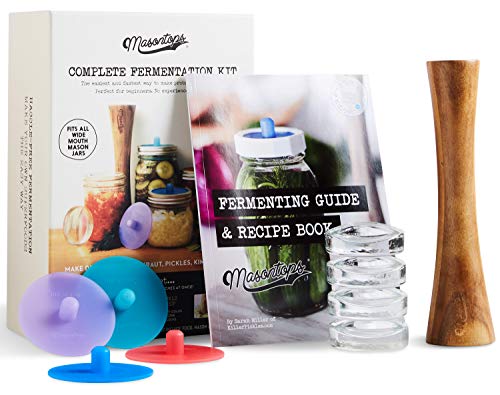
Masontops Complete Mason Jar Fermentation Kit
The full starter kit, for when you want every piece matched out of the box. Glass weights, wide-mouth airlock caps, and a wooden tamper that all size together, so nothing needs sourcing separately once you move past a single jar.
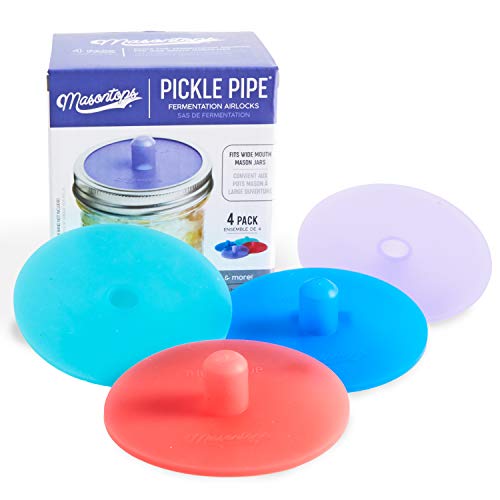
Masontops Pickle Pipes Waterless Airlock Lids
The main cross-shop. Silicone waterless domes that self-burp with no pump, no dial, and no valve to clog, so there is less to go wrong. You lose the vacuum-and-date routine. Plenty of hands-off fermenters would rather have a cap that only breathes.

32oz Mason Jar Fermentation Kit
A cheaper way to try the format on one jar. This generic 32oz kit bundles a lid, pump, and weight in the same waterless-airlock style. Find out whether pump-and-valve suits you before paying for a larger multi-lid set.
You Might Also Need
Accessories worth grabbing alongside your purchase
