Anova
Anova Precision Cooker Pro Reviews (2026)
By June Park · Updated October 2026
Independent editorial review. We never accept payment for coverage, though we may earn a commission if you purchase through our links.
Verdict
Owners are split on the Pro and the divide falls along one line: how much water they heat. The volume cooks, filling coolers and tubs, pasteurizing jars, running several units a day, praise the 1200W power, the capacity, and the onboard controls that let them skip the app entirely, and plenty report years of reliable use. The critics gather on two things: wifi and bluetooth that owners say can brick the unit, and customer service described as slow and unhelpful when a machine dies. A vocal group also calls the Pro over-engineered and overpriced for anyone cooking a single pot, and on that point we agree with them. Our takeaway: the cooking never came up as a problem in the threads, and everything bolted on around it did.
Read full take ↓Similar sous vide machines
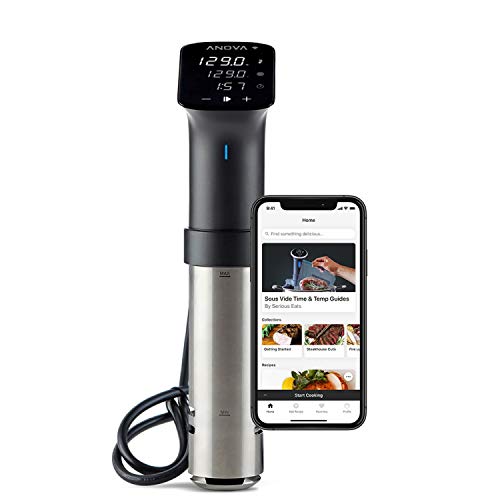
The Anova Precision Cooker Pro is the heavy-duty tier of Anova's lineup, and it announces itself the second you pick it up. A 1200W heating element, an IPX-7 waterproof body, a stainless shell, and a dual-bearing motor rated for something like 10,000 hours of near-continuous running. Where the standard Anova and the Nano are built for a pot on the counter, the Pro is built to hold a 26-gallon cooler or an 80-liter tub at a rock-steady temperature for a day and a half without complaint. It is the sous vide stick for people who cook in bulk, not for people who sear one steak on a Tuesday.
The power is real, and the owners who lean on it hardest are the ones who love it most. Pasteurize jars of pickles, cook for a crowd, fill a tub: hauling a huge water bath up to temperature and pinning it there is the whole point. It is also expensive, bulky, and, since Anova went app-first on its smart features, saddled with flaky wifi and a customer-service record owners bring up unprompted. There is a clean line between the cook who needs this machine and the cook who is buying gallons they will never fill, and it is worth working out which side you are on before you pay up a tier.
The short version
A powerful, high-capacity machine that rewards heavy users, bores casual ones, and hides its problems in the smart features rather than the cooking.
What's good:
- A 1200W element that hauls a big bath up to temperature fast and holds it dead steady, even in coolers and tubs that stall lesser sticks.
- Large capacity, comfortably running 26 gallons of water, which is what makes big-batch cooking and jar pasteurization practical.
- Onboard temperature and timer controls, so you can run it entirely off the unit without ever opening the app.
- IPX-7 waterproofing and a heavy stainless build that shrugs off the splashes and long runs that kill flimsier circulators.
What's not:
- It costs a real premium over the standard Anova and the Joule, and most home cooks will never use the capacity.
- Bulky and heavy, more machine than a single pot of steaks ever needs, and awkward to store.
- The wifi and bluetooth are the weak point by a wide margin; owners report connection attempts that brick the unit outright.
- Anova customer service comes up repeatedly as slow and unhelpful when a unit fails.
Who it's for
Water volume decides it. How much of it do you plan to heat at once?
Buy it for:
- Big batches: pasteurizing jars, cooking for a crowd, or filling a large cooler or tub that a standard stick cannot hold at temperature.
- Heavy, near-daily use where a waterproof, high-wattage machine built for long runs earns the extra outlay over years.
- People who want to run everything from the onboard screen and refuse to cook through a phone app.
Skip it if:
- You mostly cook one or two steaks on a weeknight; the Anova Precision Cooker 3.0 does that job for much less and stores easier.
- You want the cheapest way onto the Anova ladder; the entry Anova cooker covers single-batch cooking for a fraction of the spend.
- You want the most compact body and the smoothest support experience; the Breville Joule is the smaller, better-serviced rival.
The specs that matter
Three numbers separate the Pro from every cheaper stick on the shelf:
1200W heating element: this is the headline. More wattage means a big water bath reaches your target temperature faster and recovers quicker every time you drop cold jars or bags in. One spec separates the Pro from the standard stick, and this is it. Owners trust it with coolers because of this number.
Rated for roughly 26 gallons of water: capacity is a heat-loss problem, and the Pro has the muscle to hold a much larger, harder-to-heat volume than a Joule or a budget stick. For a single pot it is overkill; for a tub of pint jars or a party's worth of steaks it is the entire point of the tier.
IPX-7 waterproofing and a 10,000-hour motor rating: the body is sealed to survive full immersion, and the dual-bearing motor is specced for near-continuous running. That is a durability story on paper, and it holds up for the core machine even where the smart features do not.
How well it preserves
Even the skeptics concede this axis. The 1200W element drives a large bath to temperature quickly and then holds it flat, which is exactly what you need at a volume where a weaker stick would fight the water all day. One owner running an oversized setup for jar pasteurization walked through his own numbers and the machine kept pace:
Made it to 140 in under 2 hours and made it from 140 to 170+ in 2-3. Unless it can't actually make it to 180 or dies.... so far I cant say a bad thing about the setup even for my first time with a sous vide machine. Obviously you can see how easily it could scale to 24+ pints at one time.
Capacity is what that power buys. The Pro circulates a far larger volume than a Joule or a budget stick, and buyers who cross-shop specifically on volume point straight at the gallon rating:
From what I have been seeing, the biggest thing is it can regulate the temperature of more water. The Joule works with up to 10 gallons. The Anova Pro works with 26 gallons. The projects I want to work on requires more water. So for most cooks it does the same thing as any other immersion cooker on the market.
Worth paying for only if you use the headroom, though. On a single pot of steaks, a 1200W element and a 26-gallon rating are power you will never call on, and the owners who cook small say so themselves. Cook at the volume it was designed for and the drive and temperature hold are the best thing about the machine.
Built to last
Be precise about which half of this machine you are asking about. The cooking hardware is robust: IPX-7 waterproofing, a heavy stainless body, a motor specced for long runs. Owners who use the hardware and ignore the smart features report years of quiet service:
I've had a pro with no issues for a little over a year, but I haven't tried to connect it with bluetooth.
The most loyal owners are the commercial-style ones running several units a day, and they credit Anova with replacing failed units when they go down:
Everyone here saying how expensive this is and just get a cheap one. Monoprice is rated for 4 gallons max with a 8 liter flow rate. Joule claims under certain conditions you may be able to hit 10 gal but recommends 2.5. This thing does 26 gallons, no problem with a 12 liter/min flow rate. So say what you will, but I swear by Anova. I’ve had a few go out on me but I’ve had them all replaced, no questions asked and brand new ones sent to me. I use 6 of them a day minimum. I’ll take these over multiple thousand dollar polyscience units any day.
Then there is the wifi and bluetooth, where the failure reports gather and refuse to leave. Connection attempts that do not merely fail but brick the unit. Screens that die. Motors that go noisy and stay that way. One buyer cycled through several units before giving up on the smart features altogether:
Pro has a upgraded heating element which allows to keep more water hot (more food), or will heat same water faster. Never have been able to get bluetooth working with out bricking device (2), third one the screen just turned off and wouldn't power back on, and the last one just makes noise the entire cook (yes I've check for bent parts). Monoprice next time.
Mine had to be replaced after trying to hook it up to the WiFi murdered it and it wouldn’t turn on
A dead Pro then meets Anova support, which is the single most repeated complaint across the threads: slow, hard to reach, reluctant to help:
My Pro broke after a month. Their customer service is awful, they don't answer their service line or respond to emails. It took me almost a month and a half to get a refund. I'll never get another Anova product again.
So: a durable machine with a fragile smart layer bolted to it. The heating, the waterproofing, and the build are tough enough that heavy users trust them for years. The wifi is a liability and the support behind a failure is worse, which is why this number sits a step below the performance score instead of matching it. Run it from the onboard controls, never pair it with wifi, and keep the receipt somewhere you can find it.
Living with it
Size and price catch up with the Pro here. The win is onboard control: set temperature and time on the unit itself, never touch a phone. Owners who came from an app-first Joule name that as the reason they switched:
It's bigger (as in "bulky" compared to the Joule), and it has a display. In theory it can move more water, but you may never need that capacity in home use. I had a Joule for a few years until it shorted out one day, but I got the Anova so that I could just set everything on the unit and not have to use an app. I always had to reset the Joule to connect to it.
No-app operation plus the stronger element is the case defenders make for paying up a tier:
And Anova Pro has no-app-required operation and a more powerful heating element.
Everything else is friction. Bulky, heavy, a lot of machine to store and to clamp onto a pot, and the capacity justifying all of it is capacity most kitchens never touch. Experienced owners look at the Pro and see a solved problem re-solved, and for a casual cook they have a point:
Seems like they over-engineered an already working product. Faster heating times would be nice but not necessarily needed. The base works fine for me at least. Thanks for the insights, I'll be avoiding the pro model in the future. Been thinking of getting a second one for separate cook temps (e.g., veggies vs proteins).
Hear the value skeptics out before you spend up. Take away the screen and the connectivity and a circulator is a heater, a propeller, and a thermostat, so the Pro premium only makes sense when the power and capacity are doing real work:
I agree. A heating element, a little spinny blade to circulate water, and a temp control thing. Yes, it has a pretty screen that may impress your friends and some connectivity stuff that is barely useful but neat. Sorry, not inpressed.
How it compares
Nobody shops the Pro alone. Three sticks sit next to it in every thread.
Versus the Breville Joule: the Joule is the compact-power rival, and the trade is real. It hides its controls in an app rather than an onboard screen, which the Pro's fans dislike, but it packs strong heating into the smallest body in the category and earns notably better marks for customer service. Owners give the Joule the edge on support and, by a hair, on temperature precision.
Joule has better customer service (significantly), and more precise temperature control (though only barely).
Versus the Anova Precision Cooker 3.0: the 3.0 is the mainstream Anova most home cooks need. It keeps the onboard buttons and the trusted temperature control in a lighter, cheaper stick that handles a normal pot or a modest cooler. Unless you are regularly filling a big tub, the 3.0 does the same core job without the Pro's bulk or premium.
Versus the entry Anova cooker and the budget sticks: the cheapest way in trades wattage and capacity for outlay. A lower-power stick heats slower and holds less water, but for single-batch weeknight cooking it produces the same result on the plate. Skeptics in every thread argue that for one pot, the extra spend on the Pro buys you nothing you will notice.
Using it well
Feed it the work it was built for. Pair it with a large insulated vessel and a fitted lid so the 1200W element is not spending its output on evaporation and heat loss over a long cook. A lid alone changes how steady a big bath holds. Run temperature and time from the onboard screen and skip wifi setup entirely, because that is where the failures live. On big batches, leave the water room to move around jars or bags instead of packing them in tight, and let the machine's power handle the recovery when you drop cold food in.
And because the Pro is most at home cooking in volume, it pays to think about how you seal and store what you make. Our guide to the best vacuum sealer for sous vide and the freezer walks through bag choice, seal strength, and freezer storage, so the batches you run through a machine this powerful keep.
Who should buy it
Cooks who work in volume, and pretty much nobody else. Pasteurize jars, cook for a crowd, fill a cooler and run it for a day and a half, and the 1200W element, the capacity, and the waterproof heavy-duty build all pay for themselves. No lighter stick matches them. Performance is the standout and the core machine is tough.
Everything wrapped around that muscle is weaker. The wifi is a liability that can take the whole unit down, the customer service waiting behind a failure is worse, and the price and bulk are wasted on anyone cooking a pot of steaks. Our recommendation: skip the wifi setup entirely, and only buy it at all if the big-batch work is already on your calendar. Otherwise you are paying a premium for gallons you will never fill.
Our Ratings
Overall score
The Pro's standout, and even the skeptics concede it. The 1200W element drives a big water bath to temperature fast and holds it dead steady, and the roughly 26-gallon capacity makes big-batch cooking and jar pasteurization practical where a Joule or budget stick would stall out. The only limit worth naming is that most home cooks never use that headroom. At the volume it was designed for, the drive and temperature hold are excellent.
The cooking machine is tough: IPX-7 waterproofing, a heavy stainless body, a motor specced for long runs, and heavy users reporting years of service. Durability splits at the smart layer. Owners repeatedly describe wifi and bluetooth connection attempts that brick the unit outright, plus dead screens and motors that go noisy, and Anova's customer service is the most common complaint of all when something fails. Run it from the onboard controls and it holds up. The app is the liability.
Mixed. The win is onboard control, since everything runs from the unit without ever opening the app, which is exactly why owners switch to it from an app-first Joule. The drawbacks stack up against that: bulky and heavy, more capacity than most kitchens ever use, flaky wifi pairing, and a real price premium. A heavy user will happily live with all of it. A casual one is buying an over-engineered answer to a question they never asked.
Anova Precision Cooker Pro Reviews (2026) on Amazon.
What People Are Saying
Owners are split on the Pro and the divide falls along one line: how much water they heat. The volume cooks, filling coolers and tubs, pasteurizing jars, running several units a day, praise the 1200W power, the capacity, and the onboard controls that let them skip the app entirely, and plenty report years of reliable use. The critics gather on two things: wifi and bluetooth that owners say can brick the unit, and customer service described as slow and unhelpful when a machine dies.
A vocal group also calls the Pro over-engineered and overpriced for anyone cooking a single pot, and on that point we agree with them. Our takeaway: the cooking never came up as a problem in the threads, and everything bolted on around it did.
We weight candid owner reports from Reddit and preservation forums above brand-influenced editorial coverage, then reach our own verdict from them. The quotes below are the evidence; the rating and the take are ours.
What Reddit Is Saying
“Made it to 140 in under 2 hours and made it from 140 to 170+ in 2-3. Unless it can't actually make it to 180 or dies.... so far I cant say a bad thing about the setup even for my first time with a sous vide machine. Obviously you can see how easily it could scale to 24+ pints at one time.”View thread →
“Everyone here saying how expensive this is and just get a cheap one. Monoprice is rated for 4 gallons max with a 8 liter flow rate. Joule claims under certain conditions you may be able to hit 10 gal but recommends 2.5. This thing does 26 gallons, no problem with a 12 liter/min flow rate. So say what you will, but I swear by Anova. I’ve had a few go out on me but I’ve had them all replaced, no questions asked and brand new ones sent to me. I use 6 of them a day minimum. I’ll take these over multiple thousand dollar polyscience units any day.”View thread →
“And Anova Pro has no-app-required operation and a more powerful heating element.”View thread →
“I've had a pro with no issues for a little over a year, but I haven't tried to connect it with bluetooth.”View thread →
“We got ours for $200 on sale also, have had it for almost 2 years now, use it 2-4 times a week and it's been great!”View thread →
“From what I have been seeing, the biggest thing is it can regulate the temperature of more water. The Joule works with up to 10 gallons. The Anova Pro works with 26 gallons. The projects I want to work on requires more water. So for most cooks it does the same thing as any other immersion cooker on the market.”View thread →
“It's bigger (as in "bulky" compared to the Joule), and it has a display. In theory it can move more water, but you may never need that capacity in home use. I had a Joule for a few years until it shorted out one day, but I got the Anova so that I could just set everything on the unit and not have to use an app. I always had to reset the Joule to connect to it.”View thread →
“I agree. A heating element, a little spinny blade to circulate water, and a temp control thing. Yes, it has a pretty screen that may impress your friends and some connectivity stuff that is barely useful but neat. Sorry, not inpressed.”View thread →
“Pro has a upgraded heating element which allows to keep more water hot (more food), or will heat same water faster. Never have been able to get bluetooth working with out bricking device (2), third one the screen just turned off and wouldn't power back on, and the last one just makes noise the entire cook (yes I've check for bent parts). Monoprice next time.”View thread →
“My Pro broke after a month. Their customer service is awful, they don't answer their service line or respond to emails. It took me almost a month and a half to get a refund. I'll never get another Anova product again.”View thread →
“Mine had to be replaced after trying to hook it up to the WiFi murdered it and it wouldn’t turn on”View thread →
“Joule has better customer service (significantly), and more precise temperature control (though only barely).”View thread →
“Seems like they over-engineered an already working product. Faster heating times would be nice but not necessarily needed. The base works fine for me at least. Thanks for the insights, I'll be avoiding the pro model in the future. Been thinking of getting a second one for separate cook temps (e.g., veggies vs proteins).”View thread →
Frequently asked questions
Is the Anova Precision Cooker Pro worth it?
Mixed. The win is onboard control, since everything runs from the unit without ever opening the app, which is exactly why owners switch to it from an app-first Joule. The drawbacks stack up against that: bulky and heavy, more capacity than most kitchens ever use, flaky wifi pairing, and a real price premium.
How is the Anova Precision Cooker Pro built?
The cooking machine is tough: IPX-7 waterproofing, a heavy stainless body, a motor specced for long runs, and heavy users reporting years of service. Durability splits at the smart layer. Owners repeatedly describe wifi and bluetooth connection attempts that brick the unit outright, plus dead screens and motors that go noisy, and Anova's customer service is the most common complaint of all when something fails.
What is the Anova Precision Cooker Pro best suited for?
The Pro's standout, and even the skeptics concede it. The 1200W element drives a big water bath to temperature fast and holds it dead steady, and the roughly 26-gallon capacity makes big-batch cooking and jar pasteurization practical where a Joule or budget stick would stall out. The only limit worth naming is that most home cooks never use that headroom.
What do real owners say about the Anova Precision Cooker Pro?
Owners are split on the Pro and the divide falls along one line: how much water they heat. The volume cooks, filling coolers and tubs, pasteurizing jars, running several units a day, praise the 1200W power, the capacity, and the onboard controls that let them skip the app entirely, and plenty report years of reliable use. The critics gather on two things: wifi and bluetooth that owners say can brick the unit, and customer service described as slow and unhelpful when a machine dies.
Options Worth Checking Out

Anova Precision Cooker 3.0 Sous Vide Machine
The mainstream Anova most home cooks actually need. Same onboard controls and trusted temperature hold in a lighter, cheaper stick built for a normal pot or modest cooler. Step down here if the Pro's 26-gallon capacity is more than you will use.
Anova Culinary Sous Vide Precision Cooker
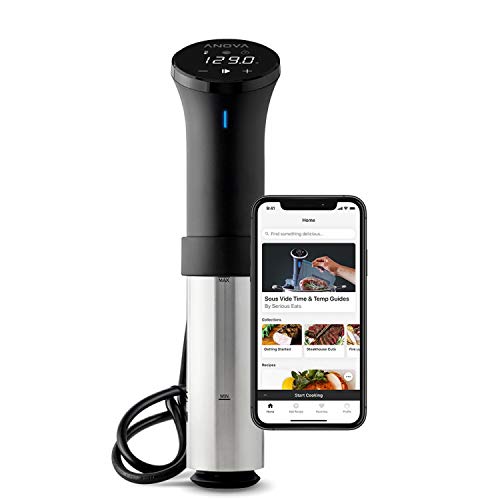
The cheapest honest way onto the Anova ladder. Lower wattage and a smaller body mean slower heat-up and less water held, but for single-batch weeknight steaks and chicken it does the same core job for far less.
Breville Joule Turbo Sous Vide
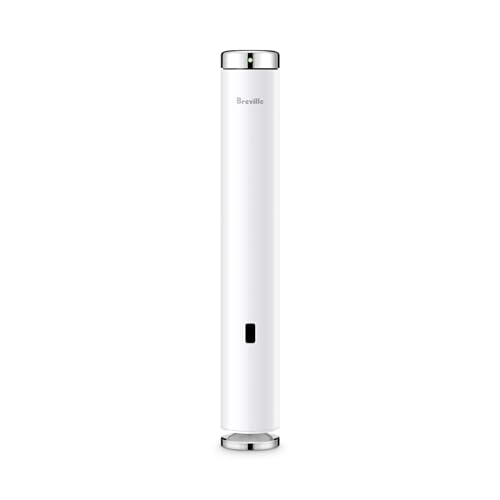
The compact-power rival owners cross-shop most. It hides its controls in an app rather than an onboard screen, but packs strong heating into the smallest body here and earns better support marks. Buy instead for counter space and service.
You Might Also Need
Accessories worth grabbing alongside your purchase


