Tattler
Tattler Reusable Canning Lids Reviews (2026)
By Ruth Alvarez · Updated October 2026
Independent editorial review. We never accept payment for coverage, though we may earn a commission if you purchase through our links.

Verdict
Owners are split on Tattler, and the divide is worth taking seriously. The loyalists are devoted: they love reusing lids for years or decades, cutting single-use waste, and a seal that grips tighter than metal once it takes. The skeptics are just as real, reporting a higher seal-failure rate than metal both out of the canner and on the shelf, with some never cracking the technique and switching back. Almost everyone agrees on two things: there is a real learning curve centered on how loosely you set the band before processing and how firmly you tighten it after, and the payoff depends entirely on whether that ritual clicks for you. The durability and waste savings are near-universally praised; the seal reliability is where the community parts ways. For our money: if you can in volume for your own shelves and will practice the ritual, the reuse is worth the skill tax, but keep a sleeve of metal lids for gift jars and anything you cannot afford to lose.
Read full take ↓Similar canning jars and lids
The Tattler E-Z Seal Reusable Canning Lids are the original answer to a question most canners eventually ask: why am I throwing a lid in the trash after one use? Instead of a single-use metal flat, you get a firm white plastic lid and a separate rubber gasket, held down by an ordinary metal screw band. Wash them, replace a worn gasket now and then, and the same lids can come back for years, even decades. No BPA, no annual lid run, and a hedge against the shortages and price spikes that sent a lot of people looking for alternatives in the first place.
That's the pitch, and plenty of owners are true believers. But this is one of the most divided products in home canning, and the split is worth taking seriously before you spend. For every canner who says they will never go back to metal, there is another who fought a higher seal-failure rate, gave up, and switched back. The difference almost always comes down to a specific tightening ritual you have to follow exactly, and whether that ritual clicks for you. This review lays out both sides: where Tattler earns its loyal following, where it frustrates people into quitting, and who should buy something else instead.
The short version
Tattler is a beloved system with a real learning curve attached. Read enough owner threads and you find the community split down the middle on whether the payoff justifies the fuss.
What's good:
- Reusable for years or decades, so the plastic lid pays for itself and only the cheap rubber gasket wears out.
- No BPA and no single-use waste, plus a real hedge against lid shortages and price spikes.
- Once sealed, the vacuum grips tighter than a metal lid, sometimes hard to pry off.
- Made in the USA (Michigan), and the company answers the phone when owners call for help.
What's not:
- A steep learning curve: the loose-then-tighten band ritual is not intuitive and punishes autopilot.
- Many owners report a higher seal-failure rate than metal lids, both out of the canner and on the shelf.
- Two loose pieces to manage per jar, and no pop button, so you verify each seal by hand.
- Higher upfront cost, and you will not want to gift a jar you can never get back.
Who it's for
What you do with your finished jars matters more here than how much you can. Keep them or give them away?
Buy it for:
- High-rotation canning you eat yourself: beans, broth, tomatoes, and staples you cycle through every year.
- Cutting waste and plastic-free single-use lids from the process, where the reuse is the whole point.
- Prepping against another lid shortage, so a fixed stash of lids keeps working batch after batch.
Skip it if:
- You gift a lot of jars: you will never see these lids again, so a case of single-use Ball lids is the cheaper call.
- You want the fewest possible seal failures with zero new technique; a thick-gasket Superb metal lid seals on the first try.
- You like the reuse idea but want it cheaper to try; the near-identical Harvest Guard lids do the same job for less.
The specs that matter
There is not much of a spec sheet on a lid. The design is what you are buying, and it asks things of you:
Two-piece lid, one screw band: a rigid white plastic top plus a removable rubber gasket, seated under any standard metal band. There is nothing to throw away, but there are two loose parts to heat, place, and keep track of on every single jar, which is the fiddliness owners mean when they say two-piece.
Reusable for years, gasket replaced as needed: the lid itself can outlast you, and owners report sets from the 1960s still in service. The rubber ring is the wear part, good for several uses before it cracks or stretches, and a bag of replacement gaskets costs about what a sleeve of single-use lids does.
No pop button, seal checked by hand: because the band comes off after cooling, there is no false seal to fool you, but there is also no audible ping. You confirm each jar by lifting it gently by the lid alone, which is a habit you build fast but have to build.
How well it preserves
Sealing is what the whole Tattler debate turns on, and it is why the number below sits where it does. When these lids seal, they seal hard. A large share of owners get clean, reliable results and describe a vacuum stronger than any metal lid, to the point the lid is a chore to pry off.
I've never had a Tatler come unsealed. There's a learning curve with learning to put them on in the first place, but once they seal, I have found the seal is much tighter than with regular lids. Almost too tight honestly (hard to pry off, lol). I love mine
Owners who have the technique down report seal rates that match metal lids and hold through storage, including full pressure-canning loads of low-acid food. One caveat belongs up front, though: USDA and NCHFP have never tested or endorsed reusable lids, and every tested processing time was validated with standard two-piece metal lids. Using Tattler for pressure-canned low-acid food means following Tattler's own instructions exactly, including their post-processing band re-tightening (the opposite of the do-not-retighten rule for metal lids), and accepting that you are outside the USDA-validated system. A successful pressure-canned batch of beef stew is exactly the outcome the loyalists point to:
Just sharing my happy success tonight! I used the safe Ball book recipe to pressure can 16 pints of beef stew meat with the Tattler lids and didn’t have a single failure! I felt like I left them in the canner too long before tightening up the rings (you do this with the Tattler lids) and I was worried they wouldn’t seal, but low and behold, 100% success! I’m feeling really good tonight.
After a learning curve on my first few batches I get about the same seal/failure rate as I do with regular flat lids. And once properly sealed they seem to hold just as well in storage
The other half of the community tells a different story, and there are too many of them to dismiss. Some fight a much higher failure rate than they ever saw with metal, both coming out of the canner and quietly on the shelf months later. A few never crack the technique at all:
I’ve used them. They’re perfectly fine safety wise. My problem with them was I had a 50% or higher failure rate on the seals.
I’m envious- I’ve tried Tattler lids myself many times and they always fail - I can’t get them to seal. The best I’ve done is had 3 out of 7 jars that sealed.
Shelf failures are the version that stings most, because you have already counted the jar as food. Even fans who love the lids report the occasional loose lid turning up in storage:
I've had three on the shelf failures. Nothing worse than going to grab a jar of your hard-won chili only to find a loose lid and have to toss it.
Read enough of these accounts and the pattern is one of forgiveness, or the lack of it. Do the ritual right and you land near metal-lid reliability. Rush it, over-tighten, or skip the post-canner step and your failure rate climbs. That spread is real, and it is why sealing is the question mark on this product rather than the selling point.
Built to last
The plastic lids do not wear out in any normal timeframe. That is the reason the whole system exists, and it is the part nobody argues about. The same lids come back for a decade or more, and inherited sets still seal:
I’ve been using them for decades now. They’re a great investment.
The only consumable is the rubber gasket, and even that stretches a long way. A set gives multiple seasons of heavy use, and you replace only the rings that crack, at a cost close to a single-use lid, which is the math that makes the reuse pay off:
I'm on my 4th season with my set of 144 lids and I've only had a couple issues (likely due to me being a home canner trying to can a few hundred cans a year and not expecting perfection, I get similar error rates with normal lids) You can get additional gaskets to keep using these longer too I highly recommend them, the only thing is the white will stain with things like tomatoes, mulberries, cherries, etc so just keep in mind they won't be pristine white forever
The caveats here are cosmetic. The white lids stain permanently from tomatoes, berries, and anything deeply pigmented, so a well-used set looks tie-dyed rather than pristine. Gaskets go brittle with age and need checking before each use, especially on older or secondhand stock. None of that touches the core promise: buy the lids once, feed them fresh gaskets, and they keep coming back. On durability alone, almost nothing in the category competes.
Living with it
Tattler asks more of you than a metal lid does, and how you feel about that is personal. The routine is specific: heat the lids and gaskets in hot water, seat the gasket, set the lid, and tighten the band only until the jar just starts to spin on the counter, then back off a hair. Process as usual, and the moment the jars come out you tighten the bands down firm. Miss a step and you pay for it in failed seals.
So far, I have been impressed with Tattlers. There is a steep learning curve, watch those YouTube videos. The band tightening to when the jar slides on a flat service seems to be the difference. These fourteen jars had no failures.
For most people a few frustrating batches come first, then a click, after which it feels routine. Starting with these lids rather than switching to them seems to skip the worst of the friction entirely:
I’m one of the few who got into canning later and actually chose to start with tattler lids. Given that the number one complaint with them is the “learning curve” when switching from standard lids, if you start with them you should have no problems like me. Regardless though, there will always be stories on both sides of the argument for all types of lids. Failures happen, but I’m team Tattler all day haha
The other quiet cost is losing the reassurance of the pop. Without an audible seal, and with a lid that many find harder to read at a glance, some canners never fully relax with them, and a chunk of buyers stall out before they even start. One veteran sums up the ledger of learning curve, expense, and the you-can-never-gift-these tax:
What do I need to know? Lots. There’s a learning curve. They’re expensive. Good luck getting them back from friends and family if you can’t even get your jars back! (LOL) Are they really worth the start up cost? It’s a math question. We can’t answer that for you. Do they really work for pressure canning? Yes.
The convenience is the flip side of the failure worry: because a miss is not a wasted lid, retrying is cheap, and the reuse itself removes the mid-batch run to the store when you run out of lids. For the people it fits, that trade is the entire appeal:
Tattler lids are all that I use now. I have no experience with any other brand of reusable lids, because I have loved having the tattlers so much. They are so convenient, and I don’t feel as bad if one doesn’t seal because I can just try again instead of throwing out a new metal lid. I have personally had only a few over the years not seal for me, and it was probably due to user error.
How it compares
The alternatives fall into two camps: other reusable systems, and giving up on reuse altogether. Both camps are worth a look.
Versus Harvest Guard reusable lids: this is the near-twin, spun off from the same founding family, with an almost identical white-lid-and-ring design and the same tightening ritual. It usually costs a little less, and some owners find its gaskets seal as well or better. The gaskets are not interchangeable between the two, so pick a lane and stock rings to match.
Versus Superb single-use lids: the opposite philosophy. Superb is a USA-made metal flat with an unusually thick sealing compound that canners keep naming as the most reliable single-use option across varied jar rims. If you want the highest first-try seal rate and do not care about reuse, this is the one to buy instead.
Versus standard Ball lids with bands: the default everyone knows. Cheapest way in, zero learning curve, and the familiar pop that confirms a seal. The catch is the trash and the recurring cost, plus a run of owner reports that post-pandemic Ball quality has slipped. It is still the right call for jars you plan to give away.
Versus Weck and GEM glass-lid systems: the same reuse-forever idea taken further, with a glass lid and rubber ring and no plastic at all. They are beautiful and let you see the seal, but the jars cost more and do not always fit standard pressure canners. Tattler retrofits the mason jars you already own, which is its edge here. If the all-glass route tempts you, our Weck jar review walks through where it shines and where it frustrates.
Using it well
Treat the instructions as non-negotiable. Warm the lids and gaskets in hot water first so the rubber softens and seats. Fill the jar slightly lower than you would with metal, wipe the rim spotless, seat the gasket and lid, then tighten the band only until the jar begins to turn on the counter and no further. Process the recipe as written. The instant the jars come out, wait for the bubbling inside to settle, then tighten the bands down firm while the jars are still hot. Let everything cool fully, remove the bands, and lift each jar by the lid to confirm the seal before it goes on the shelf.
People blame the lid when the band is usually the problem. Old rusted or off-brand bands are worth replacing before you write off a set of Tattlers. If you are still building your canning setup around these, our guide to the best water bath canner for beginners walks through the pot, rack, and process that make a first Tattler batch far less nerve-wracking.
Should you switch
If you can in volume for your own pantry, hate throwing lids away, and do not mind learning a new routine, we would say yes. For that canner the reuse is real money and real waste saved, the lids last for decades, and the strong seal becomes a point of pride. The people defending these online are not brand ambassadors. They are canners who stopped buying lids and never looked back.
We stop short of a rave because the community is divided on the thing that matters most, which is whether the jars seal. A meaningful share of owners fight a higher failure rate than metal and eventually give up, and the learning curve is steep enough to stall beginners before they get a batch right. So: buy Tattler if the reuse and the waste reduction are worth practicing for, start with a small batch of water to learn the ritual, and keep single-use lids on hand for gifts and for anything you cannot afford to lose. Expect a durable, thrifty system with a real skill tax attached, and it earns its shelf space.
Our Ratings
Overall score
Sealing is the contested part, and the split community caps this number. When Tattler lids seal they seal hard, and owners who master the ritual match metal-lid reliability and hold through storage. But a meaningful share report a higher failure rate than metal, both out of the canner and quietly on the shelf months later, and some never crack the technique at all. The lids are less forgiving than metal, which is why performance is a question mark rather than the selling point.
Longevity is the whole reason these exist, and it delivers. The plastic lids do not meaningfully wear out; the same lids come back for a decade or more, and inherited sets still seal. The only consumable is the rubber gasket, good for several uses and cheap to replace, which is the math that makes the reuse pay off. The caveats are cosmetic: the white stains permanently, and old gaskets go brittle and need checking, but the core buy-once promise holds up.
Handling is where this loses ground. The loose-then-tighten band ritual is not intuitive, there are two loose pieces per jar plus a post-canner tightening step, and there is no pop to reassure you. A few frustrating batches usually come before it clicks, and starting with these rather than switching skips the worst of it. Once learned it feels routine, and retrying a miss is free, but the learning curve is steep enough to stall beginners and is the number-one complaint across the board.
Tattler Reusable Canning Lids Reviews (2026) on Amazon.
What People Are Saying
Owners are split on Tattler, and the divide is worth taking seriously. The loyalists are devoted: they love reusing lids for years or decades, cutting single-use waste, and a seal that grips tighter than metal once it takes. The skeptics are just as real, reporting a higher seal-failure rate than metal both out of the canner and on the shelf, with some never cracking the technique and switching back.
Almost everyone agrees on two things: there is a real learning curve centered on how loosely you set the band before processing and how firmly you tighten it after, and the payoff depends entirely on whether that ritual clicks for you. The durability and waste savings are near-universally praised; the seal reliability is where the community parts ways. For our money: if you can in volume for your own shelves and will practice the ritual, the reuse is worth the skill tax, but keep a sleeve of metal lids for gift jars and anything you cannot afford to lose.
We weight candid owner reports from Reddit and preservation forums above brand-influenced editorial coverage, then reach our own verdict from them. The quotes below are the evidence; the rating and the take are ours.
What Reddit Is Saying
“So, getting to the point here: I tried out these Tattler lids and not a single drop escaped my jars…everything was clean as a whistle - maybe beginners luck, I don’t know yet, but the Tattler lids came up BIG on doing things correctly. Yes, they cost more, but they are reusable…over and over…for life “they say”. You just wash them and carry on. They are not dodgy at all.”View thread →
“All of this. I adore my Tattler lids, I’ll never go back to metal. I also like that they’re made in the USA (Michigan).”View thread →
“Tattler lids are all that I use now. I have no experience with any other brand of reusable lids, because I have loved having the tattlers so much. They are so convenient, and I don’t feel as bad if one doesn’t seal because I can just try again instead of throwing out a new metal lid. I have personally had only a few over the years not seal for me, and it was probably due to user error.”View thread →
“I'm on my 4th season with my set of 144 lids and I've only had a couple issues (likely due to me being a home canner trying to can a few hundred cans a year and not expecting perfection, I get similar error rates with normal lids) You can get additional gaskets to keep using these longer too I highly recommend them, the only thing is the white will stain with things like tomatoes, mulberries, cherries, etc so just keep in mind they won't be pristine white forever”View thread →
“I've never had a Tatler come unsealed. There's a learning curve with learning to put them on in the first place, but once they seal, I have found the seal is much tighter than with regular lids. Almost too tight honestly (hard to pry off, lol). I love mine”View thread →
“Just sharing my happy success tonight! I used the safe Ball book recipe to pressure can 16 pints of beef stew meat with the Tattler lids and didn’t have a single failure! I felt like I left them in the canner too long before tightening up the rings (you do this with the Tattler lids) and I was worried they wouldn’t seal, but low and behold, 100% success! I’m feeling really good tonight.”View thread →
“I’m one of the few who got into canning later and actually chose to start with tattler lids. Given that the number one complaint with them is the “learning curve” when switching from standard lids, if you start with them you should have no problems like me. Regardless though, there will always be stories on both sides of the argument for all types of lids. Failures happen, but I’m team Tattler all day haha”View thread →
“I’ve been using them for decades now. They’re a great investment.”View thread →
“So far, I have been impressed with Tattlers. There is a steep learning curve, watch those YouTube videos. The band tightening to when the jar slides on a flat service seems to be the difference. These fourteen jars had no failures.”View thread →
“After a learning curve on my first few batches I get about the same seal/failure rate as I do with regular flat lids. And once properly sealed they seem to hold just as well in storage”View thread →
“I like tattler lids. I get nearly 100% seal rates out of the canner, but have had a few fail on the shelf in intervening months. I am not certain why. It’s not many, and my storage conditions aren’t perfect (the temperature fluctuates). I’m always disappointed when I find the failed lid, but the number of failures is still small enough that I like the reusable lids.”View thread →
“I bought a 50 pack of both sizes. my failure rate is about 10% my failure rate on all disposable lids is vanishingly small. I’m happy with the trade off, I’ve found off brand bands are a likely culprit for failed seals”View thread →
“What do I need to know? Lots. There’s a learning curve. They’re expensive. Good luck getting them back from friends and family if you can’t even get your jars back! (LOL) Are they really worth the start up cost? It’s a math question. We can’t answer that for you. Do they really work for pressure canning? Yes.”View thread →
“I tried these lids for several years before finally giving up on them for most things. I'd always have one or two fail to seal out of a canner load (for me, 24 pints or 16 quarts)....way more than with metal lids. No matter what I did I couldn't improve on that.”View thread →
“I’ve used them. They’re perfectly fine safety wise. My problem with them was I had a 50% or higher failure rate on the seals.”View thread →
“I’m envious- I’ve tried Tattler lids myself many times and they always fail - I can’t get them to seal. The best I’ve done is had 3 out of 7 jars that sealed.”View thread →
“I've had three on the shelf failures. Nothing worse than going to grab a jar of your hard-won chili only to find a loose lid and have to toss it.”View thread →
Frequently asked questions
Is the Tattler Reusable Canning Lids worth it?
Handling is where this loses ground. The loose-then-tighten band ritual is not intuitive, there are two loose pieces per jar plus a post-canner tightening step, and there is no pop to reassure you. A few frustrating batches usually come before it clicks, and starting with these rather than switching skips the worst of it.
How is the Tattler Reusable Canning Lids built?
Longevity is the whole reason these exist, and it delivers. The plastic lids do not meaningfully wear out; the same lids come back for a decade or more, and inherited sets still seal. The only consumable is the rubber gasket, good for several uses and cheap to replace, which is the math that makes the reuse pay off.
What is the Tattler Reusable Canning Lids best suited for?
Sealing is the contested part, and the split community caps this number. When Tattler lids seal they seal hard, and owners who master the ritual match metal-lid reliability and hold through storage. But a meaningful share report a higher failure rate than metal, both out of the canner and quietly on the shelf months later, and some never crack the technique at all.
What do real owners say about the Tattler Reusable Canning Lids?
Owners are split on Tattler, and the divide is worth taking seriously. The loyalists are devoted: they love reusing lids for years or decades, cutting single-use waste, and a seal that grips tighter than metal once it takes. The skeptics are just as real, reporting a higher seal-failure rate than metal both out of the canner and on the shelf, with some never cracking the technique and switching back.
Options Worth Checking Out

Harvest Guard Reusable Canning Lids
The near-identical reusable rival, spun off from the same founding family. Same white-lid-plus-rubber-ring design and the same loosen-then-torque ritual, often a little cheaper. Some owners find its gaskets seal as well or better than Tattler's.

Superb Canning Lids, Regular Mouth (single-use)
A USA-made single-use metal lid canners keep naming as the most reliable option, thanks to an unusually thick sealing gasket that grips varied rims. Buy these instead if reusability is not the goal and you just want lids that seal on the first try.
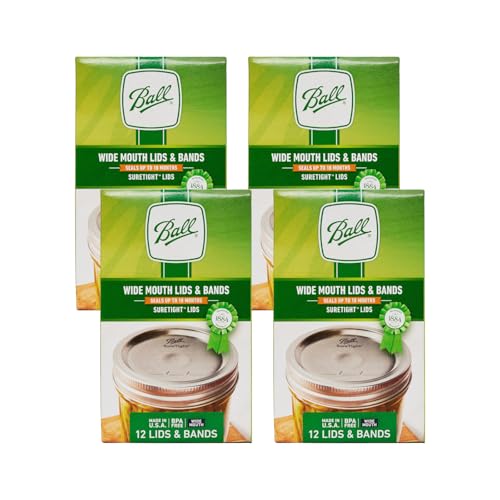
Ball Regular Mouth Mason Jar Lids with Bands (single-use)
The single-use standard Tattler is trying to replace. Cheapest way in, zero learning curve, and the familiar pop that tells you it sealed. You toss the flat after every batch, and it is the right lid for jars you plan to give away.
You Might Also Need
Accessories worth grabbing alongside your purchase
