STX
STX Turboforce Meat Grinder Reviews (2026)
By Theo Marchetti · Updated October 2026
Independent editorial review. We never accept payment for coverage, though we may earn a commission if you purchase through our links.

Verdict
Owners who grind game and burger with the STX are broadly positive, and the praise is consistent: it has real power for the money, it comes with every plate and tube a beginner needs, and it is a night-and-day upgrade from a KitchenAid attachment or a wimpy older grinder. The recurring knocks are just as consistent. The fine die clogs and smears if the meat warms up or gets fed too fast, a first-season frustration owners mostly trace to technique and keeping things cold. Stuffing sausage through the grinder head is a genuine struggle that pushes serious link-makers toward a dedicated stuffer. The longevity question is more ours than theirs: owners do not report the plastic gears and housings failing, but that is where premium grinders use metal, and it is the part we would watch for anyone grinding hard rather than seasonally. Read together, the owner reports match our read: buy it for a few batches a season, not for a weekly habit.
Read full take ↓Similar curing kits
The STX Turboforce 3000 Electric Meat Grinder is the grinder that shows up the moment a hunter or home sausage-maker outgrows the KitchenAid attachment but is not ready to spend LEM money. It is the value electric grinder: a big peak-wattage motor, a wide throat that swallows strips of venison and pork butt, a circuit breaker, air-induction cooling, and a box that arrives with three cutting plates, blades, and a stack of sausage tubes. For grinding your own burger and sausage meat, that kit-in-a-box pitch is most of the appeal.
Owners who grind game and burger with it are largely happy: it has the power to push deer and pork through for a fraction of what an all-metal grinder costs. The tradeoffs are the ones you would expect at this price. The small die clogs if you rush or let the meat warm up, stuffing sausage through it is a genuine chore, and it leans on plastic where the all-metal grinders use gears and housings of steel, which is what raises the longevity question under heavy use. This review weighs both: what the STX nails for a home preserver, where it strains, and who should size up or down instead.
The short version
The STX buys you more grinding power per dollar than anything else at this price. It also comes with two caveats that owners hit in their first season, and you should know both before the box arrives.
What's good:
- Real power for the price: owners push whole deer and pork butt through it and call it a night-and-day upgrade from an attachment or a wimpy older grinder.
- Comes ready to work with three plates, cutting blades, and a set of sausage tubes in the box, so a beginner is not shopping for parts on day one.
- A resetting circuit breaker trips before the motor cooks itself, which is exactly the safety net a hard-charging first-timer needs.
- Big throat and coarse plate make quick work of the bulk first grind for burger, chili meat, and sausage bases.
What's not:
- The fine die clogs and smears if the meat warms up or you feed it too fast, a recurring first-season frustration.
- Stuffing sausage through the grinder head is a struggle; owners who make links end up wanting a dedicated stuffer.
- Plastic gears and parts sit where premium grinders use metal, which is the open question on how it holds up under heavy, repeated use.
- A lot of pieces to break down, chill, and wash after a greasy session.
Who it's for
How many pounds you grind a year settles this. A few deer and some pork butt, and the STX is plenty of machine. A weekly habit, and you are shopping in the wrong aisle.
Buy it for:
- Grinding your own burger, chili meat, and sausage bases from venison, game, or pork a handful of times a season.
- A hunter or new charcuterie hobbyist who wants a capable machine and all the plates and tubes without a premium spend.
- Anyone stepping up from a KitchenAid attachment or a hand crank and mostly needs the grind, not perfect links.
Skip it if:
- You grind hundreds of pounds a year or run it hard every week; a metal-gear LEM BigBite #5 shrugs that load off for decades.
- Links are the whole point for you; pair any grinder with a dedicated stuffer, because pushing sausage through a grinder head heats the fat and fights you.
- You want the cheapest way to find out if you even like grinding; a bare-bones Weston electric grinder and stuffer gets you there for less.
The specs that matter
Ignore the headline wattage for a moment. What actually changes your grind:
A big peak-wattage motor with a resetting circuit breaker: that headline wattage is a peak-and-stall figure, not what it draws all day, so read it as muscle in reserve rather than a promise. What matters in practice is that it has enough torque to pull cold venison and pork through the coarse plate without bogging, and the breaker trips to save the motor if you jam it, then resets so a stall does not end the session.
Three cutting plates, blades, and a set of sausage tubes in the box: coarse for the first pass and burger, medium and fine for a second pass and finer sausage, plus the tubes for casing. For a preserver that means one purchase covers burger, a coarse breakfast-sausage grind, and a finer salami grind without buying accessories separately.
Air-induction cooling and an all-in-one grinder-plus-stuffer design: the cooling fan is there to let the motor run longer batches without overheating, which is the feature that lets it clear a deer in a sitting. The stuffer function is a bonus, not the main event; it works, but it is the part owners most often outgrow.
How well it preserves
Cold muscle goes in, an even grind comes out, and the STX keeps pulling on a whole deer or a case of pork butt. Owners who came to it from a KitchenAid attachment or a limp older machine describe the jump in the plainest terms. One long-time wild game grinder put his upgrade bluntly:
I had a Oyster that I used for years but that meat grinder was rather wimpy when using to grind wild game. I upgraded to a Megaforce with the air induction last year and did one deer on the oyster(with recently sharpened blades) and the other with the megaforce and mega force put that oyster to shame. The megaforce has cheap parts where there needs to be cheap parts and some higher quality parts where they need them. IE blade seam to be good steel and wont comment on that till i sharpen them but the breaker is good quality and resets well before the motor starts to overwork itself
The coarse first grind is the STX at its best, chewing through strips of venison and fatty pork for burger, chili meat, and sausage bases at a pace a hand crank cannot touch. An owner three batches into making salami with it says the grinding was never the problem:
I'm on batch number three of salami (Genoa and pepperoni this time) and I've been working with an STX-3000-TF thus far. It grinds very well, but stuffing is an endless struggle. As per the instructions (I think), I've been using the "wagon wheel" shaped wheel ( bottom left here ) as per the instructions, with the largest stuffing tube and have sprayed everything with cooking spray after every 16inches or so of casing. I'm grinding on the larger granularity (top left in the above picture). When I clean things out periodically while stuffing, it seems like the stuffing wheel gets clogged up with fatty bits and then the resulting material that makes it through is ground to a pulp by the time it gets through to the casing. Is this expected? Am I doing something obviously wrong? Is my meat too warm when I'm stuffing? Do I need to buy more lean meat? I've tried to account for as many variables as possible, but I can't seem to solve the problem. Any help would be greatly appreciated.
The fine die is the limit. Push meat too fast, leave too much silverskin, or let the batch warm up, and the small plate jams and smears instead of cutting. It is a common first-season complaint, partly technique and partly the plate:
The large die on my grinder works great, but the small die gets clogged all the time. In less than a pound of pork butt my small die is nearly completely jammed up. I Partially freeze my meat. I put the metal grinder parts in the freezer. I trim as much silverskin out of the pork butt as I can. I cut it into small cubes for grinding. Still I run into this problem.
Most of the fix is in your hands. Keep the meat and the metal parts near-frozen, trim connective tissue, feed small handfuls, and keep the head nut snug so the blade and plate stay in firm contact. Do all that and it grinds clean. No, it will not out-muscle a commercial machine, but for household batches of burger and sausage meat nothing near its price does the prep work better.
Built to last
Metal where the work happens, plastic where the cost has to come out. That is the deal you make at this price, and it is the weakest of the three axes here. An owner who grinds game and has looked hard at the build described the tradeoff without flinching, and it is a fair read:
I had a Oyster that I used for years but that meat grinder was rather wimpy when using to grind wild game. I upgraded to a Megaforce with the air induction last year and did one deer on the oyster(with recently sharpened blades) and the other with the megaforce and mega force put that oyster to shame. The megaforce has cheap parts where there needs to be cheap parts and some higher quality parts where they need them. IE blade seam to be good steel and wont comment on that till i sharpen them but the breaker is good quality and resets well before the motor starts to overwork itself
That "cheap parts where there needs to be cheap parts" framing covers it. The steel blades and plates do the cutting and they hold up. The plastic gears and housings are what raise the longevity question for anyone running the machine hard, week after week, for years. A grinder doing a deer or two a season will likely outlast one doing every weekend. The resetting breaker helps too, tripping before the motor burns, which is real protection for a first-timer prone to over-feeding it.
None of that makes the STX fragile. It makes it a machine you match to your load. Grind light-to-moderate seasonal batches and durability never comes up, which is why the number below marks it as the softest axis rather than a dealbreaker. Grind high volume and a metal-gear machine earns its higher price. Size up before the plastic parts become your problem.
Living with it
Assemble the head, pick your plate, feed cold strips down the throat, and it goes. The box arrives with everything you need to do that, which is a real part of the value. One owner who has leaned on it across projects keeps his review short:
This mofo has never steered me wrong, and is great for both grinding and stuffing.
The learning curve is all about temperature. Meat and parts go in cold, chilled toward freezing, or the fat smears and the fine plate clogs. You feed it in handfuls instead of cramming the hopper. You stop and clear the head when it starts to smear. None of it is hard. It is the difference between a smooth session and a frustrating one, and better learned before your first batch than mid-deer.
Stuffing is the annoying part. Pushing already-ground meat back through the grinder head to fill casings heats the fat, breaks the bind, and clogs. The same owner who praised its grinding hit a wall the moment he tried to make links:
I'm on batch number three of salami (Genoa and pepperoni this time) and I've been working with an STX-3000-TF thus far. It grinds very well, but stuffing is an endless struggle. As per the instructions (I think), I've been using the "wagon wheel" shaped wheel ( bottom left here ) as per the instructions, with the largest stuffing tube and have sprayed everything with cooking spray after every 16inches or so of casing. I'm grinding on the larger granularity (top left in the above picture). When I clean things out periodically while stuffing, it seems like the stuffing wheel gets clogged up with fatty bits and then the resulting material that makes it through is ground to a pulp by the time it gets through to the casing. Is this expected? Am I doing something obviously wrong? Is my meat too warm when I'm stuffing? Do I need to buy more lean meat? I've tried to account for as many variables as possible, but I can't seem to solve the problem. Any help would be greatly appreciated.
Every grinder-stuffer does this, not just the STX. An auger smears ground meat; a piston pushes it cleanly. If links are your goal, treat the STX as a grinder and add a dedicated vertical stuffer. Cleanup is the other cost of admission. Lots of pieces to break down, and greasy plates and augers want a rinse before they go in the sink or dishwasher so the fat does not set.
How it compares
Cross-shopping the STX usually turns on one question: will you grind more than you think you will? The machines people weigh against it each answer that differently.
Versus the LEM BigBite #5: this is the buy-it-for-life upgrade. All-metal gears and a heavier build let it grind hundreds of pounds a season without the plastic-parts question mark that hangs over the STX, and it holds its value for years of hard use. You pay meaningfully more for that peace of mind, which is only worth it if your volume justifies it.
Versus the Weston #8 Electric Meat Grinder: the closest step-up cross-shop. A #8 head and a more refined build put it a notch above the STX in throughput and fit and finish, and it is the unit to price against the STX when you want a little more grinder without jumping to premium money. Owners who grind regularly but not commercially land here.
Versus the budget Weston grinder and sausage stuffer: the cheaper way to find out if you even like grinding. It is a smaller, simpler machine that handles light seasonal batches for the lowest outlay, so it is the pick if the STX feels like more grinder than a curious beginner needs. You trade capacity and staying power for a smaller spend.
Using it well
Chill the meat toward freezing and stash the plates, blades, and auger in the freezer before you start. Cold is what keeps the grind clean and the fat from smearing. Cut meat into strips that drop down the throat, trim heavy silverskin and connective tissue so the fine plate does not choke, and feed small handfuls rather than packing the hopper. Grind coarse first, then run it through the fine plate for sausage. Keep the head nut snug so the blade and plate stay in firm contact; that, more than anything, is what stops the clogging. And if links are the plan, grind with the STX and stuff with a dedicated stuffer.
If you are still deciding which grinder fits your volume and whether to prioritize power, plates, or an all-metal build, it is worth reading the format choices in one place first. Our guide to the best meat grinder for sausage and game walks through motor ratings, plate sizes, and grinder-versus-stuffer tradeoffs in more depth, with the STX in context against the alternatives.
What the STX is really for
The STX Turboforce 3000 is an easy machine to recommend for what most home preservers actually do: grind their own burger, chili meat, and sausage bases from venison, game, and pork a few times a season, pushed through by a motor with more torque than the price suggests and a box that arrives with every plate and tube you need. Performance is its real strength and the value is genuine. For a hunter or a new charcuterie hobbyist, it is a lot of capable grinder for the money.
The complaints are predictable and mostly manageable. The fine die clogs if you get lazy about keeping things cold. Stuffing sausage through it is a chore, and a dedicated stuffer solves that. The plastic parts are what raise the longevity question if you grind hard and often. For a light-to-moderate seasonal load, we would buy it without hesitating. If you are looking at hundreds of pounds a year, spend up to a metal-gear grinder now instead of replacing this one later.
Our Ratings
Overall score
Grinding is the reason to own one. The motor has real torque for the price, and owners push whole deer and pork butt through the coarse plate for burger, chili meat, and sausage bases at a pace an attachment or hand crank cannot match. The fine die is the limit, since it clogs and smears if the meat warms up or you feed it too fast, though keeping everything cold and the head tight fixes most of it. For household game-and-burger prep it does the core job as well as anything near its price.
Durability is the weakest of the three axes, and the value price is why. The STX uses steel where it cuts and plastic where the cost comes out, so blades and plates hold up while the plastic gears and housings raise the longevity question under heavy, repeated use. A resetting circuit breaker trips before the motor burns, which protects a hard-charging beginner. Light-to-moderate seasonal grinders will get years out of it. High-volume grinders should size up to a metal-gear machine.
It comes ready to work with three plates, blades, and sausage tubes, and running the grind is straightforward once you know the moves. The learning curve is all about keeping the grind clean: chill the meat and parts near-frozen, feed small handfuls, and keep the head snug. Stuffing sausage through the head is the tedious part, and owners who make links end up wanting a dedicated stuffer. Add a lot of pieces to wash after a greasy session, and ease of use is solid rather than effortless.
STX Turboforce Meat Grinder Reviews (2026) on Amazon.
What People Are Saying
Owners who grind game and burger with the STX are broadly positive, and the praise is consistent: it has real power for the money, it comes with every plate and tube a beginner needs, and it is a night-and-day upgrade from a KitchenAid attachment or a wimpy older grinder. The recurring knocks are just as consistent. The fine die clogs and smears if the meat warms up or gets fed too fast, a first-season frustration owners mostly trace to technique and keeping things cold.
Stuffing sausage through the grinder head is a genuine struggle that pushes serious link-makers toward a dedicated stuffer. The longevity question is more ours than theirs: owners do not report the plastic gears and housings failing, but that is where premium grinders use metal, and it is the part we would watch for anyone grinding hard rather than seasonally. Read together, the owner reports match our read: buy it for a few batches a season, not for a weekly habit.
We weight candid owner reports from Reddit and preservation forums above brand-influenced editorial coverage, then reach our own verdict from them. The quotes below are the evidence; the rating and the take are ours.
What Reddit Is Saying
“This mofo has never steered me wrong, and is great for both grinding and stuffing.”View thread →
“I had a Oyster that I used for years but that meat grinder was rather wimpy when using to grind wild game. I upgraded to a Megaforce with the air induction last year and did one deer on the oyster(with recently sharpened blades) and the other with the megaforce and mega force put that oyster to shame. The megaforce has cheap parts where there needs to be cheap parts and some higher quality parts where they need them. IE blade seam to be good steel and wont comment on that till i sharpen them but the breaker is good quality and resets well before the motor starts to overwork itself”View thread →
“I'm on batch number three of salami (Genoa and pepperoni this time) and I've been working with an STX-3000-TF thus far. It grinds very well, but stuffing is an endless struggle. As per the instructions (I think), I've been using the "wagon wheel" shaped wheel ( bottom left here ) as per the instructions, with the largest stuffing tube and have sprayed everything with cooking spray after every 16inches or so of casing. I'm grinding on the larger granularity (top left in the above picture). When I clean things out periodically while stuffing, it seems like the stuffing wheel gets clogged up with fatty bits and then the resulting material that makes it through is ground to a pulp by the time it gets through to the casing. Is this expected? Am I doing something obviously wrong? Is my meat too warm when I'm stuffing? Do I need to buy more lean meat? I've tried to account for as many variables as possible, but I can't seem to solve the problem. Any help would be greatly appreciated.”View thread →
“The large die on my grinder works great, but the small die gets clogged all the time. In less than a pound of pork butt my small die is nearly completely jammed up. I Partially freeze my meat. I put the metal grinder parts in the freezer. I trim as much silverskin out of the pork butt as I can. I cut it into small cubes for grinding. Still I run into this problem.”View thread →
Frequently asked questions
Is the STX Turboforce Meat Grinder worth it?
It comes ready to work with three plates, blades, and sausage tubes, and running the grind is straightforward once you know the moves. The learning curve is all about keeping the grind clean: chill the meat and parts near-frozen, feed small handfuls, and keep the head snug. Stuffing sausage through the head is the tedious part, and owners who make links end up wanting a dedicated stuffer.
How is the STX Turboforce Meat Grinder built?
Durability is the weakest of the three axes, and the value price is why. The STX uses steel where it cuts and plastic where the cost comes out, so blades and plates hold up while the plastic gears and housings raise the longevity question under heavy, repeated use. A resetting circuit breaker trips before the motor burns, which protects a hard-charging beginner.
What is the STX Turboforce Meat Grinder best suited for?
Grinding is the reason to own one. The motor has real torque for the price, and owners push whole deer and pork butt through the coarse plate for burger, chili meat, and sausage bases at a pace an attachment or hand crank cannot match. The fine die is the limit, since it clogs and smears if the meat warms up or you feed it too fast, though keeping everything cold and the head tight fixes most of it.
What do real owners say about the STX Turboforce Meat Grinder?
Owners who grind game and burger with the STX are broadly positive, and the praise is consistent: it has real power for the money, it comes with every plate and tube a beginner needs, and it is a night-and-day upgrade from a KitchenAid attachment or a wimpy older grinder. The recurring knocks are just as consistent. The fine die clogs and smears if the meat warms up or gets fed too fast, a first-season frustration owners mostly trace to technique and keeping things cold.
Options Worth Checking Out
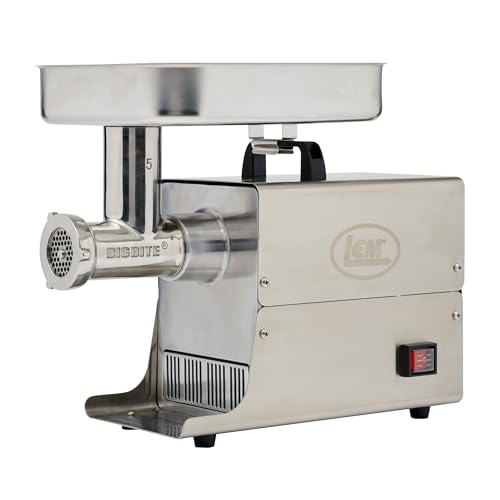
LEM Products BigBite #5 Stainless Steel Electric Meat Grinder
The all-metal upgrade for serious volume. Steel gears and a heavier build grind hundreds of pounds a season without the plastic-parts question mark, and it holds up for years of hard use. Worth the higher spend only if your volume justifies it.

Weston #8 Electric Meat Grinder
The closest step-up cross-shop to the STX. A #8 head and a more refined build add throughput and finish for regular home grinders, without jumping to premium money. Price it against the STX when you want a little more grinder for the season.

Weston Electric Meat Grinder & Sausage Stuffer
The cheapest way to find out if you even like grinding. A smaller, simpler machine that handles light seasonal batches of burger and sausage meat for a low outlay. You trade capacity and staying power for a spend that suits a curious first-timer.
You Might Also Need
Accessories worth grabbing alongside your purchase
