VIVOHOME
Steam Juicer Reviews (2026)
By Ruth Alvarez · Updated October 2026
Independent editorial review. We never accept payment for coverage, though we may earn a commission if you purchase through our links.
Verdict
Owners of steam juicers skew enthusiastic, and the praise is consistent: clear juice for grapes, currants, and soft berries with almost none of the pressing or jelly-bag drip the old method demands, plus a real time saver on a big harvest. The caveats are just as consistent. It's slow, an hour or two per batch, it wants a lot of fruit for the juice it returns, and firm fruit like apples and pears yields poorly, with a decade-deep owner calling it rarely worth using outside ideal soft-fruit crops. Storage bulk and thin budget stainless round out the knocks. Match the tool to the fruit and hardly anyone goes back, which is the whole verdict as far as we're concerned.
Read full take ↓Similar canning tools
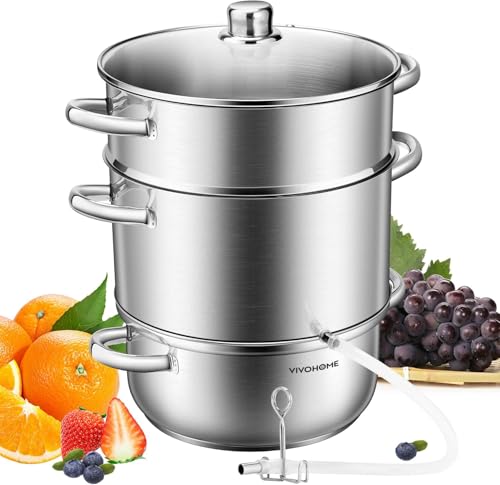
The VIVOHOME Stainless Steel Steam Juicer is the budget version of a tool that quietly changes how you put up a fruit harvest. Three pieces stack on the stovetop: a water pot on the bottom, a juice-collecting pan with a clamped hose in the middle, and a tall basket up top that you fill with grapes, apples, berries, or crabapples. Boil the water, and the steam breaks the fruit down over a couple of hours while juice drains out the hose clear enough to bottle or turn into jelly. No pressing. No jelly bag, no de-stemming, no hand-squeezing.
For grapes, currants, and soft berries that hands-off promise delivers about as well as owners hope. The catches are just as consistent. Steam juicing is slow, it wants a lot of fruit to give back a modest amount of juice, firm fruit like apples and pears fight it, and the pot is a storage hog you use a few weeks a year. We weighed both sides for a preserver who wants to juice a glut and then water-bath can it, going on what owners report rather than a spec sheet.
The short version
A useful, well-liked tool for the right fruit, with a few limits worth knowing before you order. Owner threads are consistent enough that the verdict comes easily.
What's good:
- Turns a big grape, berry, or currant harvest into clear, bottle-ready juice with almost no hands-on work.
- The juice runs clear enough for jelly and canning straight off the hose, no cheesecloth or jelly bag needed.
- Doubles as a large stovetop steamer for tamales, bao, or vegetables in the off-season.
- Far less physical than pressing or hand-squeezing, which matters for big or repeat batches.
What's not:
- Slow going: plan on one to two hours per batch, sometimes more for stubborn fruit.
- It takes a lot of fruit for the juice you get back, and firm fruit like apples and pears yield poorly.
- The pot is bulky to store for something you use only a few weeks a year.
- Budget stainless runs thin, and letting the water pan boil dry risks scorching, so it needs the odd check-in.
Who it's for
A steam juicer is either the best purchase of your canning year or a pot that lives in a cupboard. It depends entirely on what you grow.
Buy it for:
- Grapes, currants, crabapples, and soft berries you have in volume and want to bottle as juice or turn into jelly.
- Anyone tired of the jelly-bag drip or hand-pressing, who would rather load a basket and walk away.
- A once-or-twice-a-year harvest where hands-off matters more than speed.
Skip it if:
- You mostly juice apples or pears for volume; a crank press or the Giantex basket paired with a strainer extracts far more, far faster.
- You want a pot to hand down for decades; the heirloom-grade Mehu-Liisa is thicker stainless built to last.
- You are short on storage and would use it once a year; borrowing one first may be the smarter move.
The specs that matter
The numbers on a steam juicer are simple. They translate into very specific kitchen realities:
Three-piece stainless stack with a clamped drain hose: the design is identical across nearly every brand, so metal thickness and hose quality separate them, not features. Stainless wipes clean and handles acidic grape and currant juice without pitting the way aluminum can.
Tall fruit basket over a shallow water pot: load the basket, boil the pot, and the juice collects in the middle pan. Yield is the catch. A basket of grapes gives back roughly a third of its volume in juice, and firm fruit gives back much less, so buy or pick more fruit than you think you need.
Stovetop, gas or electric: no motor, no electronics, nothing to burn out. Mind the water pot and top it off so it never boils dry. That one mistake scorches a pan and taints a batch.
How well it preserves
Give it the fruit it's built for and a steam juicer pulls clear, clean juice with none of the pressing or straining the old method demands. Owners juicing grapes, berries, and currants are consistently happy with the clarity and with the sheer ease of it. One owner turned a yard's worth of grapes into gallons of juice in a single evening:
This is probably old news to many, but I'd never heard of a steam juicer, and it rules. I just turned 15 gallons of yard grapes into 5 gallons of sparkling grape juice, and will make grape jelly with the gallon of juice leftover. Sure beats de-stemming and hand-squeezing them like I did last year. Next up, plum wine.
Yield per pound of fruit is modest, and owners who track it are matter-of-fact about the ratio. You trade raw efficiency for a hands-off process. On soft, juicy fruit that trade sits fine:
I've only used a steam juicer on my grapes (I processed about 30 gallons of grape volume into 11ish gallons of juice last week) so I can't compare flavor, but I'm very happy with the flavor of the juice l get.
Clarity is the other thing owners praise without prompting. The juice drips rather than getting squeezed, so it comes off the hose clean enough that many people skip straining entirely. That saves a step when the next one is jelly or bottled juice:
we have one for juicing grapes and strawberry guavas. the juice yielded is very clear, i highly recommend
Flavor holds up too. An owner who has done it both ways couldn't tell steamed grape juice from pressed, and the ease was no contest:
I've done it both ways, pressing and steaming. Honestly, with my Concord Grapes, I cannot tell a difference in the flavor from one method to the other. Steaming is 10x easier, I can say that for sure!
Here is the limit to understand before buying. A steam juicer is a soft-fruit tool. Grapes, berries, plums, and currants steam down and give up their juice. Apples and pears mostly don't. A long-time owner lays out where the line falls:
I have one and I love it. I will say that berries and very juicy fruits (grapes, peaches, plums, etc) are better than firmer fruits like apples and pears. I feel like the clarity is fine and don't strain the juice. It does require some babysitting; you have to top off the water in the bottom pot every so often, but I get much more juice from my fruit than I do using the traditional method of boiling the fruit in water and then straining so I feel like it's worth the extra attention it takes.
Hear the firm-fruit skeptics out in full, because most write-ups skip this part. On apples the yield can be a fraction of what a press delivers, for far more time at the stove:
I mean, is it safe to use a steamer on apples? Sure. Absolutely no problem. But I can't imagine getting more than about 10-20% of the juice via steaming as you can with crushing and pressing. And steaming out a litre or two would likely take you over an hour just for the juice itself, before pasteurization and canning.
The bluntest voice comes from a decade-deep owner who still reaches for it only a couple of times out of dozens of harvests. If your fruit isn't ideal, the tool won't rescue it:
I have a steam juicer and several books on steam juicing that I regularly look to for ideas. I've been using it wherever I am able to for around a decade. Real-talk, a steam juicer is rarely worth using. The only times that I have been happy with the produced juice are with an exceptionally juicy crop of slip-skin grapes, and with a few gallons of sour cherries that were pushing overripe and would otherwise been discarded. Two crops out of maybe 50 over a decade. That being said, fantastic as a generic steamer, I do 2-3 full (massive) loads of tamales and bao every year and then freeze them.
Built to last
No motor, no electronics, three metal pieces and a hose. There is very little here to break, and owners routinely report units that have run for decades, hand-me-downs included. The metal itself is the variable, and the budget tier is where you feel it. Stainless resists the pitting that acidic grape and currant juice can cause in older aluminum pots, which is why an aluminum owner wants to upgrade:
We found one at Goodwill. It was a life changing device. So much easier to run our grapes through. We also use it for our apple and pear trees. Ours is aluminum, I want to find a stainless steel one.
Across brands the design is the same, and the price mostly buys thicker metal. An owner who bought the same budget VIVOHOME tier this review covers put the difference plainly, and it's a fair way to set expectations on a cheaper unit:
Mehu-Liisa is the fancy version and expensive I bought a cheaper one because I don't expect to be using it heavily (just chokecherries once a year). The brand is Vivohome My friend bought a Norpro which is kind of in the middle; I think she uses hers more heavily than I use mine
The one failure mode owners warn about is operator error: letting the bottom pot boil dry. On thinner stainless that scorches the pan and can taint a batch. Keep water in the pot and don't wander off for hours, and there is not much else to get wrong:
You have to run it longer than other fruit but a steam juicer will juice apples. Just make sure you don't run the water pan dry.
None of that makes a budget steam juicer fragile. It makes it a simple tool that rewards a little attention. Keep the water topped off, hand-wash the hose and clamp, and a stainless unit like this should outlast most kitchen gadgets. The heavier heirloom pots earn their price in gauge rather than features, which is why the number below sits a touch under the others.
Living with it
Even the skeptics agree on effort. Loading a basket and letting steam do the work is a world away from pressing fruit or wringing a jelly bag, and owners who came from those methods describe the switch as pure relief:
We process lots of red currants for them it is brilliant quick easy and hassle free plus you get every single drop of juice out of them
It earns goodwill by being useful the rest of the year, too. Owners admit it sits in a cupboard most months, and it is a storage hog for a seasonal tool. The bottom pot and basket double as a large steamer, though, and the people who use it that way resent the shelf space far less:
I make several dozen bottles of wine each year from whatever summer fruits are available. Clarity from the steam juicer is great, and it makes things so easy. Sure it sits in storage 11 months of the year but I don't regret it.
Accept the pace and you'll be fine. A batch runs an hour or two and wants the occasional check to top off the water. Owners who expect a slow, hands-off simmer rather than a quick press stay happy with it. Patience is the whole learning curve here. There are no settings to master and nothing to calibrate.
How it compares
Steam juicers are nearly identical in design, so cross-shopping comes down to metal thickness, capacity, and price. Three units come up most. Here's how the VIVOHOME sits against each.
Versus the Original Mehu-Liisa: the heirloom upgrade. Same three-piece design, heavier gauge stainless, tighter hose, and the pot owners describe as fancy, expensive, and built to hand down. Juice heavily every season and want a tool for the next generation? It justifies the spend. For once-a-year chokecherries or a small grape crop, it's more pot than you need.
Versus the Cook N Home Stainless Steam Juicer: the closest like-for-like. Comparable-tier stainless, the same steam-and-drain process, a roomy fruit basket. Price it head to head with the VIVOHOME whenever one is on sale or out of stock. Neither reinvents the format, and both juice soft fruit the same way.
Versus the Giantex 11-Quart Juice Steamer: the big-basket budget option. Eleven quarts swallow a large picking in fewer loads, which helps when you're working through a glut. Metal runs thin like most budget units, so the same watch-the-water rule applies. If capacity per batch is what you care about, it's the sensible cheaper pick.
Using it well
Technique matters less here than fruit choice. Match the fruit to the tool: lean on grapes, currants, berries, plums, and crabapples, and treat apples and pears as a slow bonus rather than the main event. Keep the bottom pot topped off so it never boils dry. Resist the urge to press or stir the pulp, which clouds the juice. Let the fruit steam until it fully collapses and the flow slows, then decant. Owners who juice currants and jelly fruit put both tips together:
I mainly use our steam juicer for currants and making currant jelly. There's some discussion that's helpful in Linda Zeidrich's Joy of Jams, Jellies, and Preserves. We make sure the bottom pan has enough water to not run out and keep it going until the liquid/juice release slows down/stops. If you try to mix/ press the fruit pulp, you'll get a cloudy juice - maybe that's okay for some recipes though.
Seedy berries are the standout use, since the steam does the seed-straining for you. The leftover pulp doesn't have to go to waste either. Save it for crabapple butter, fruit leather, or a sieved sauce:
Great idea to use it for tamales! This is my first year with a steam juicer, upgraded from a chinois strainer, and it perfectly fit my needs. I juiced blueberries and blackberries daily for about two weeks. For seedy berries, it is the perfect tool to make the most of my seasonal abundance and make it last all year.
I just used mine to extract juice for jelly jam from crabapples. The pulpy remains I pushed through a sieve to remove dkind and seeds and and boiled up the pulp with equal amounts of sugar, cup for cup, and half a teaspoon of mixed spice per cup. Result - spiced crabapple butter. It's awesome. I'm just a about to go and scrape the pan.
Plan the whole chain before a real harvest starts. One owner ran 156 quarts through in a season, prepping firmer fruit for a strainer afterward, which is the kind of volume this tool is happiest at:
We did 156 qts. with our steam juicer this year. Apples ,pears and Asian Pears are quartered, seeds removed and stems pulled off. The Victorio strainer does not tolerate these. After juicing, and cooling of the apples/pears were run through the Victorio strainer, some of the mullberries and some of the grapes. We ended up giving away gallons of applesauce to neihbours and friends. We do use a mix of apple varieties. No one has said anything about being flavorless. The apple/raspberry was the biggest hit this year.
Whatever you juice, the last step is preserving it safely, and steam-juiced grape, apple, and berry juice is a natural water-bath candidate. New to canning the juice you extract? Our beginner guide to the best water bath canner walks through the pot, the rack, and the process so your bottled juice and jelly seal and store the way they should.
The verdict
Have grapes, currants, crabapples, or soft berries in volume, and a grudge against the jelly bag? Then the VIVOHOME is an easy recommendation. It turns a chore into a load-and-walk-away simmer, and the juice comes off clear enough to bottle or jelly straight away. Performance and everyday ease are the strong axes, and the budget price gets you into steam juicing without the heirloom-pot spend.
The drawbacks are limits, not dealbreakers. It's slow, it wants a lot of fruit for the juice it returns, firm fruit fights it, and it's bulky, thin stainless you'll use a few weeks a year. Match your fruit to the tool, keep water in the pot, treat it as the patient way to put up a soft-fruit harvest, and it earns its cupboard space. Buy it expecting a fast juicer or an apple press and you'll be disappointed. Buy it for a clear-juice simmer of grapes and berries and you'll wonder how you canned without one.
Our Ratings
Overall score
On soft fruit it performs about as well as owners hope. Grapes, currants, and berries steam down into clear juice that runs off the hose clean enough for jelly or canning without straining, and the flavor holds up against pressing. Fruit type and yield are the limits. Apples and pears give back little for a lot of time at the stove, and even ideal fruit returns a modest fraction of its volume. Strong for the right harvest, then, and not an all-purpose juicer.
With no motor and no electronics, a stainless steam juicer is simple and long-lived. Owners run decades-old units and hand them down. The metal is the soft spot: budget stainless runs thin, and the pricier pots mostly buy heavier gauge rather than features. The one real failure mode is operator error, letting the water pan boil dry and scorching it. Keep water topped off, hand-wash the hose, and don't wander off for hours.
The axis that wins the steam juicer its fans. Loading a basket and letting steam do the work beats pressing or wringing a jelly bag by a wide margin, and owners coming from those methods call it a relief. Nothing to calibrate, no learning curve beyond patience. Two costs: pace, at an hour or two per batch with the odd water top-off, and storage, since it's bulky for a seasonal tool. Using it as a large steamer the rest of the year softens the second one.
Steam Juicer Reviews (2026) on Amazon.
What People Are Saying
Owners of steam juicers skew enthusiastic, and the praise is consistent: clear juice for grapes, currants, and soft berries with almost none of the pressing or jelly-bag drip the old method demands, plus a real time saver on a big harvest. The caveats are just as consistent. It's slow, an hour or two per batch, it wants a lot of fruit for the juice it returns, and firm fruit like apples and pears yields poorly, with a decade-deep owner calling it rarely worth using outside ideal soft-fruit crops.
Storage bulk and thin budget stainless round out the knocks. Match the tool to the fruit and hardly anyone goes back, which is the whole verdict as far as we're concerned.
We weight candid owner reports from Reddit and preservation forums above brand-influenced editorial coverage, then reach our own verdict from them. The quotes below are the evidence; the rating and the take are ours.
What Reddit Is Saying
“This is probably old news to many, but I'd never heard of a steam juicer, and it rules. I just turned 15 gallons of yard grapes into 5 gallons of sparkling grape juice, and will make grape jelly with the gallon of juice leftover. Sure beats de-stemming and hand-squeezing them like I did last year. Next up, plum wine.”View thread →
“I've only used a steam juicer on my grapes (I processed about 30 gallons of grape volume into 11ish gallons of juice last week) so I can't compare flavor, but I'm very happy with the flavor of the juice l get.”View thread →
“we have one for juicing grapes and strawberry guavas. the juice yielded is very clear, i highly recommend”View thread →
“I've done it both ways, pressing and steaming. Honestly, with my Concord Grapes, I cannot tell a difference in the flavor from one method to the other. Steaming is 10x easier, I can say that for sure!”View thread →
“I have one and I love it. I will say that berries and very juicy fruits (grapes, peaches, plums, etc) are better than firmer fruits like apples and pears. I feel like the clarity is fine and don't strain the juice. It does require some babysitting; you have to top off the water in the bottom pot every so often, but I get much more juice from my fruit than I do using the traditional method of boiling the fruit in water and then straining so I feel like it's worth the extra attention it takes.”View thread →
“We found one at Goodwill. It was a life changing device. So much easier to run our grapes through. We also use it for our apple and pear trees. Ours is aluminum, I want to find a stainless steel one.”View thread →
“We process lots of red currants for them it is brilliant quick easy and hassle free plus you get every single drop of juice out of them”View thread →
“I make several dozen bottles of wine each year from whatever summer fruits are available. Clarity from the steam juicer is great, and it makes things so easy. Sure it sits in storage 11 months of the year but I don't regret it.”View thread →
“I mainly use our steam juicer for currants and making currant jelly. There's some discussion that's helpful in Linda Zeidrich's Joy of Jams, Jellies, and Preserves. We make sure the bottom pan has enough water to not run out and keep it going until the liquid/juice release slows down/stops. If you try to mix/ press the fruit pulp, you'll get a cloudy juice - maybe that's okay for some recipes though.”View thread →
“Great idea to use it for tamales! This is my first year with a steam juicer, upgraded from a chinois strainer, and it perfectly fit my needs. I juiced blueberries and blackberries daily for about two weeks. For seedy berries, it is the perfect tool to make the most of my seasonal abundance and make it last all year.”View thread →
“I just used mine to extract juice for jelly jam from crabapples. The pulpy remains I pushed through a sieve to remove dkind and seeds and and boiled up the pulp with equal amounts of sugar, cup for cup, and half a teaspoon of mixed spice per cup. Result - spiced crabapple butter. It's awesome. I'm just a about to go and scrape the pan.”View thread →
“We did 156 qts. with our steam juicer this year. Apples ,pears and Asian Pears are quartered, seeds removed and stems pulled off. The Victorio strainer does not tolerate these. After juicing, and cooling of the apples/pears were run through the Victorio strainer, some of the mullberries and some of the grapes. We ended up giving away gallons of applesauce to neihbours and friends. We do use a mix of apple varieties. No one has said anything about being flavorless. The apple/raspberry was the biggest hit this year.”View thread →
“Mehu-Liisa is the fancy version and expensive I bought a cheaper one because I don't expect to be using it heavily (just chokecherries once a year). The brand is Vivohome My friend bought a Norpro which is kind of in the middle; I think she uses hers more heavily than I use mine”View thread →
“You have to run it longer than other fruit but a steam juicer will juice apples. Just make sure you don't run the water pan dry.”View thread →
“I mean, is it safe to use a steamer on apples? Sure. Absolutely no problem. But I can't imagine getting more than about 10-20% of the juice via steaming as you can with crushing and pressing. And steaming out a litre or two would likely take you over an hour just for the juice itself, before pasteurization and canning.”View thread →
“I have a steam juicer and several books on steam juicing that I regularly look to for ideas. I've been using it wherever I am able to for around a decade. Real-talk, a steam juicer is rarely worth using. The only times that I have been happy with the produced juice are with an exceptionally juicy crop of slip-skin grapes, and with a few gallons of sour cherries that were pushing overripe and would otherwise been discarded. Two crops out of maybe 50 over a decade. That being said, fantastic as a generic steamer, I do 2-3 full (massive) loads of tamales and bao every year and then freeze them.”View thread →
Frequently asked questions
Is the VIVOHOME Steam Juicer worth it?
The axis that wins the steam juicer its fans. Loading a basket and letting steam do the work beats pressing or wringing a jelly bag by a wide margin, and owners coming from those methods call it a relief. Nothing to calibrate, no learning curve beyond patience.
How is the VIVOHOME Steam Juicer built?
With no motor and no electronics, a stainless steam juicer is simple and long-lived. Owners run decades-old units and hand them down. The metal is the soft spot: budget stainless runs thin, and the pricier pots mostly buy heavier gauge rather than features.
What is the VIVOHOME Steam Juicer best suited for?
On soft fruit it performs about as well as owners hope. Grapes, currants, and berries steam down into clear juice that runs off the hose clean enough for jelly or canning without straining, and the flavor holds up against pressing. Fruit type and yield are the limits.
What do real owners say about the VIVOHOME Steam Juicer?
Owners of steam juicers skew enthusiastic, and the praise is consistent: clear juice for grapes, currants, and soft berries with almost none of the pressing or jelly-bag drip the old method demands, plus a real time saver on a big harvest. The caveats are just as consistent. It's slow, an hour or two per batch, it wants a lot of fruit for the juice it returns, and firm fruit like apples and pears yields poorly, with a decade-deep owner calling it rarely worth using outside ideal soft-fruit crops.
Options Worth Checking Out

The Original Mehu-Liisa Stainless Steam Juicer
The Finnish pot owners name when they want a steam juicer to outlive them. Same three-piece design, heavier gauge stainless, tighter hose. Worth the spend if you juice heavily every season and want a tool the next generation still uses.

Cook N Home Stainless Steam Juicer
The closest like-for-like to the VIVOHOME: comparable-tier stainless, the same steam-and-drain process, a roomy fruit basket. Price the two head to head whenever one is on sale or out of stock. Both juice soft fruit the same way.

Giantex 11-Quart Juice Steamer
The big-basket budget option. Eleven quarts swallow a large grape or apple picking in fewer loads when you're working through a glut. Metal runs thin like most budget units, so mind the water pot and never let it boil dry. Capacity per batch is the draw.
You Might Also Need
Accessories worth grabbing alongside your purchase
