Norpro
Norpro Food Mill Reviews (2026)
By June Park · Updated October 2026
Independent editorial review. We never accept payment for coverage, though we may earn a commission if you purchase through our links.
Verdict
Preservers who mill are enthusiastic, and the praise keeps landing on the same two things: texture and cleanliness. Cranking cooked tomatoes or apples through a disc gives a smoother, more consistent sauce than an immersion blender, and it pulls out the seeds and skins that turn a sauce bitter or gritty. Several describe milling as the upgrade that finally made pizza sauce and applesauce easy. The counterweight is labor and money. Hand-cranking is fine for a bowl or two and wears on the arms at bushel scale, which sends high-volume canners toward a powered strainer, and a few members push back that nobody needs to spend on gear to preserve well. We think both camps are right, and which one you belong to comes down entirely to how much fruit is sitting on your counter.
Read full take ↓Similar canning tools
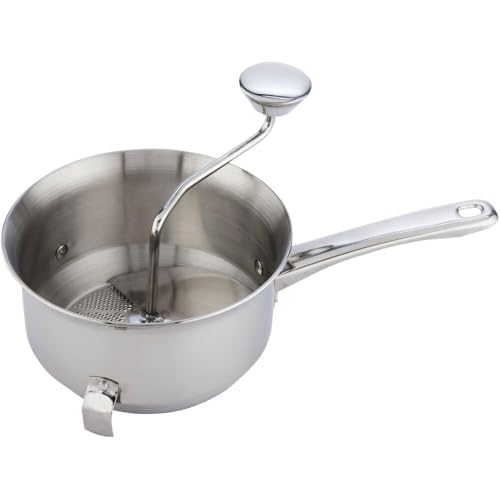
The Norpro Stainless Steel Food Mill is the hand-crank bowl that turns a pot of cooked tomatoes or soft apples into smooth sauce without plugging anything in. You ladle cooked fruit or vegetables into the stainless hopper, turn the crank, and a curved paddle presses the pulp through a perforated disc while the seeds, skins, and cores stay behind in the bowl. Three discs swap in for coarse, medium, or fine, so the same tool handles chunky salsa, pourable passata, and silky applesauce.
In preserving threads it lands between an immersion blender that leaves the seeds in and a big powered strainer that costs more and eats a shelf. Owners who switched to milling rave about the texture and about how cleanly it separates seeds and skins. Plenty call it the upgrade that made putting up sauce easier than straining by hand. The catch is muscle. At bushel scale the hand crank turns into a shoulder workout, and the thin stainless and the fiddly tension spring are both worth knowing about before you buy.
The short version
The Norpro does the one job most people buy it for, and does it well. Its drawbacks are about effort and heft, not about whether it works.
What's good:
- Presses cooked tomatoes, apples, and berries into smooth sauce while the seeds, skins, and cores stay behind, no peeling or coring first.
- Three discs cover coarse salsa, medium sauce, and fine applesauce from one tool.
- Fully manual, so there is no cord, no motor to burn out, and it stores in a drawer.
- Owners consistently rate the milled texture above an immersion blender or a countertop blender that just purees everything together.
What's not:
- The hand crank is real labor at bushel scale, where a powered strainer pulls well ahead.
- The stainless body is on the thin side and can flex if you force a heavy load through it.
- The tension spring and three discs are a little fiddly to reassemble and rinse after each session.
- It de-seeds and de-skins but does not reduce anything, so a watery tomato still needs time on the stove.
Who it's for
Batch size decides this one. A few pots a season and the mill is a pleasure. A bushel a weekend and it is punishment.
Buy it for:
- Household batches of applesauce, tomato sauce, salsa, and berry jelly a few times a season.
- Cooks who want seeds and skins gone from a sauce without peeling and coring everything by hand first.
- Small kitchens that want the clean result of a strainer without the size, the spend, or a motor.
Skip it if:
- You process bushels at a time; the Roma-style strainer below moves that volume far faster and takes an electric motor.
- You want a body solid enough to lean on hard; the heavier-duty three-disc mill holds its shape better under a heavy push.
- You only want puree and do not care about pulling out seeds; a blender you already own will get you there.
The specs that matter
The disc set is why you would pick a mill over a strainer. The stainless and the crank are why you might not.
Three interchangeable discs: coarse for rustic salsa and chunky sauce, medium for most tomato passata, and fine for smooth applesauce and seedless berry puree. One tool covering three textures is the whole reason to choose a disc mill over a fixed-screen strainer.
Stainless bowl and crank: it wipes clean, will not hold tomato stain or rust the way a tin-plated mill can, and stands up to acidic fruit all day. The tradeoff is a body thin enough to flex when you bear down on a heavy load.
Hand crank, no power: nothing to plug in, nothing to burn out, and it tucks into a drawer between seasons. The flip side is that every single batch is your arm doing the work, which is fine for a bowl and tiring for a bushel.
How well it preserves
New preservers keep asking the same question before they spend the money:
I have a question if you don't mind giving your opinion… I'm new to food preserving, and so far have just been making tomato sauce and freezing. I've been using our Vitamix blender, which is going well but it is definitely making a very blended "thin" sauce. What is the benefit of a food mill over a blender, food processor, etc.? I think I probably want one but would love to know your thoughts.
The disc is the answer. A blender purees everything at once, seeds and skins included, and whips air into a thin, foamy sauce. A mill presses pulp through the holes and holds the rest back, so what comes out is denser and cleaner. Owners who have run both methods are blunt about the gap:
After trying both the immersion blender method and the food mill method the texture from the food mill is so far superior it's worth it. I find the immersion blender makes it to airy and I had more siphoning with that method too.
That cleaner result shows up across everything people mill, from pizza and pasta sauce to applesauce and seedless jelly, whether they are canning it or freezing it:
I got a food mill for Christmas and it's been such a game-changer for pizza sauce. I am freezing it rather than canning it, but it has made the process so much easier!
Set your expectations on one thing. A mill removes seeds and skins. It does not cook a watery tomato down, and that is still an hour or two of stove time you have to plan for:
As others said, gets rid of seeds (which can get bitter in a sauce) and skins. I still need to cook my sauce down to a good sauce consistency, and depending on how big a batch, that's anywhere from a 1 to 2 hour haul.
Owners describe the payoff in concrete terms: better texture, less waste, and enough speed over hand methods to change how much they get put up from the same box of produce.
But for those who do have the funds, a decent food mill makes an enormous positive difference in the physical process and the quality of the end product. For me, "the point" of canning tomatoes is to have a way to store my seasonal produce for use throughout the year, in a way that is high quality and suited closer to the tastes and needs of my household. Using tools that make it faster and more ergonomically sustainable heightens that enjoyment rather than diminishing.
Built to last
Nothing about the Norpro is fragile. The stainless is a real advantage over the old tin-plated mills: it does not rust, it does not stain, and it shrugs off acidic tomato and berry all season. Cleaned and dried, one of these lasts years.
The soft spot is heft. Crank down hard on a dense, underripe load and you feel the body give rather than stand solid, which is what heavy-handed owners mean when they wish for a sturdier frame. Then there is the tension spring that holds the crank against the disc. It does its job while you are milling, but it pops loose in the sink and takes a minute of fiddling to seat again, and between three discs, the paddle, and that spring you have a handful of small parts to keep together. None of this is a defect. It just means you own a good work tool, not an heirloom. Keep the discs and the spring in one drawer and it will hold up fine. Owners who lean hard on the crank should look at the heavier-duty mill in the picks below.
Living with it
For a bowl or two, this is an easy tool to like. Ladle in the cooked fruit, turn the crank, sauce out one side and waste in the bowl. No cord, no motor noise. Preservers who came up doing this by hand feel the upgrade most, and one of them remembered exactly what a mill replaces:
I remember my mother using an aluminum cone-shaped thing that you put over a bowl. It had little holes all in it and you used a big wooden mortar-like thing to push your tomatoes through and it took all day. I'm sure she would have loved an electric food mill. For most people I know, canning is not considered an accomplishment. It is a necessity to be able to feed your family all year. Anything to make it easier is helpful.
Your shoulder is the motor, though, and that is the ceiling. Pleasant for household batches. Grim by the third bushel. Preservers working at that volume start shopping for something with a plug:
I was using that cone and mortar this evening. It works great but I'm looking at getting an electric food mill for next season. My arms and shoulder just can't keep doing the old grind.
Cleanup is the other daily reality. The stainless rinses clean and does not stain, a step up from tin, but you are washing the bowl, the paddle, the crank assembly, and whichever discs you used, then reseating the spring. None of it is hard. It is just more pieces than a blender jar. If your preserving day means a truckload of tomatoes rather than a few pots, read the strainer note below before you commit to hand-cranking all of it.
How it compares
People cross-shop a food mill against a powered strainer, a beefier mill, or the blender already in the cupboard.
Versus a Roma-style auger strainer: this is the volume upgrade. A strainer feeds whole cooked fruit through a screw and pushes skins and seeds out the end continuously, so it never stops to be emptied and it takes an electric motor for bushel-scale days. You give up the disc mill's small footprint, low cost, and drawer storage, but if you process in quantity it moves far faster than any hand crank.
Versus a heavier-duty three-disc mill: same idea, sturdier build. If your complaint about the standard mill is flex under a hard push, a beefier stainless body holds its shape better and shrugs off dense loads, while keeping the three-disc versatility. You pay more and gain nothing on speed, but it is the pick for someone who leans on the crank.
Versus a blender you already own: the budget path is often no new tool at all. A blender or a food mill both make sauce, but only the mill pulls the seeds and skins, so the choice is really about whether you care about that texture. Not everyone thinks the spend is necessary, and that is a fair point to sit with:
Yes a great tool, but let's not forget that not everyone has the means for fancy tools. Spending alot on tools can sometimes diminish the point behind making your own food and being self sufficient. I'd be interested in your ideas on this.
Using it well
Cook your fruit or vegetables soft first so the pulp presses through easily, and mill while it is still warm rather than fridge-cold. Match the disc to the goal: coarse for salsa, medium for tomato sauce, fine for applesauce and seedless jelly. Feed the hopper in modest scoops instead of packing it. Turn the crank steadily, and back it off a quarter turn when it binds so seeds clear instead of jamming. Scrape the underside of the disc now and then to keep the puree moving. And budget stove time, because the mill de-seeds but never reduces.
Once your sauce or applesauce is milled and cooked to consistency, the next step is getting it into jars safely. Our guide to setting up a water bath canner walks through the pot, the rack, headspace, and processing times so your milled tomatoes and fruit end up shelf-stable instead of just delicious.
Should you buy the Norpro?
We would recommend the Norpro for what most people want from a mill: household batches of applesauce, tomato sauce, salsa, and seedless jelly, milled cleaner than a blender manages and freed of the seeds and skins that turn a sauce bitter or gritty. It does that with no cord, a small footprint, and a low price. That combination is why it keeps coming up.
Two things keep it off the top shelf. Hand-cranking is a pleasure for a few pots and a workout for a bushel, which is why high-volume canners graduate to a powered strainer. The thin stainless and the fiddly spring make this a solid work tool, not a lifetime heirloom. Buy it for the texture and the de-seeding, size your batches to your shoulder, and it is a satisfying way to put food up.
Our Ratings
Overall score
Cranked over a pot of cooked tomatoes or soft apples, the Norpro presses out smooth, even sauce and leaves the seeds, skins, and cores in the bowl. Owners consistently rate that texture above an immersion blender or a countertop blender, which puree everything together. Three discs cover coarse salsa through silky applesauce, no cord required and no seeds in the finished jar. For de-seeding and de-skinning cooked produce, it delivers.
The thin stainless is the soft spot. It resists rust and tomato stain and cleans up well, but the body is on the thin side and can flex if you bear down on a heavy load, and the tension spring that holds the crank against the disc is fiddly to seat again after washing. Nothing here is fragile, but you are buying a capable everyday mill, not something to hand down, and the three discs plus spring are small parts to keep track of.
Simple to run and easy to like for a bowl or two: ladle in cooked fruit, turn the crank, done, with no electricity. The catch is muscle. At bushel scale the hand crank becomes a shoulder workout, which is why high-volume canners move to a powered strainer, and there are the bowl, paddle, crank, and three discs to rinse and reassemble after each session. For household batches it is a pleasure; for real volume it is hard work.
Norpro Food Mill Reviews (2026) on Amazon.
What People Are Saying
Preservers who mill are enthusiastic, and the praise keeps landing on the same two things: texture and cleanliness. Cranking cooked tomatoes or apples through a disc gives a smoother, more consistent sauce than an immersion blender, and it pulls out the seeds and skins that turn a sauce bitter or gritty. Several describe milling as the upgrade that finally made pizza sauce and applesauce easy.
The counterweight is labor and money. Hand-cranking is fine for a bowl or two and wears on the arms at bushel scale, which sends high-volume canners toward a powered strainer, and a few members push back that nobody needs to spend on gear to preserve well. We think both camps are right, and which one you belong to comes down entirely to how much fruit is sitting on your counter.
We weight candid owner reports from Reddit and preservation forums above brand-influenced editorial coverage, then reach our own verdict from them. The quotes below are the evidence; the rating and the take are ours.
What Reddit Is Saying
“After trying both the immersion blender method and the food mill method the texture from the food mill is so far superior it's worth it. I find the immersion blender makes it to airy and I had more siphoning with that method too.”View thread →
“I got a food mill for Christmas and it's been such a game-changer for pizza sauce. I am freezing it rather than canning it, but it has made the process so much easier!”View thread →
“But for those who do have the funds, a decent food mill makes an enormous positive difference in the physical process and the quality of the end product. For me, "the point" of canning tomatoes is to have a way to store my seasonal produce for use throughout the year, in a way that is high quality and suited closer to the tastes and needs of my household. Using tools that make it faster and more ergonomically sustainable heightens that enjoyment rather than diminishing.”View thread →
“I remember my mother using an aluminum cone-shaped thing that you put over a bowl. It had little holes all in it and you used a big wooden mortar-like thing to push your tomatoes through and it took all day. I'm sure she would have loved an electric food mill. For most people I know, canning is not considered an accomplishment. It is a necessity to be able to feed your family all year. Anything to make it easier is helpful.”View thread →
“I have a question if you don't mind giving your opinion… I'm new to food preserving, and so far have just been making tomato sauce and freezing. I've been using our Vitamix blender, which is going well but it is definitely making a very blended "thin" sauce. What is the benefit of a food mill over a blender, food processor, etc.? I think I probably want one but would love to know your thoughts.”View thread →
“As others said, gets rid of seeds (which can get bitter in a sauce) and skins. I still need to cook my sauce down to a good sauce consistency, and depending on how big a batch, that's anywhere from a 1 to 2 hour haul.”View thread →
“I was using that cone and mortar this evening. It works great but I'm looking at getting an electric food mill for next season. My arms and shoulder just can't keep doing the old grind.”View thread →
“Yes a great tool, but let's not forget that not everyone has the means for fancy tools. Spending alot on tools can sometimes diminish the point behind making your own food and being self sufficient. I'd be interested in your ideas on this.”View thread →
Frequently asked questions
Is the Norpro Food Mill worth it?
Simple to run and easy to like for a bowl or two: ladle in cooked fruit, turn the crank, done, with no electricity. The catch is muscle. At bushel scale the hand crank becomes a shoulder workout, which is why high-volume canners move to a powered strainer, and there are the bowl, paddle, crank, and three discs to rinse and reassemble after each session.
How is the Norpro Food Mill built?
The thin stainless is the soft spot. It resists rust and tomato stain and cleans up well, but the body is on the thin side and can flex if you bear down on a heavy load, and the tension spring that holds the crank against the disc is fiddly to seat again after washing. Nothing here is fragile, but you are buying a capable everyday mill, not something to hand down, and the three discs plus spring are small parts to keep track of.
What is the Norpro Food Mill best suited for?
Cranked over a pot of cooked tomatoes or soft apples, the Norpro presses out smooth, even sauce and leaves the seeds, skins, and cores in the bowl. Owners consistently rate that texture above an immersion blender or a countertop blender, which puree everything together. Three discs cover coarse salsa through silky applesauce, no cord required and no seeds in the finished jar.
What do real owners say about the Norpro Food Mill?
Preservers who mill are enthusiastic, and the praise keeps landing on the same two things: texture and cleanliness. Cranking cooked tomatoes or apples through a disc gives a smoother, more consistent sauce than an immersion blender, and it pulls out the seeds and skins that turn a sauce bitter or gritty. Several describe milling as the upgrade that finally made pizza sauce and applesauce easy.
Options Worth Checking Out

Stainless Steel Food Mill with 3 Discs (Heavy Duty)
Step up when the standard mill flexes under a heavy tomato or apple load. This heavier-duty three-disc build holds its shape while you crank, and the discs still swap in for chunky salsa, pourable sauce, or silky applesauce.

Stainless Steel Food Mill
The cheaper way to find out if milling is for you. It purees cooked fruit and separates the seeds and skins the same way, just with a lighter body and simpler disc setup. Fine for jam, small applesauce batches, and the odd tomato run.

Roma / Johnny Apple Sauce Maker & Food Strainer
When you process bushels, not bowls, a hand crank wears out your shoulder. This one feeds whole cooked fruit through an auger and pushes skins and seeds out the end continuously, so tomatoes and apples move far faster than milling by hand.
You Might Also Need
Accessories worth grabbing alongside your purchase
