Harvest Right
Harvest Right Freeze Dryer Reviews (2026)
By Theo Marchetti · Updated October 2026
Independent editorial review. We never accept payment for coverage, though we may earn a commission if you purchase through our links.
Verdict
Owners split into two loud camps and both of them are telling the truth. Homesteaders, preppers, and everyday cooks who actually run the thing call it one of their best investments: milk, eggs, meat, and full meals that beat store-bought pouches and keep for decades, and many say it pays for itself over time. The second camp is just as vocal about the pain. Four-figure price, slow batches, pump maintenance, noise, heat, long backorders, and a reliability problem on newer builds where machines pass an empty vacuum test but fail with food inside. Customer service and returns draw the heaviest criticism of anything owners raise. Reading all of it, we came away thinking the capability is unmatched and the risk is priced into how often you will use it. Run it weekly and the complaints fade into maintenance. Run it four times a year and every one of them will find you.
Read full take ↓Similar freeze dryers
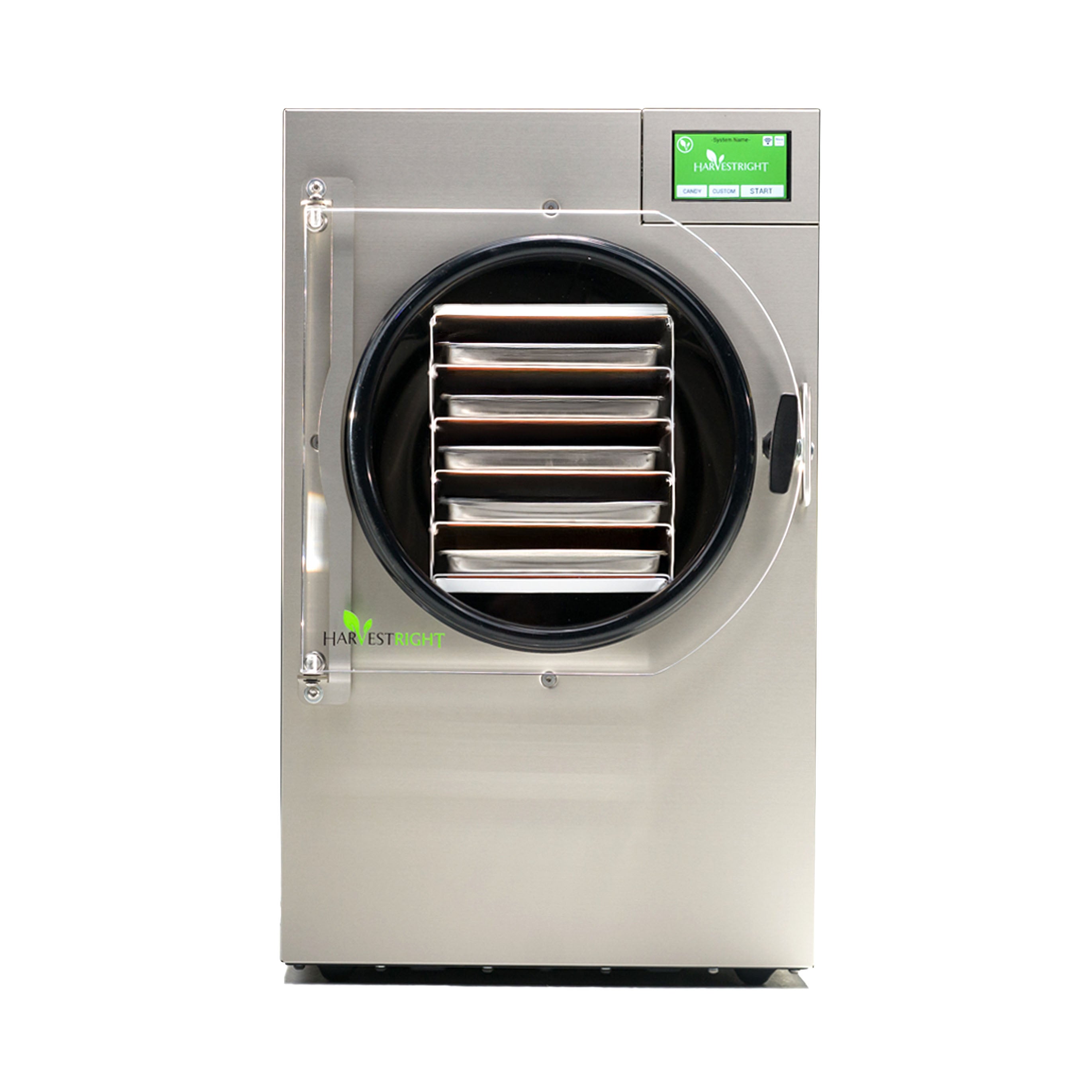
The Harvest Right Home Freeze Dryer freezes food solid, then pulls a deep vacuum that draws the ice off as vapor. What comes out is shelf stable for decades with most of its nutrition and nearly all of its taste intact. Meals, fruit, dairy, eggs. Owners store raw burger, whole milk, scrambled eggs, garden gluts, and entire leftover dinners in mylar for years, then rehydrate them close to fresh. No dehydrator or canner comes near that, and on capability alone nothing else on the consumer market does either.
Then there is the price of entry, and a list of ownership demands longer than any glossy video admits. Four figures before accessories. A day or two per batch. A vacuum pump you maintain, noise and heat you have to house somewhere, and a steady stream of prepped food to keep it earning. Complaints have piled up too, especially on units built after 2021: vacuum failures mid-batch, parts that need swapping, months-long backorders, and a support process owners describe as a wall. The gap between owners who call this the best purchase of their lives and owners who regret it daily is enormous, and it comes down to something you can predict before you spend a dollar.
The short version
It does something no other home appliance can, and it asks a lot of you in return. Both halves of that are worth taking seriously before you spend four figures.
What's good:
- Makes shelf-stable food good for decades, with nutrition and taste that beat dehydrating, canning, or store-bought pouches.
- Handles what other methods cannot: dairy, eggs, full cooked meals, and delicate produce that rehydrate close to fresh.
- Pays back over time if you already produce or buy food cheaply, and the meals routinely out-taste Mountain House.
- Holds its value well used, and a healthy online community shares recipes and fixes for almost any food.
What's not:
- A four-figure outlay before you buy pumps, trays, mylar, oxygen absorbers, and the electricity to run it.
- Reliability is a real gamble on newer builds; mid-batch vacuum failures and parts swaps show up again and again.
- Out-of-warranty support and returns draw heavy criticism, including restocking fees on units the company called defective.
- It is loud, slow, heat-throwing, maintenance-hungry, and often backordered for weeks or months before it even ships.
Who it's for
The households that love these machines have one thing in common: a steady supply of food to put through them. Everyone else ends up with an expensive, noisy box that runs four times a year.
Buy it for:
- Homesteaders and gardeners with real surplus: eggs, milk, meat on sale, and produce that would otherwise rot or fill a freezer.
- Deep preppers who want years of storage in food they actually eat, not filler-heavy emergency buckets.
- Cooks who freeze dry for daily convenience too, from herbs and camping meals to zero-waste leftovers.
Skip it if:
- You mostly want backup food and would rather not maintain a machine; buying pre-made freeze-dried cans is cheaper and simpler.
- You only preserve fruit, herbs, and jerky; a dehydrator does that for a fraction of the cost and hassle.
- You cannot commit to running it often, since the payback math only works when it stays busy.
If the machine earns a place in your weeknight cooking and not just your storage shelf, you are the right buyer. One long-time owner puts it this way:
I still use mine all the time and have loved it. It's not just for long term storage. This makes regular things like dinner quicker for me. No more worries about fresh garlic or herbs. Makes camping food prep easier. We buy less packed treats for the kids lunches. We use the ingredients pretty much on a daily basis. The new premiere pump is great. Have a friend who paid a lot more for the oil less and has a lot of problems.
The specs that matter
Three numbers on the medium's spec sheet decide how it fits your kitchen. The rest is marketing.
Batch size, roughly 10 to 15 pounds of fresh food per batch across five trays (less once it's freeze-dried): a medium turns out enough to fill a stack of jars or mylar bags per run, which suits most households, though heavy producers quickly wish they had gone larger. You cannot add trays to grow it, so size up front if you have volume.
Cycle time of about 20 to 40 hours per batch: a load is a day or two, not an afternoon. Freezing, then hours of vacuum drying, then a defrost cycle at the end. That cadence is the single biggest reality check for new owners, and it drives how much food you can actually put up in a month.
A vacuum pump you choose and maintain: the standard oil pump is cheap to run but wants an oil change every dozen or so batches, while the oil-free pump costs much more up front and needs a periodic rebuild. That single decision shapes your noise, your maintenance, and a real slice of your budget.
How well it preserves
This is the one axis nobody argues about. Freeze drying pulls almost all the moisture at low temperature, so color, nutrients, and flavor survive in a way dehydrating and canning cannot match, and the payoff is storage measured in decades. One owner covers the quality and the return in the same breath:
I have had mine for about 8 months now. I have thousands of dollars worth of freeze dried meals in tubs in my basement. All of these meals are equal in quality and superior in taste to Mountain House. The initial investment sucks, I'll give you that, but the return on investment is already well past what I could have done with $3500. e.g. I can freeze dry and store 8lbs of raw burger in about 36 hours. Combine that with jarred pasta sauce and dried pasta and I have 8 complete meals in 36 hours. The pasta sauce is probably the shortest storage item with the burger being good for 5 to 10 years in a mylar bag with an O2 absorber.
Dairy and eggs are the separator. They are unsafe to dehydrate, and a freeze dryer handles both cleanly, which is why farm owners lean on it hardest. Milk by the gallon, eggs by the dozen, rehydrated close to fresh:
I love my freeze dryer. I've had it over a year. I mainly use it to preserve milk and eggs from our farm, but have done a lot of other stuff as well. I think I have over 150 dozen eggs freeze-dried and countless gallons of milk. If SHTF were living on milk and eggs lol!
Whole milk rehydrates to milk, provided you run it right. Owners who have processed gallons of it say the widely repeated warning about it turning to yogurt never happened to them:
My freeze dried milk has NEVER turned to yogurt (I have been freeze drying since 2020 and have processed gallons of both milk and 1/2 & 1/2). It rehydrates just like fresh. The only way you'd get yogurt was if you freeze dried yogurt (and if you do that, change the tray setting to 95 degrees so you don't kill the probiotics).
The limits are time and throughput. Batches are slow, and the machine wants near-constant feeding to earn out, a complaint that shows up even from owners who rate the results at the top:
It's easy to check if most food is done properly in the freeze drier. And it has the longest shelf life of anything. My problem with them is that they are slow, and you got to run it constantly refilling it ever so many hours and it's noisy. It's great if you have a lot of food you want to freeze dry but its getting a bit late in the game to start now. To make one really pay for itself it needs to run for a year or two and now you have to fill it at crash pricing, unless you got a garden to back it up.
Slow is a scheduling problem, though, not a quality one. For shelf life and food quality, no dehydrator, canner, or vacuum sealer competes, and that is why this axis scores as high as it does.
Built to last
Durability is where the enthusiasm and the horror stories collide, and the gap between them is enormous. A good unit runs hard for years and racks up hundreds of trouble-free batches:
Wow, I've ran hundreds of batches and not had any issues. I'm sorry for your bad experience.
The failure reports are too common to wave away, and they cluster around one symptom. The machine passes an empty vacuum test, then cannot hold vacuum once there is food inside, often within weeks of arrival. Some buyers hit shipping damage before they even got that far:
I am having this problem right now. Purchased a Harvest Right medium back in Nov. 2021. Finally got a unit that wasn't visibly damaged in March 2022. It took 4 shipments to get a freeze dryer that wasn't beat up! This wasn't all due to FedEx either. One was packaged with gouged sheet metal, others were sent without foam padding and were damaged in shipment. I have run 9 batches through the thing, including the initial bread batch, and I'm already having mid batch vacuum issues. The vacuum test runs perfectly, but when there's food in the machine it fails. Haven't even had the thing for 2 weeks! Called customer service and have a tech call scheduled for tomorrow morning. Seriously considering sending it back since I'm within 30 days of delivery. I will also refuse to pay shipping and restocking. Beyond frustrated with this company! Was searching the internet for similar experiences and came across this thread. So many have said how great these things are. Sadly, my experience thus far has been anything but great.
Satisfied owners say it too. A condenser or pump can go inside the first year, warranty repairs do happen, and the pattern still colors how people talk about the brand:
We have a medium, they are great for all the food you can prep. Just be warned that they can have issues, we have already had to have our unit repaired as the condenser failed within a year (shipped back to company and fixed under warranty) and now Harvest Right is sending us a new vacuum pump as we are having issues pulling a proper vacuum with the unit. They are not the most reliable appliances.
A repairable fault turns into a regret at the support desk. Owners describe long waits, a heavy do-it-yourself expectation, and a returns process with teeth: several hundred dollars of return freight, plus a restocking fee in the hundreds, charged even when the company has declared the machine defective.
Mine only worked for a couple weeks. The company was a nightmare to deal with. They more or less expect you to be able to do any and all repairs on it yourself with very minimal advice from them and long wait times to speak to someone. There’s more info on youtube than you can get from their service line. If yours never really works right and you just want to throw in the towel and return it you’ll find that the fine print you agreed to states you’ll not only pay the freight shipping to get it back to them (this is several hundred dollars minimum) plus a restocking fee of about $500. The restocking fee applies even if they have declared your machine defective. Read the harvest right sub here as well as their huge list of bbb complaints for more info. What happened to me is not at all uncommon.
Buy the large unit and the stakes rise with the price. Some owners eventually stop fighting it:
I have a large one and I regret it. Have only managed 3 runs and 8 months of back and forth with “customer service” I think they used to be quality machines but with “supply chain disruption” they’ve must have replaced many parts with cheap ones because they are breaking, not functioning and the company does not want to take accountability for them. Look up BBB complaints. Wish I had. Not worth the headache and money in my opinion. Sending it back is a nightmare too. It’s cheaper to keep it and regret it every day.
Plenty of these machines last for years, handy owners fix a lot themselves, and the community documents most failures. But the spread between a good unit and a bad one is enormous, newer builds draw more complaints, and the downside costs real money. Our advice: buy from a seller with a real return window, run it hard the first month, and surface a lemon while you can still send it back.
Living with it
You do not operate a freeze dryer so much as keep it fed, and how you feel about that decides a lot. Start with the vacuum pump. The standard oil pump wants a quick oil change every so often, which owners who stick with it call trivial once they build a routine:
I agree. I ditched the oil free pump and went back to a premier pump. I'm a mechanic and change and filter the oil after every batch. It's so easy. And since I'm busy and don't have the time to repair mine, I keep the oil pristine to protect it longer and save a ton on oil. When I flip the valve I let the oil drain while warm. By the time I am done bagging and sealing, I just go pour oil from my premeasured jug in and let the oil oil filter. I put the filtered oil in the premarked jug and it's ready to go in next time. Even built a little wedge stand so the pump tilts to drain easily and then folds back down.
The oil-free pump trades that chore for a much higher price and an eventual rebuild, and owners split on whether the convenience is worth it. Plenty land on yes:
We have a medium as well and love it. Shipped with an oil bath pump because they were out of the oil-less one then we received it a month or two later, so we've used both. Hands down for us the oil-less was the way to go but it is a little pricey. My vote is that it was worth the cost.
Then plan for noise and heat. It runs for hours at a stretch, warms the room it sits in, and needs climate control rather than a hot garage or a freezing shed. The sound lands somewhere between a dishwasher and a loud humidifier, and owners get used to it faster than you would expect:
I have one, it's great. It needs climate control though, so if you put it in like.. a garage.. it won't work during summer or winter. We ended up putting ours just a few feet from our bed and it's been a great sleep aid / white noise machine lol. The unit itself soundwise is comparable to a microwave, and the pump (premiere) isn't anywhere as loud as you'd think.. it's like.. a loud humidifier. We're so used to it we have trouble sleeping without it running.
Electricity is the cheap part. Owners put a load at a couple of dollars, and one puts the monthly bill increase at about thirty, though heavy summer use and higher rates push that up:
Electric is sbout $1.50 a load or so. Bill went up maybe $30 a month owning the HR.
Skill takes a season. Dry times vary by food, trays need prepping ahead, and a few habits save a lot of ruined batches. Most of it is already written down in the owner groups:
Its my year anniversary with my medium with premier pump. Worked like a charm with no issues running it multiple times a week for a year. Love it, highly reccomend. If you do get it join a freeze drying group so you can search for awnsers on diffrent foods. I dont use facebook but I keep it around for Retired at 40s freeze drying group, its a great source of knowledge. For example, whem doing meats or foods with fats, line the bottom of your trays with a layer paper towels to soak up any of the fats and your food will last longer. (Even tho even if you still had some fats it will still last a loooong time just not indefinetly if thats what youre aiming for) And as far as cleaning goes people will swear by a lot of things but what worked for me is bread runs for smell, and rubbing alcohol for general cleaning.
Last piece: actually getting one. Backorders come and go, and the wait routinely runs past the quoted window. Order early:
If you end up getting one, plan for a much longer lead time than quoted! When we ordered (Harvest Right, Medium, Oil-free Pump), the shipping window was 1 - 3 weeks. Here we are at 6 weeks, still hadn't shipped. Customer service reps are promptly responding to emails, citing supply chain issues for the delay. They're hopeful it'll ship "later this week".. fingers crossed!
How it compares
Anyone asking whether the price is justified ends up weighing it against three things.
Versus buying pre-made freeze-dried food: commercial cans and pouches are shelf stable for decades with zero machine to maintain, and for pure backup storage they are cheaper and simpler up front. The trade is control and cost-per-serving over time. You cannot pick the ingredients, dodge the sodium, or freeze dry your own meals, and the skeptics put it bluntly:
You're better off just getting $2,000 of freeze-dried food instead of a $2,000 freeze-dryer. Remember: Most freeze dried food lasts a minimum of 20 years. With it stashed as your backup supply, you'll (hopefully) never need to touch it or buy more in the future.
Versus a dehydrator and a canner: for fruit, herbs, jerky, and everyday shelf-stable food, a dehydrator does the job for a fraction of the cost and effort, and canning covers soups and sauces. What they cannot do is dairy, eggs, full meals, or true multi-decade storage, and a freeze dryer is far more energy, time, and maintenance intensive by comparison:
In my opinion, definitely not worth it. It's energy and time intensive. I talked to someone local using one for a business and they had experienced several failures of the vacuum pump. It was a couple hundred bucks for each replacement. The guy half of the business was sharp enough on refrigeration systems to recognize that the pump was equivalent to one used for automotive AC repair, and replaced it with a much cheaper alternative. He said it hadn't failed after a couple of years of use.
Versus the new competitors: for years this was a one-brand category, but rivals like Blue Alpine, Stay Fresh, and The Cube have arrived. They are worth watching, though most are too new to judge on longevity, and Harvest Right has responded with upgraded components under its newer line. If you are not in a hurry, waiting for more real-world reviews is a defensible call:
It sounds like you're doing a lot that would benefit from freeze drying. However, I don't know that I would buy one just yet (unless you've got money to spare, since it's a hefty chunk of change for these). Harvest Right's been getting a lot of reports on poor quality in the recent year or two (I have one from 2020 and have had no problems with it, people seem to have problems after that though). In the past, it was basically Harvest Right or the highway. No competition meant they didn't really have to do much to innovate/reduce prices, etc. They're finally getting some competition. Stay Fresh , Blue Alpine and The Cube (seems to be a 4Patriots brand, so might be questionable). I would wait for more reviews to see how things shake out.
Using it well
Put it in a climate-controlled room on a dedicated 20-amp circuit. Not the garage. Buy a second set of trays so the next batch can pre-freeze while one runs, because that is the difference between a machine that pays off and one that sits idle half the year. High-fat foods like bacon and heavy chocolate do not freeze dry well, so skip them and lean into meals, dairy, eggs, fruit, and vegetables. Running the standard pump? Build a five-minute oil-change routine and filter the oil to stretch it.
More good food is lost in storage than in the machine. For anything long term, seal into thick mylar with the right oxygen absorber for the bag size, then keep it cool and dark. Our guide to the best mylar bags and oxygen absorbers walks through bag thickness, absorber sizing, and sealing so your decades of shelf life are real and not just theoretical.
Worth the money, and for whom
With a garden, a flock, or a chest freezer full of sale meat, yes. The food it makes is better than anything you can buy in a pouch, it keeps for decades, and the enthusiasm in the owner community is real and repeated: for the right household this becomes one of the best purchases they ever made. That capability is why the performance score sits where it does.
The caveats are all around the machine rather than in it. Big ticket, demanding routine, a reliability record that has slipped on newer builds, and a support and returns experience that can turn a fixable fault into a four-figure regret. So buy it somewhere with a real return policy, put food through it constantly for the first month, and go in expecting to work. Bought as a set-and-forget backup plan, you will wish you had bought the food instead.
Our Ratings
Overall score
The standout by a distance. Low temperature under deep vacuum means nutrition, color, and flavor survive in a way dehydrating and canning cannot, with shelf life measured in decades. Milk, eggs, full cooked meals: things no other home method can preserve at all. The finished food beats store-bought pouches on taste. Throughput is slow, and that is the only mark against it here.
A gamble, and no amount of enthusiasm in the threads changes that. Plenty of owners rack up hundreds of trouble-free batches over years. A real cluster of others get a unit that passes an empty vacuum test and fails with food inside, sometimes within weeks, and newer builds draw more complaints than older ones. Repairs do happen. But out-of-warranty support and returns get heavy criticism, including restocking fees on machines the company called defective. Buy it somewhere you can send it back, and load it up early and often.
Batches run 20 to 40 hours. The vacuum pump wants oil changes or an eventual rebuild, and the machine throws off enough noise and heat to need its own climate-controlled corner. You prep and feed it constantly to earn the payback, and getting one at all often means a long backorder. Running cost is modest and owners do build routines that tame the chores, but the first season is mostly learning curve.
What People Are Saying
Owners split into two loud camps and both of them are telling the truth. Homesteaders, preppers, and everyday cooks who actually run the thing call it one of their best investments: milk, eggs, meat, and full meals that beat store-bought pouches and keep for decades, and many say it pays for itself over time. The second camp is just as vocal about the pain.
Four-figure price, slow batches, pump maintenance, noise, heat, long backorders, and a reliability problem on newer builds where machines pass an empty vacuum test but fail with food inside. Customer service and returns draw the heaviest criticism of anything owners raise. Reading all of it, we came away thinking the capability is unmatched and the risk is priced into how often you will use it.
Run it weekly and the complaints fade into maintenance. Run it four times a year and every one of them will find you.
We weight candid owner reports from Reddit and preservation forums above brand-influenced editorial coverage, then reach our own verdict from them. The quotes below are the evidence; the rating and the take are ours.
What Reddit Is Saying
“I love my freeze dryer. I've had it over a year. I mainly use it to preserve milk and eggs from our farm, but have done a lot of other stuff as well. I think I have over 150 dozen eggs freeze-dried and countless gallons of milk. If SHTF were living on milk and eggs lol!”View thread →
“I have had mine for about 8 months now. I have thousands of dollars worth of freeze dried meals in tubs in my basement. All of these meals are equal in quality and superior in taste to Mountain House. The initial investment sucks, I'll give you that, but the return on investment is already well past what I could have done with $3500. e.g. I can freeze dry and store 8lbs of raw burger in about 36 hours. Combine that with jarred pasta sauce and dried pasta and I have 8 complete meals in 36 hours. The pasta sauce is probably the shortest storage item with the burger being good for 5 to 10 years in a mylar bag with an O2 absorber.”View thread →
“I still use mine all the time and have loved it. It's not just for long term storage. This makes regular things like dinner quicker for me. No more worries about fresh garlic or herbs. Makes camping food prep easier. We buy less packed treats for the kids lunches. We use the ingredients pretty much on a daily basis. The new premiere pump is great. Have a friend who paid a lot more for the oil less and has a lot of problems.”View thread →
“Electric is sbout $1.50 a load or so. Bill went up maybe $30 a month owning the HR.”View thread →
“Wow, I've ran hundreds of batches and not had any issues. I'm sorry for your bad experience.”View thread →
“Its my year anniversary with my medium with premier pump. Worked like a charm with no issues running it multiple times a week for a year. Love it, highly reccomend. If you do get it join a freeze drying group so you can search for awnsers on diffrent foods. I dont use facebook but I keep it around for Retired at 40s freeze drying group, its a great source of knowledge. For example, whem doing meats or foods with fats, line the bottom of your trays with a layer paper towels to soak up any of the fats and your food will last longer. (Even tho even if you still had some fats it will still last a loooong time just not indefinetly if thats what youre aiming for) And as far as cleaning goes people will swear by a lot of things but what worked for me is bread runs for smell, and rubbing alcohol for general cleaning.”View thread →
“We have a medium as well and love it. Shipped with an oil bath pump because they were out of the oil-less one then we received it a month or two later, so we've used both. Hands down for us the oil-less was the way to go but it is a little pricey. My vote is that it was worth the cost.”View thread →
“I have one, it's great. It needs climate control though, so if you put it in like.. a garage.. it won't work during summer or winter. We ended up putting ours just a few feet from our bed and it's been a great sleep aid / white noise machine lol. The unit itself soundwise is comparable to a microwave, and the pump (premiere) isn't anywhere as loud as you'd think.. it's like.. a loud humidifier. We're so used to it we have trouble sleeping without it running.”View thread →
“I agree. I ditched the oil free pump and went back to a premier pump. I'm a mechanic and change and filter the oil after every batch. It's so easy. And since I'm busy and don't have the time to repair mine, I keep the oil pristine to protect it longer and save a ton on oil. When I flip the valve I let the oil drain while warm. By the time I am done bagging and sealing, I just go pour oil from my premeasured jug in and let the oil oil filter. I put the filtered oil in the premarked jug and it's ready to go in next time. Even built a little wedge stand so the pump tilts to drain easily and then folds back down.”View thread →
“My freeze dried milk has NEVER turned to yogurt (I have been freeze drying since 2020 and have processed gallons of both milk and 1/2 & 1/2). It rehydrates just like fresh. The only way you'd get yogurt was if you freeze dried yogurt (and if you do that, change the tray setting to 95 degrees so you don't kill the probiotics).”View thread →
“We have a medium, they are great for all the food you can prep. Just be warned that they can have issues, we have already had to have our unit repaired as the condenser failed within a year (shipped back to company and fixed under warranty) and now Harvest Right is sending us a new vacuum pump as we are having issues pulling a proper vacuum with the unit. They are not the most reliable appliances.”View thread →
“It sounds like you're doing a lot that would benefit from freeze drying. However, I don't know that I would buy one just yet (unless you've got money to spare, since it's a hefty chunk of change for these). Harvest Right's been getting a lot of reports on poor quality in the recent year or two (I have one from 2020 and have had no problems with it, people seem to have problems after that though). In the past, it was basically Harvest Right or the highway. No competition meant they didn't really have to do much to innovate/reduce prices, etc. They're finally getting some competition. Stay Fresh , Blue Alpine and The Cube (seems to be a 4Patriots brand, so might be questionable). I would wait for more reviews to see how things shake out.”View thread →
“It's easy to check if most food is done properly in the freeze drier. And it has the longest shelf life of anything. My problem with them is that they are slow, and you got to run it constantly refilling it ever so many hours and it's noisy. It's great if you have a lot of food you want to freeze dry but its getting a bit late in the game to start now. To make one really pay for itself it needs to run for a year or two and now you have to fill it at crash pricing, unless you got a garden to back it up.”View thread →
“Mine only worked for a couple weeks. The company was a nightmare to deal with. They more or less expect you to be able to do any and all repairs on it yourself with very minimal advice from them and long wait times to speak to someone. There’s more info on youtube than you can get from their service line. If yours never really works right and you just want to throw in the towel and return it you’ll find that the fine print you agreed to states you’ll not only pay the freight shipping to get it back to them (this is several hundred dollars minimum) plus a restocking fee of about $500. The restocking fee applies even if they have declared your machine defective. Read the harvest right sub here as well as their huge list of bbb complaints for more info. What happened to me is not at all uncommon.”View thread →
“I am having this problem right now. Purchased a Harvest Right medium back in Nov. 2021. Finally got a unit that wasn't visibly damaged in March 2022. It took 4 shipments to get a freeze dryer that wasn't beat up! This wasn't all due to FedEx either. One was packaged with gouged sheet metal, others were sent without foam padding and were damaged in shipment. I have run 9 batches through the thing, including the initial bread batch, and I'm already having mid batch vacuum issues. The vacuum test runs perfectly, but when there's food in the machine it fails. Haven't even had the thing for 2 weeks! Called customer service and have a tech call scheduled for tomorrow morning. Seriously considering sending it back since I'm within 30 days of delivery. I will also refuse to pay shipping and restocking. Beyond frustrated with this company! Was searching the internet for similar experiences and came across this thread. So many have said how great these things are. Sadly, my experience thus far has been anything but great.”View thread →
“I have a large one and I regret it. Have only managed 3 runs and 8 months of back and forth with “customer service” I think they used to be quality machines but with “supply chain disruption” they’ve must have replaced many parts with cheap ones because they are breaking, not functioning and the company does not want to take accountability for them. Look up BBB complaints. Wish I had. Not worth the headache and money in my opinion. Sending it back is a nightmare too. It’s cheaper to keep it and regret it every day.”View thread →
“In my opinion, definitely not worth it. It's energy and time intensive. I talked to someone local using one for a business and they had experienced several failures of the vacuum pump. It was a couple hundred bucks for each replacement. The guy half of the business was sharp enough on refrigeration systems to recognize that the pump was equivalent to one used for automotive AC repair, and replaced it with a much cheaper alternative. He said it hadn't failed after a couple of years of use.”View thread →
“You're better off just getting $2,000 of freeze-dried food instead of a $2,000 freeze-dryer. Remember: Most freeze dried food lasts a minimum of 20 years. With it stashed as your backup supply, you'll (hopefully) never need to touch it or buy more in the future.”View thread →
“If you end up getting one, plan for a much longer lead time than quoted! When we ordered (Harvest Right, Medium, Oil-free Pump), the shipping window was 1 - 3 weeks. Here we are at 6 weeks, still hadn't shipped. Customer service reps are promptly responding to emails, citing supply chain issues for the delay. They're hopeful it'll ship "later this week".. fingers crossed!”View thread →
Frequently asked questions
Is the Harvest Right Freeze Dryer worth it?
Batches run 20 to 40 hours. The vacuum pump wants oil changes or an eventual rebuild, and the machine throws off enough noise and heat to need its own climate-controlled corner. You prep and feed it constantly to earn the payback, and getting one at all often means a long backorder.
How is the Harvest Right Freeze Dryer built?
A gamble, and no amount of enthusiasm in the threads changes that. Plenty of owners rack up hundreds of trouble-free batches over years. A real cluster of others get a unit that passes an empty vacuum test and fails with food inside, sometimes within weeks, and newer builds draw more complaints than older ones.
What is the Harvest Right Freeze Dryer best suited for?
The standout by a distance. Low temperature under deep vacuum means nutrition, color, and flavor survive in a way dehydrating and canning cannot, with shelf life measured in decades. Milk, eggs, full cooked meals: things no other home method can preserve at all.
What do real owners say about the Harvest Right Freeze Dryer?
Owners split into two loud camps and both of them are telling the truth. Homesteaders, preppers, and everyday cooks who actually run the thing call it one of their best investments: milk, eggs, meat, and full meals that beat store-bought pouches and keep for decades, and many say it pays for itself over time. The second camp is just as vocal about the pain.
Options Worth Checking Out

5-Gallon Mylar Bags + Oxygen Absorbers Kit
The storage backbone every owner needs. Thick 5-gallon mylar bags plus matched oxygen absorbers turn a finished batch into the 25-year shelf life the machine promises. Buy it right away, because freeze-dried food without a proper seal does not keep.

300cc Oxygen Absorbers (Bulk Pack)
The cheapest way to keep food good for years. Bulk 300cc absorbers suit quart and half-gallon jars and bags, and buying in quantity means you never ration them mid-batch. Reseal the pack fast so the leftovers stay active.

Vacuum Pump Oil for Harvest Right Standard Pump
If you run the standard oil pump instead of the pricey oil-free one, this is the consumable that keeps it alive. Change it every dozen or so batches, filter and reuse to stretch it, and keep a spare jug on hand so a low oil level never stalls a load.
You Might Also Need
Accessories worth grabbing alongside your purchase
