Concord
Concord Steam Canner Reviews (2026)
By Nora Calloway · Updated October 2026
Independent editorial review. We never accept payment for coverage, though we may earn a commission if you purchase through our links.

Verdict
Steam canning has a devoted following, and owners of dome-lid canners like the Concord are overwhelmingly happy: less water to heat, a faster start, and a light pot that suits glass-top stoves and anyone who struggles to lift a full water bath. The caveat comes up constantly, and it matters. Experienced canners remind newcomers that a steam canner is only safe for high-acid foods processed 45 minutes or less, and that meat, beans, and most soups still require a pressure canner. The other recurring gripe is the lid gauge or thermometer knob, described as loosening, drifting, or simply worth double-checking with a separate thermometer. We read the threads the same way the veterans do: excellent pot, narrow job, and the narrowness is not negotiable.
Read full take ↓Similar water-bath canners
The Concord Stainless Steel Steam Canner is an atmospheric steam canner: a shallow stainless base you fill with an inch or two of water, a rack for your jars, and a tall domed lid that traps steam around them. Instead of submerging jars in a rolling boil, it processes them in that pocket of steam. The payoff is less water to heat, a faster start, and a much lighter pot to lift, which is exactly why it keeps coming up in canning threads from people on glass-top stoves or anyone tired of wrestling a full water bath.
The marketing softens the part that matters most. Steam canning is only validated for high-acid foods, and only within tested processing times of 45 minutes or less. For jams, jellies, pickles, and acidified tomatoes it is a safe, validated replacement for a water bath. It is not a shortcut around pressure canning, and it will not safely put up green beans, meat, or most soups. Below: what the Concord does well, where it wobbles, and the safety line you have to respect to use it at all.
The short version
A couple hundred owner comments later, our read comes out the same way every time: a well-liked, useful canner carrying one hard limit you must understand before you buy it.
What's good:
- Uses a fraction of the water a full water bath needs, so it heats up fast and saves energy.
- Light enough to lift, fill, and move without a second person or a full pot of boiling water.
- A validated, safe method for high-acid foods when you stay inside tested times, per NCHFP.
- Hands-off once it hits a steady steam, and friendly to glass-top stoves that hate heavy pots.
What's not:
- High-acid foods only. Meat, beans, and most soups still require a pressure canner, no exceptions.
- Hard 45-minute processing ceiling including altitude, which rules out longer water bath recipes.
- The lid gauge or thermometer knob is the weak point owners fuss over and often double-check.
- Thin, light stainless is easy to lift but tips more readily, and the shallow base holds only so many jars.
Who it's for
Whether this pot belongs in your kitchen depends almost entirely on what you put up.
Buy it for:
- High-acid preserving: jams, jellies, pickles, salsa, and acidified tomatoes in short processing runs.
- Glass-top stoves, water conservation, or anyone who struggles to lift a heavy full water bath pot.
- Small and mid batches where a quick start beats maximum capacity.
Skip it if:
- You want to can meat, beans, broth, or soups; you need a pressure canner, not any steam canner.
- You regularly run high-acid recipes past 45 minutes; a full water bath like the Granite Ware handles those.
- You put up big batches at once; a taller 20-quart stainless pot fits more jars per load.
The specs that matter
Three design choices explain nearly everything about how the Concord behaves on a burner:
Shallow base and tall dome lid: you fill the base with only an inch or two of water instead of enough to cover the jars, so it comes to steam quickly and sips energy. That shallow reservoir is also why the clock matters; there is less water in reserve, which is part of why the safe processing ceiling sits at 45 minutes.
Lid temperature gauge or thermometer knob: the tested dome-lid canners tell you when the steam has reached temperature so you know when to start timing. This is the single most important part to get right, and the single part owners complain about most when it drifts or works loose.
Thin stainless construction: the stainless upgrade over the aluminum version is sturdier and easier to clean, and the whole unit stays light. Light is the selling point when you're lifting it, but it also means the canner sits less firmly on the burner than a heavy water bath pot.
How well it preserves
Scope comes first, before anything else. Atmospheric steam canning is a tested, authority-backed method, but only for high-acid foods, and only at the same processing times you'd use in a water bath. Inside those lines the Concord is reliable, and owners are consistent about saying so. One experienced canner lays out the boundary in plain language:
you can not can low acid foods like meat and lentils and most soups in a steam canner. you must have a pressure canner( not a pressure cooker) you can use your steam canner for high acid foods like jams and jellies and pickles. you need to follow safe tested recipes, processes, and sources.
The second half of the rule is the time limit. Steam canning is only validated for processing times of 45 minutes or less, altitude included. Go past that, or move to a low-acid food, and the method is no longer safe. Owners repeat this to newcomers constantly, because it's the one thing that turns a safe canner into a dangerous one:
Also, you can only safely use a steam canner as a substitute for WB processing times of 45 minutes or less including altitude adjustments
Note that if your elevation calls for more than 45 min processing time, it's not safe to use the steam canner and you should water bath instead
Stay inside those lines and the results are dependable. Because the processing times are identical to a water bath, you're not learning a new recipe book, just a new pot. A long-time canner sums up the safety picture cleanly:
It's perfectly safe, and the processing times are the same as with water bath canning. The only difference is that if your processing time is more than 45 minutes you have to water bath process instead.
For high-acid work the Concord is a true 1:1 swap for a boiling water bath, and plenty of owners now reach for it first and leave the big pot in the cupboard. One Concord owner puts it directly. Another lays out the informal rulebook worth taping inside a cabinet door:
Atmospheric steam canners are a 1:1 replacement for boiling water bath canners for processing times under 40 minutes. They're totally legit and are recommended as an option by NCHFP. I have one and I love it! I pretty much never break out my boiling water canner anymore. Mine is a Concord brand one but any of the dome style ones are safe to use.
If you're asking why Ball/Bernadin hasn't included steam canning recipes, I'm going to guess it's because the processing times are all the same as water-bath. It does seem like they should include a section about "the rules" (high acid/hot pack only, less than 45 minutes, make sure you can see a 8" steam cloud before starting the time, use the same time, etc.)
Seal quality is not what holds this canner back. Two other things do: how short the safe list is, and the fact that a small gauge is the thing telling you the steam is hot enough. Respect the scope, confirm the temperature, and the Concord preserves high-acid foods as well as the water bath it replaces.
Built to last
Two things drag this score down: the light build and the lid gauge. Thin stainless is a gift when you are lifting the pot and a liability once it is on the burner, because a steam canner sits less securely than a heavy one. One canner weighing the two methods around young kids names it outright:
From a safety stand point I'd be alot more comfortable with my kids (who are under 10) around a water bath canner vs a steam bath. I've water bathed canned since I was a kid and steam canning is new to me so that may play a part of it. The steam canner releases steam from the bottom vs the top in a water bath canner, which is a more familiar concept to kids. Also a full water bath canner weighs alot more and is going to be much more difficult to be tipped over where the steam canners are much more lighter due to the less water and so much easier to tip over.
The gauge is where most of the real grumbling lives. On the dome-lid models, a thermometer knob or gauge tells you when to start timing, and owners report it loosening, drifting, or reading oddly often enough that many keep a backup thermometer nearby. Two owners describe the exact failure modes:
Has anyone who has the FruitSaver steam canner (it has the thermometer knob on the top of the lid) had an issue with the thermometer knob falling off/coming unscrewed? It's happened to me twice now. Not sure what I should do to better secure it.
The lid has been off of the pot cooling for Two hours and the gauge has not gone all the way back down. Also, when I did the calibration test, it went way past the max before it stopped. There's something wrong with the gauge?
The practical workaround is the same one experienced canners recommend anyway: don't blindly trust the lid gauge. An instant-read thermometer poked through the vent holes confirms the steam is actually at temperature before you start the clock, which matters more here than on almost any other canner because an under-read gauge means under-processed jars:
I don't really trust the lid gauges they come with so I double check with an instant read air temp thermometer from ThermoWorks. I poke it through the lid holes and verify that the pot is up to temp, it actually takes quite a few minutes at a rapid boil pumping out steam to get up to 211 air temp which is where mine maxes out.
None of this makes the Concord fragile in the pot-dies-in-a-year sense. The stainless body holds up fine. You manage around a light footprint and a gauge, not a motor or a seal that quits. But that gauge carries safety weight, and the build sits on the flimsy side of the category, which is why the durability number below lands under ease of use.
Living with it
Water is the first thing owners notice. Instead of heating a deep pot to cover the jars, you bring an inch or two to steam. Faster, cheaper to run, and far less to haul to and from the sink. People who switched off a full water bath describe it almost identically:
I got mine last year and love it. I rarely water bath can anything that needs more than 45 minutes so it’s perfect. It’s fast, uses less water, and uses less energy.
I got a steam canner last year after decades of water bath canning. Never going back!
Weight is the other win, and it lands harder than it sounds. A light canner is one you can lift with jars in it, set on a glass top without worrying about the surface, and handle after surgery or with a bad back. One owner bought hers for exactly that reason and called out the smaller niceties too:
I bought a VKP steam canner(the steel one) when I had to get surgery, it’s great. Wastes less water, prewarms the jars nicely(not full steam, just preheat), easier to lift and move. Figuring out where to put the processing line is the hardest part(I used a thin strip of red tape to mark mine), and the time limit, but there’s so few water bath recipes that run for an extended time it’s not that much of a limitation.
For the stainless-versus-aluminum question that comes up constantly, owners land in the same place: pay the little extra for stainless. It's sturdier, cleans up easier, and doesn't feel like it'll dent in a season:
I have one. Best money I’ve ever spent. I rarely do anything more than 30-45 minutes. Even at 45 minutes it’s nowhere close to drying out. I got the stainless steel one not the aluminum one. I’m glad I got the heavier duty one. It’s been great.
I have a Fruit Saver steam canner and I really like it. I would go for the stainless steel over the aluminum. It has made a huge difference for me in canning because it’s way easier and way quicker.
The learning curve is short and worth naming. You'll spend a batch or two figuring out where the processing line sits and getting comfortable reading the gauge, and a small-batch fit means you're not putting up a truckload at once. A couple of quick endorsements capture how low the friction is once it clicks:
Absolutely. I love my steam canner and it's soo easy and fast. They make a model that's perfect for glass top stoves. I forget the brand but I think it's Harvest or something. Will post link when I'm on laptop if any interest.
Steam canner is awesome. Just be sure to get the one with the shallow bottom and deep top. Great for small batches and lots of other benefits
How it compares
Nearly everything people cross-shop against the Concord is a full water bath. Three come up most:
Versus the Harvest 20-Quart Stainless Canning Pot: this is the capacity step up. A tall 20-quart stainless pot holds more jars per load and doubles as a deep water bath, so high-acid recipes that run past the steam canner's 45-minute ceiling still have a home. You give back the fast start and the light weight, and you're heating a lot more water.
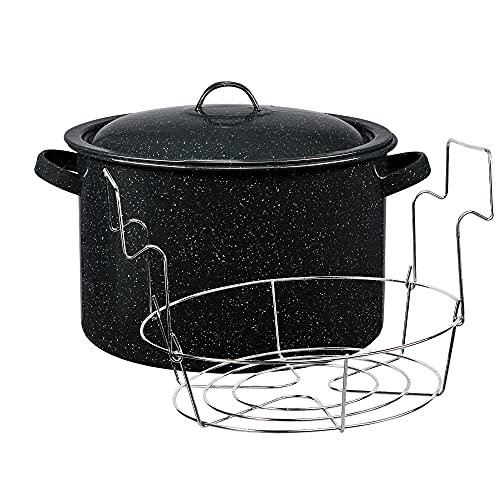
Versus the Granite Ware Enamel Water Bath Canner: the traditional full water bath, and the pot to reach for whenever a recipe processes longer than 45 minutes. It handles every high-acid batch a steam canner can, plus the long ones it can't, and it's cheap and proven. The tradeoffs are the ones the Concord fixes: more water, more weight, a slower start.
Versus the GasOne Canning Pot with Rack: the budget way into water bath canning if you'd rather skip steam entirely. A tall pot and rack cover jams, pickles, and tomatoes at any processing time for a low outlay. You lose the water savings and the light handling, but you also lose the gauge you have to babysit.
Using it well
Fill the base to the level your manual specifies, no more. Bring it to a full, visible steam column before you even think about the clock. Confirm the steam is at temperature with the lid gauge and, ideally, a backup instant-read thermometer through the vent holes, then start timing. Do not start timing the moment you see wisps. Stick to tested high-acid recipes, keep every processing time at 45 minutes or under including your altitude adjustment, and if a recipe runs longer, move it to a water bath instead. Mark your water line so refills are consistent, and never open the lid mid-process.
If you're newer to boiling-water preserving and want the fuller picture before you commit to steam, it's worth reading how the whole method works first. Our guide to the best water bath canner for beginners walks through pot choice, racks, jar handling, and the high-acid rules in more depth, with steam canners in context against the traditional gear.
Where we land on the Concord
For high-acid preserving, yes. Less water, a faster start, and a pot you can actually lift. For jams, pickles, salsa, and acidified tomatoes in short batches, the Concord is a real comfort upgrade over a heavy water bath, and it is a validated, safe method as long as you stay inside the tested times. Ease of use is what it does best, and for plenty of preservers that friction was the thing keeping them from canning more.
Two things hold us back from a full rave. Scope: this is a high-acid, 45-minutes-or-less canner, full stop, and treating it like anything more is a food-safety risk rather than a shortcut. Build: the thin body and the fussy lid gauge mean you keep a thermometer handy and work around a couple of quirks. Buy it with both in mind and hold the safety line without exception. Within its lane it is a lighter, faster, water-saving way to put up the foods it was built for.
Our Ratings
Overall score
Inside the job it is validated for, the Concord performs. High-acid foods like jams, pickles, and acidified tomatoes process on the same times as a water bath, and owners report clean, dependable seals. Scope is the catch, not quality. Steam canning is only USDA-validated for high-acid recipes running 45 minutes or less including altitude, so this is not a do-everything canner, and low-acid foods still need a pressure canner. Confirm the steam temperature before you start the timer and results hold up.
Our lowest mark here. The stainless is thin and the whole canner is light, which is the point when you are lifting it and the problem when it is on a burner, since it tips more readily than a heavy water bath pot. The lid-mounted temperature gauge draws the most complaints: knobs that work loose, gauges that drift or stick, and enough distrust that many owners keep an instant-read thermometer on hand to verify the steam. The shallow base also caps how many jars go in per load.
Our highest mark, and the reason people fall for this pot. It uses a fraction of the water a full water bath needs, heats far faster, and is light enough to lift and move without a second person, which is why glass-top and mobility-limited canners reach for it. Set the jars, bring it to a steady steam, confirm temperature, and a short high-acid batch runs mostly hands-off. Owners who switch rarely go back for everyday jam and pickle runs.
Concord Steam Canner Reviews (2026) on Amazon.
What People Are Saying
Steam canning has a devoted following, and owners of dome-lid canners like the Concord are overwhelmingly happy: less water to heat, a faster start, and a light pot that suits glass-top stoves and anyone who struggles to lift a full water bath. The caveat comes up constantly, and it matters. Experienced canners remind newcomers that a steam canner is only safe for high-acid foods processed 45 minutes or less, and that meat, beans, and most soups still require a pressure canner.
The other recurring gripe is the lid gauge or thermometer knob, described as loosening, drifting, or simply worth double-checking with a separate thermometer. We read the threads the same way the veterans do: excellent pot, narrow job, and the narrowness is not negotiable.
We weight candid owner reports from Reddit and preservation forums above brand-influenced editorial coverage, then reach our own verdict from them. The quotes below are the evidence; the rating and the take are ours.
What Reddit Is Saying
“Atmospheric steam canners are a 1:1 replacement for boiling water bath canners for processing times under 40 minutes. They're totally legit and are recommended as an option by NCHFP. I have one and I love it! I pretty much never break out my boiling water canner anymore. Mine is a Concord brand one but any of the dome style ones are safe to use.”View thread →
“It’s an absolute game changer. Buy the top hat steam canner (versus the one that looks like a water bath canner), That has been tested and found safe. I bought one for my daughter (who lives high altitude (Albuquerque, New Mexico) - she told me she never uses her water bath canner anymore, it’s such a time saver for her.”View thread →
“Absolutely. I love my steam canner and it's soo easy and fast. They make a model that's perfect for glass top stoves. I forget the brand but I think it's Harvest or something. Will post link when I'm on laptop if any interest.”View thread →
“Steam canner is awesome. Just be sure to get the one with the shallow bottom and deep top. Great for small batches and lots of other benefits”View thread →
“I have a multi purpose canner that can be used as a water bath canner as well as a steam canner. The lid has a gauge at the top that shows when it's in the correct zone to start the processing timer. It's the best of both worlds, imo.”View thread →
“I have one. Best money I’ve ever spent. I rarely do anything more than 30-45 minutes. Even at 45 minutes it’s nowhere close to drying out. I got the stainless steel one not the aluminum one. I’m glad I got the heavier duty one. It’s been great.”View thread →
“I bought a VKP steam canner(the steel one) when I had to get surgery, it’s great. Wastes less water, prewarms the jars nicely(not full steam, just preheat), easier to lift and move. Figuring out where to put the processing line is the hardest part(I used a thin strip of red tape to mark mine), and the time limit, but there’s so few water bath recipes that run for an extended time it’s not that much of a limitation.”View thread →
“I have a Fruit Saver steam canner and I really like it. I would go for the stainless steel over the aluminum. It has made a huge difference for me in canning because it’s way easier and way quicker.”View thread →
“I got a steam canner last year after decades of water bath canning. Never going back!”View thread →
“I got mine last year and love it. I rarely water bath can anything that needs more than 45 minutes so it’s perfect. It’s fast, uses less water, and uses less energy.”View thread →
“It's perfectly safe, and the processing times are the same as with water bath canning. The only difference is that if your processing time is more than 45 minutes you have to water bath process instead.”View thread →
“you can not can low acid foods like meat and lentils and most soups in a steam canner. you must have a pressure canner( not a pressure cooker) you can use your steam canner for high acid foods like jams and jellies and pickles. you need to follow safe tested recipes, processes, and sources.”View thread →
“Note that if your elevation calls for more than 45 min processing time, it's not safe to use the steam canner and you should water bath instead”View thread →
“Also, you can only safely use a steam canner as a substitute for WB processing times of 45 minutes or less including altitude adjustments”View thread →
“If you're asking why Ball/Bernadin hasn't included steam canning recipes, I'm going to guess it's because the processing times are all the same as water-bath. It does seem like they should include a section about "the rules" (high acid/hot pack only, less than 45 minutes, make sure you can see a 8" steam cloud before starting the time, use the same time, etc.)”View thread →
“From a safety stand point I'd be alot more comfortable with my kids (who are under 10) around a water bath canner vs a steam bath. I've water bathed canned since I was a kid and steam canning is new to me so that may play a part of it. The steam canner releases steam from the bottom vs the top in a water bath canner, which is a more familiar concept to kids. Also a full water bath canner weighs alot more and is going to be much more difficult to be tipped over where the steam canners are much more lighter due to the less water and so much easier to tip over.”View thread →
“I don't really trust the lid gauges they come with so I double check with an instant read air temp thermometer from ThermoWorks. I poke it through the lid holes and verify that the pot is up to temp, it actually takes quite a few minutes at a rapid boil pumping out steam to get up to 211 air temp which is where mine maxes out.”View thread →
“Has anyone who has the FruitSaver steam canner (it has the thermometer knob on the top of the lid) had an issue with the thermometer knob falling off/coming unscrewed? It's happened to me twice now. Not sure what I should do to better secure it.”View thread →
“The lid has been off of the pot cooling for Two hours and the gauge has not gone all the way back down. Also, when I did the calibration test, it went way past the max before it stopped. There's something wrong with the gauge?”View thread →
Frequently asked questions
Is the Concord Steam Canner worth it?
Our highest mark, and the reason people fall for this pot. It uses a fraction of the water a full water bath needs, heats far faster, and is light enough to lift and move without a second person, which is why glass-top and mobility-limited canners reach for it. Set the jars, bring it to a steady steam, confirm temperature, and a short high-acid batch runs mostly hands-off.
How is the Concord Steam Canner built?
Our lowest mark here. The stainless is thin and the whole canner is light, which is the point when you are lifting it and the problem when it is on a burner, since it tips more readily than a heavy water bath pot. The lid-mounted temperature gauge draws the most complaints: knobs that work loose, gauges that drift or stick, and enough distrust that many owners keep an instant-read thermometer on hand to verify the steam.
What is the Concord Steam Canner best suited for?
Inside the job it is validated for, the Concord performs. High-acid foods like jams, pickles, and acidified tomatoes process on the same times as a water bath, and owners report clean, dependable seals. Scope is the catch, not quality.
What do real owners say about the Concord Steam Canner?
Steam canning has a devoted following, and owners of dome-lid canners like the Concord are overwhelmingly happy: less water to heat, a faster start, and a light pot that suits glass-top stoves and anyone who struggles to lift a full water bath. The caveat comes up constantly, and it matters. Experienced canners remind newcomers that a steam canner is only safe for high-acid foods processed 45 minutes or less, and that meat, beans, and most soups still require a pressure canner.
Options Worth Checking Out

Harvest Stainless Steel 20-Quart Canning Pot
Step up when the Concord's shallow base feels cramped. This 20-quart stainless pot holds more jars and doubles as a deep water bath, so high-acid recipes that run past the steam canner's 45-minute ceiling have a home. Heavier, and uses more water.
Granite Ware Enamel Water Bath Canner
The traditional full water bath, and where you turn when a recipe processes longer than 45 minutes. Enamel-on-steel, comes with a jar rack, and handles any high-acid batch a steam canner can plus the long ones it can't. Uses far more water.

GasOne Canning Pot with Rack
The cheaper way into water bath canning if you'd rather skip steam entirely. A tall pot with a canning rack that covers jams, pickles, and tomatoes at any processing time. You'll heat and haul more water than the Concord, but it costs less up front.
You Might Also Need
Accessories worth grabbing alongside your purchase
